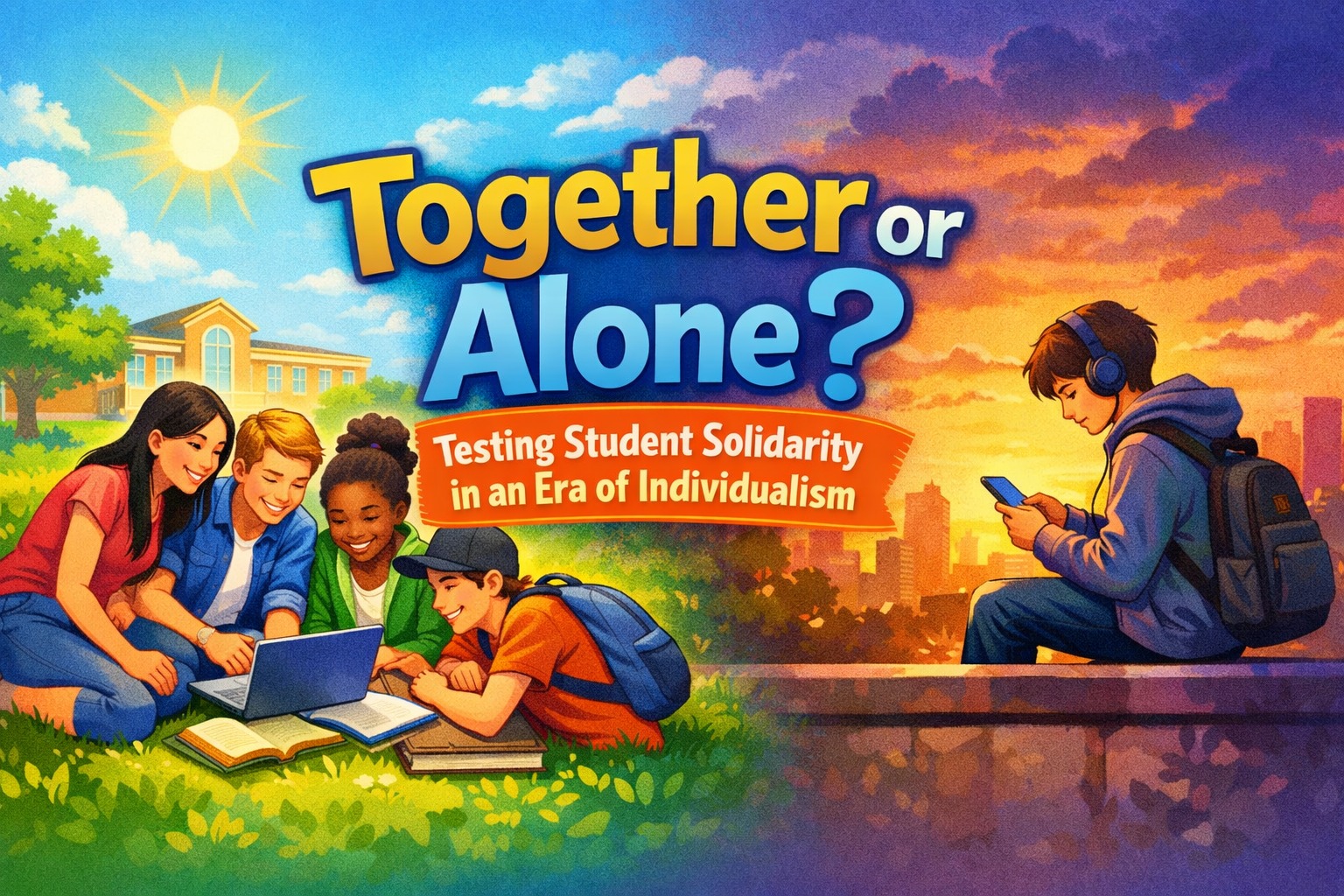
The development of the times has brought significant changes to students’ lifestyles. The ease of technology, academic performance demands, and competition in the job market make students increasingly focused on personal achievements. On one hand, independence is a positive value. On the other hand, this situation raises an important question: does student solidarity still have a place amid the growing culture of individualism? Solidarity has long been a strong identity in student life. It grows through organizations, discussions, social actions, and student activities. This article examines how student solidarity is tested in an individualistic era, while highlighting challenges and opportunities to maintain it.
INDIVIDUALISM IN STUDENT LIFE
Individualism among students does not arise without reason. The education system, which emphasizes academic achievement, GPA, and personal portfolios, encourages students to compete intensely. Focus on individual targets often limits social interactions and makes them more functional than meaningful. In addition, social media also influences how students build relationships. Fast and convenient digital interactions often replace deeper face-to-face communication. As a result, empathy and concern for others gradually decline.
Individualism reduces meaningful social interactions and can weaken empathy among students.
THE MEANING OF SOLIDARITY FOR STUDENTS
Solidarity is not merely being together in organizational activities; it also involves mutual care, support, and responsibility within the academic community. It teaches students to view issues collectively, not only from a personal perspective. In the history of student movements, solidarity has been a primary force driving social change. Without a sense of togetherness, students risk losing their role as agents of change sensitive to social realities.
Solidarity cultivates a collective perspective and social responsibility in student communities.
CHALLENGES IN BUILDING SOLIDARITY IN THE MODERN ERA
Building solidarity amid individualism is not easy. Academic workloads, part-time job demands, and career orientation often make students reluctant to engage in collective activities. Some even perceive solidarity as an additional burden. Differences in backgrounds, views, and interests also often create distance among students. If not managed well, this can weaken the sense of togetherness and foster apathy on campus.
Modern challenges require strategies to maintain engagement and collective action despite individual pressures.
THE ROLE OF CAMPUSES AND STUDENT ORGANIZATIONS
Campuses play a strategic role in fostering student solidarity. Policies that encourage collaboration, group-based learning, and social activities provide spaces for students to interact and understand one another. Student organizations are also important platforms for building solidarity values. Through humanitarian activities, discussions, and community service, students learn that collective achievements are often more meaningful than individual accomplishments.
Institutions and organizations support the growth of solidarity through structured and interactive experiences.
BALANCING INDIVIDUAL AND COLLECTIVE INTERESTS
Solidarity does not mean abandoning personal goals. Students still need to develop independently, but without neglecting concern for their surroundings. Balancing personal ambition and social responsibility is key to building a healthy campus life. By fostering collective awareness, students can support each other in achieving individual goals while contributing positively to society.
Balanced personal and social engagement strengthens student communities.
CONCLUSION
In an increasingly individualistic era, student solidarity faces real challenges. However, the value of togetherness remains relevant and necessary to preserve the identity of students as an intellectual and social community. Through the roles of campuses, student organizations, and individual awareness, solidarity can continue to grow and adapt to changing times.
Students face a choice: walk alone or move together. Amid the complexities of the modern world, moving together is often the more meaningful path.
Tentang Penulis
Gusti Ayu Tita P
Penulis — Universitas STEKOM
Penulis aktif yang berfokus pada isu-isu akademik, teknologi pendidikan, dan pengembangan sumber daya manusia di lingkungan kampus.