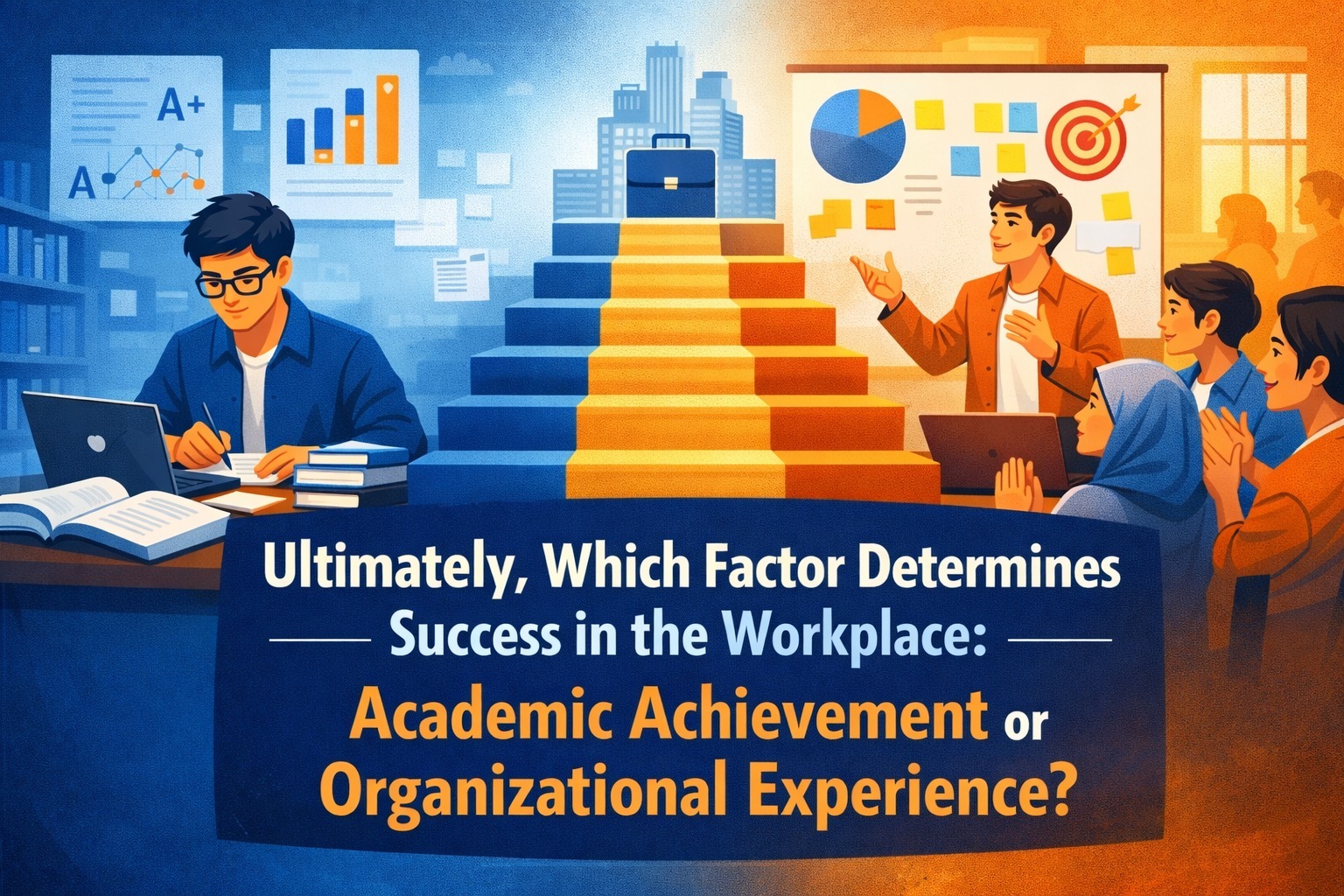
In the modern professional world, success is influenced by many factors, including knowledge, skills, experience, and personal character. Among students and young professionals, one common debate often arises: which factor plays a more important role in determining success in the workplace—academic achievement or organizational experience?
Academic excellence is often associated with intelligence and discipline, while organizational experience is linked to leadership, teamwork, and practical skills. Understanding how these two elements contribute to professional success can help students prepare more effectively for their future careers.
The Role of Academic Achievement in Professional Success
Academic achievement reflects a student’s dedication to learning and mastery of knowledge within a particular field. Students who perform well academically usually develop strong analytical thinking, problem-solving abilities, and the capacity to understand complex theories.
In many professions, particularly in fields such as engineering, finance, science, and technology, strong academic knowledge forms the foundation of job performance. Employers often value candidates with high academic achievement because it demonstrates intellectual capability, persistence, and the ability to handle challenging tasks.
Furthermore, academic success can help graduates gain access to competitive job opportunities, scholarships, and advanced education. For many entry-level positions, employers may consider academic performance as an initial indicator of a candidate’s potential.
The Importance of Organizational Experience
While academic achievement provides technical knowledge, organizational experience helps students develop practical skills that are essential in professional environments. Participation in student organizations, clubs, or community groups allows individuals to gain real-life experience in communication, leadership, and teamwork.
Through organizational involvement, students often learn how to coordinate activities, manage projects, solve problems collaboratively, and interact with people from diverse backgrounds. These experiences closely resemble real workplace situations, where employees must work together to achieve common goals.
Organizational experience also helps individuals develop confidence, adaptability, and decision-making skills—qualities that are highly valuable in dynamic professional environments.
Why Employers Look for a Combination of Both
In today’s job market, most employers do not rely solely on one factor when evaluating candidates. Instead, they prefer individuals who demonstrate both strong academic competence and practical interpersonal skills.
Academic achievement shows that a candidate possesses the knowledge and intellectual ability required for a specific role. Organizational experience, on the other hand, indicates that the candidate can communicate effectively, work in teams, and handle responsibilities in real-world situations.
When these two qualities are combined, they create a well-rounded professional profile. Candidates who possess both academic excellence and organizational experience are often seen as more adaptable and capable of contributing to organizational goals.
Workplace Success Beyond Education
It is important to recognize that workplace success is not determined solely by academic or organizational experiences during university years. Other factors such as emotional intelligence, work ethic, continuous learning, and professional networking also play significant roles.
Employees who demonstrate initiative, adaptability, and a willingness to grow often achieve long-term success regardless of their initial academic or extracurricular backgrounds. Over time, professional performance, achievements, and contributions to the organization become more important than past academic records.
Building a Strong Foundation for Career Success
Students who want to maximize their career potential should aim to develop both academic knowledge and practical experience. Maintaining good academic performance while actively participating in organizations can help students develop a diverse range of competencies.
Internships, volunteer activities, professional workshops, and collaborative projects can also provide valuable experiences that strengthen both technical and interpersonal abilities.
By building a balanced skill set, students can better prepare themselves for the challenges and opportunities that exist in the professional world.
Conclusion
In conclusion, both academic achievement and organizational experience contribute significantly to success in the workplace. Academic excellence provides the intellectual foundation and technical expertise needed for professional tasks, while organizational experience helps develop leadership, teamwork, and communication skills.
Rather than viewing these factors as competing elements, it is more accurate to see them as complementary. Individuals who combine strong academic knowledge with meaningful organizational experience often have a greater advantage in building successful and sustainable careers.
Tentang Penulis
Gusti Ayu Tita P
Penulis — Universitas STEKOM
Penulis aktif yang berfokus pada isu-isu akademik, teknologi pendidikan, dan pengembangan sumber daya manusia di lingkungan kampus.