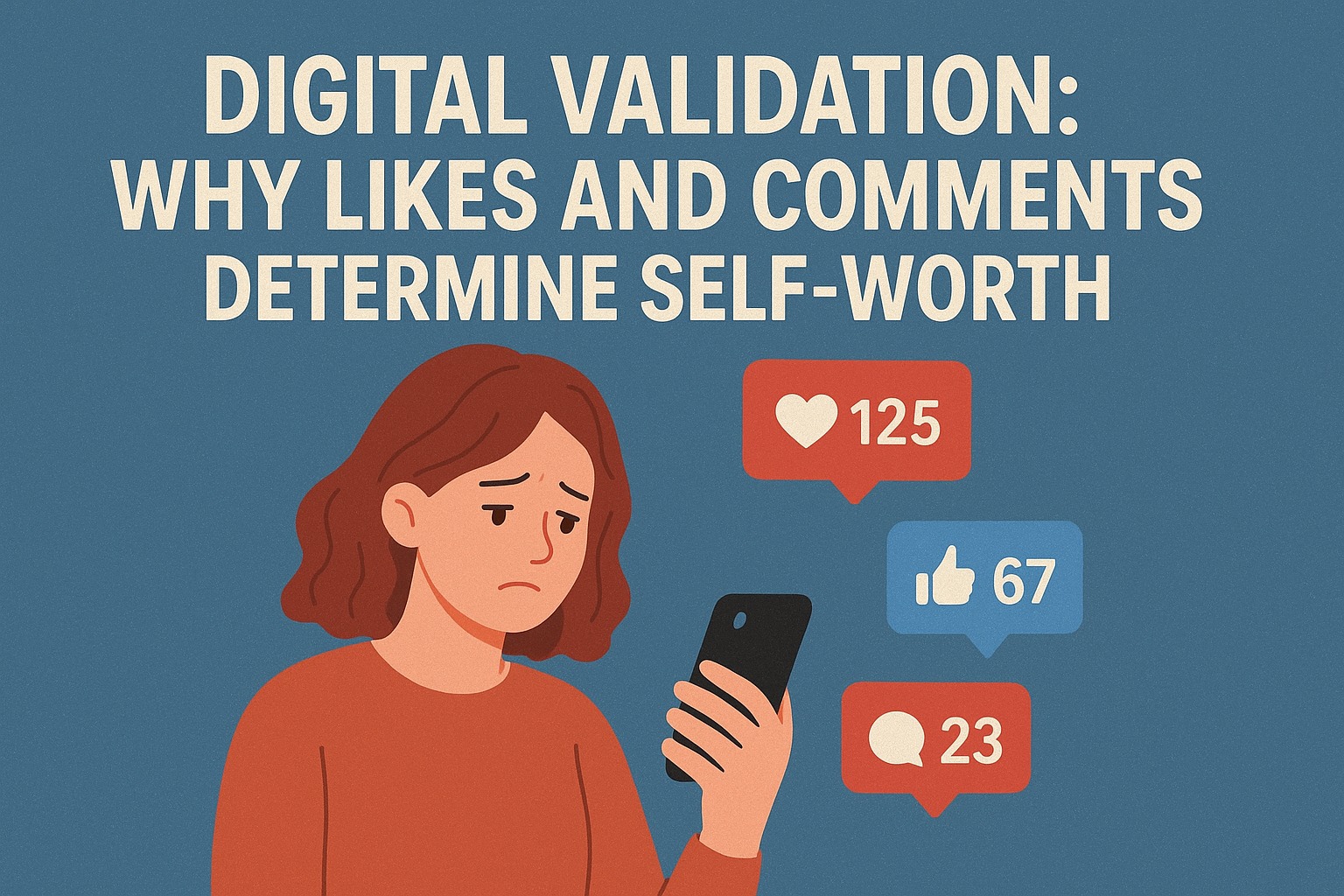
In the era of social media, a single post can become a “mirror” of someone’s emotions for the entire day. The number of likes, comments, and views often feels like a public judgment of who we are, how interesting our life looks, or even how valuable our existence is. From this, the habit of measuring self-worth through a screen slowly develops—becoming a new emotional need without us realizing it.
This phenomenon isn’t just about technology, but also about psychology and social interaction. This article invites us to explore how digital validation works, why it feels so enticing, and what impact it has on mental health and the way we see ourselves.
WHAT IS DIGITAL VALIDATION?
Digital validation is the desire to receive recognition through online interactions—such as likes, comments, shares, or follower counts. These interactions act as modern “social signals” that make us feel accepted, appreciated, and important.
Unlike direct, face-to-face praise, digital validation is fast, measurable, and public. The numbers on the screen make appreciation feel objective, even though they are heavily influenced by algorithms, upload timing, and audience preferences. As a result, the feeling of being “enough” often depends on content performance rather than true self-worth.
WHY DO LIKES AND COMMENTS FEEL SO IMPORTANT?
The human brain responds to praise like a small “reward.” Every notification can trigger dopamine—the hormone linked to pleasure and motivation. This creates a habit of checking our phones, hoping for new signals of acceptance.
On the other hand, social media provides a stage for comparison. A feed filled with others’ achievements creates an unspoken standard of what it means to be successful, happy, or attractive. Without filtering what we see, this exposure can push us to judge ourselves based on unfair comparisons—because what’s shown is often the best version, not the whole reality.
THE PSYCHOLOGICAL IMPACT BEHIND THE NUMBERS
When self-identity becomes tied to online responses, emotional stability becomes fragile. A day with “low engagement” can feel like personal rejection, even when the cause might simply be technical.
Common impacts include:
* Anxiety when a post “doesn’t perform well”
* Overthinking others’ reactions
* Feeling inadequate or insecure
* Dependency on notifications to feel happy
* Reduced self-confidence from constant comparison
These effects can build up and lead to mental exhaustion. Instead of enjoying the creative process, a person becomes trapped by numbers, outcomes, and reactions.
THE TRAP OF SOCIAL COMPARISON
Social media accelerates the culture of comparison. What others share often looks cleaner, more successful, and happier. Yet we rarely see their failures, doubts, or struggles behind the scenes.
Unhealthy comparison leads to two outcomes: diminishing oneself or forcing an image just to appear equal. Both distance us from authenticity—and make self-worth dependent on external validation.
HOW TO BUILD A HEALTHIER SENSE OF SELF-WORTH
1. Recognize Your Value Beyond the Screen
Your worth is not defined by digital metrics. Character, integrity, empathy, and consistency matter far more than numbers.
2. Curate the Content You Consume
Follow accounts that inspire positivity and learning. Reduce exposure to content that triggers unhealthy comparison.
3. Set Digital Boundaries
Schedule daily “offline” time. Creating space from notifications helps your mind recover from instant validation demands.
4. Seek Validation From Within
Practice healthy self-talk. Appreciating small achievements and accepting your flaws build a stable foundation of self-worth.
5. Prioritize Real-Life Connections
Face-to-face interactions provide richer, more genuine emotional feedback than reactions on a screen.
CONCLUSION
Likes and comments are not the enemy—but they are also not measures of self-worth. When digital validation becomes the main source of self-esteem, we risk losing our grip on authentic identity. Regaining control through awareness, healthy boundaries, and internal appreciation is essential to make social media a tool again, not the ruler of our emotions.
True self-worth grows from self-acceptance, real relationships, and the meaning we create each day—not from ever-changing numbers on a screen.
Tentang Penulis
Gusti Ayu Tita
Penulis — Universitas STEKOM
Penulis aktif yang berfokus pada isu-isu akademik, teknologi pendidikan, dan pengembangan sumber daya manusia di lingkungan kampus.