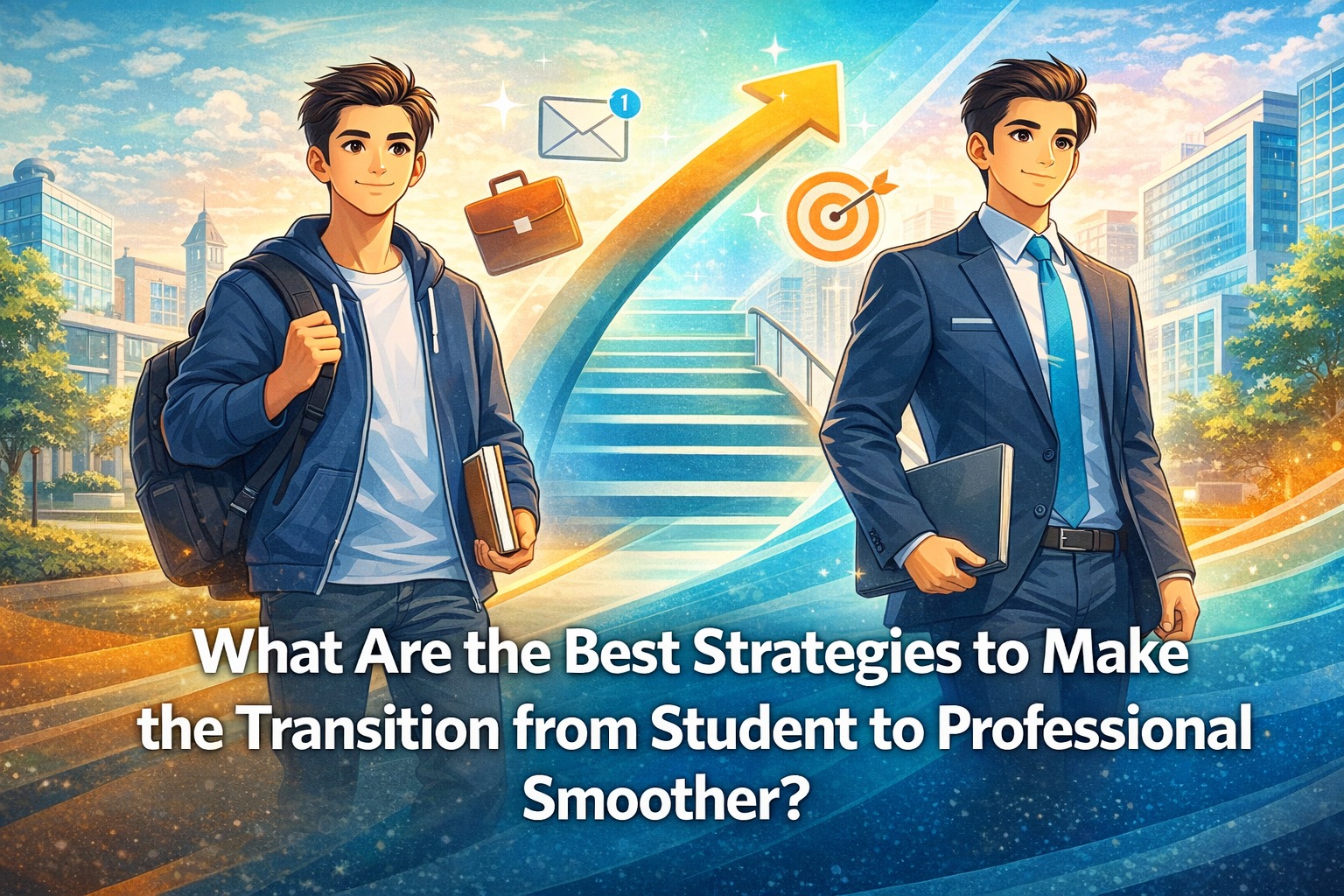
The transition from student life to the professional world is a crucial phase filled with challenges. Many fresh graduates feel surprised by the work pace, responsibilities, and professional culture that differ greatly from the campus environment. Without proper preparation, this transition period can feel confusing and exhausting.
So, what are the best strategies to make the transition from student to professional smoother? Here is a guide to help fresh graduates adapt more quickly and confidently as they begin their careers.
BUILDING A PROFESSIONAL MINDSET EARLY
The first crucial step is shifting your mindset from being “a student who learns” to becoming “a professional who takes responsibility.” In the workplace, results and real contributions are the primary benchmarks.
Having a proactive attitude, strong discipline, and readiness to take responsibility will ease the adjustment process. This mindset helps fresh graduates see challenges as part of long-term career growth.
DEVELOPING SOFT SKILLS NEEDED IN THE WORKPLACE
Beyond academic knowledge, soft skills play a major role in career success. Communication skills, teamwork, time management, and problem-solving abilities are highly valued across almost all industries.
Students can start developing these skills through student organizations, committees, group projects, or volunteer activities. Such experiences become valuable preparation when facing the dynamics of the professional world.
GAINING PRACTICAL EXPERIENCE BEFORE GRADUATION
Internships, part-time jobs, or freelance projects allow students to understand workplace culture early on. Practical experience provides real insight into work rhythms, responsibilities, and professional interaction.
The more exposure students have to work environments before graduating, the less likely they are to experience culture shock when starting full-time employment.
LEARNING TO ACCEPT FEEDBACK AND CONTINUE GROWING
In the professional world, performance evaluations are common. Fresh graduates need to get used to receiving feedback from supervisors or colleagues without taking it personally.
Feedback should be viewed as a learning opportunity to improve competence. Being open to constructive criticism accelerates career development in the early stages.
BUILDING A PROFESSIONAL NETWORK
Professional relationships can open many career opportunities. Attending seminars, training sessions, industry communities, or being active on professional platforms can help expand networks.
A strong network not only assists in job searching but also becomes a source of learning and support when facing workplace challenges.
MANAGING CAREER EXPECTATIONS REALISTICALLY
Many fresh graduates have high expectations for their first job. However, the early career stage is primarily about learning and adapting.
Having realistic expectations helps reduce disappointment and pressure. By focusing on self-development, long-term career opportunities will become more accessible.
MAINTAINING WORK-LIFE BALANCE
The transition into the workforce often leads fresh graduates to focus excessively on work while neglecting their health. In fact, maintaining a balance between work and personal life is essential for long-term productivity.
Managing rest time, exercising regularly, and maintaining social relationships help keep physical and mental conditions stable during the adaptation period.
CONCLUSION
The transition from student to professional can be smoother when supported by the right strategies. Building a professional mindset, developing soft skills, gaining practical experience, being open to feedback, expanding networks, and maintaining life balance are key steps that should not be overlooked.
With thorough preparation and an adaptive attitude, fresh graduates can not only survive in the workplace but also grow optimally throughout their career journey.
Tentang Penulis
Gusti Ayu Tita P
Penulis — Universitas STEKOM
Penulis aktif yang berfokus pada isu-isu akademik, teknologi pendidikan, dan pengembangan sumber daya manusia di lingkungan kampus.