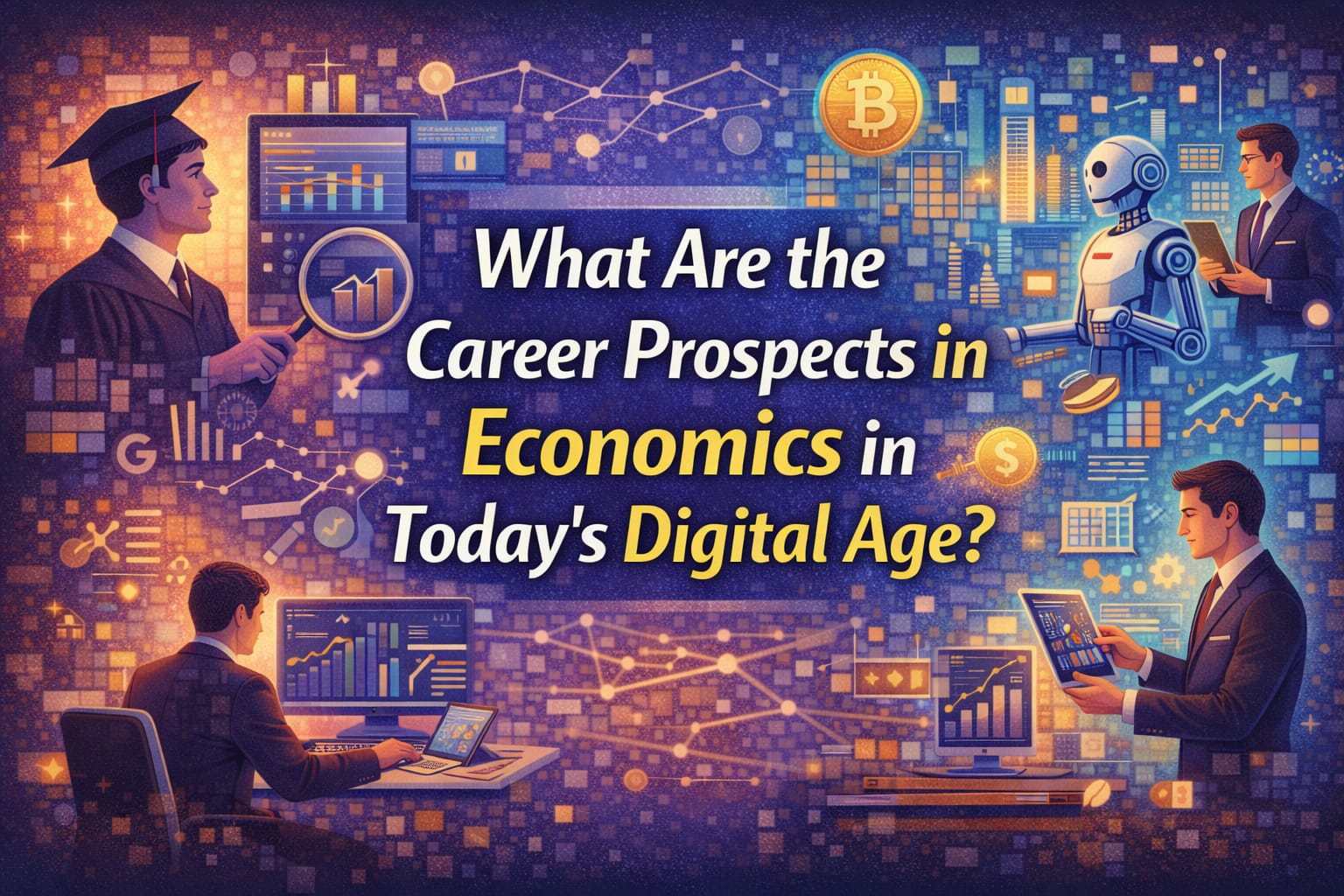
Career Prospects for Economics Graduates in the Digital Economy Era
Amid the rapid development of technology and changing global business patterns, the world of work is undergoing a major transformation. This applies especially to the field of economics. Today, career prospects for economics graduates in the digital ecnomoic era are broader and more promising, opening opportunities for young professionals to contribute across various industry sectors.
1. The Changing Job Market Due to Digitalization
The digital economy era has significantly impacted business models. Companies no longer rely solely on conventional transactions but instead use data, algorithms, and online consumer behavior to make decisions.
Key Point: Economics graduates are highly valued because they understand market dynamics, exchange rates, and investment strategies, all of which form the foundation of the modern digital economy.
2. Emerging Careers in Economics
Some of the rising career paths include:
* Data Economist – Combines economic knowledge with data analysis to predict market trends.
* Digital Financial Analyst – Evaluates business performance in digital platforms, such as financial apps and e-commerce.
* Business Intelligence Specialist – Develops data-driven strategies to improve company efficiency and profitability.
Key Point: These roles reflect the integration of economics and digital technology, opening new avenues beyond traditional positions like bank teller or accountant.
3. Essential Skills for the Future Economics Workforce
To compete in the digital economy, aspiring economics professionals must master:
* Basic Programming (Python, R, or SQL)
* Data Analysis and Statistics
* Understanding of Digital Micro and Macroeconomics
* Fintech Adaptation
Key Point: Combining economic knowledge with technological and analytical skills is crucial to thrive in modern career paths.
4. The Role of Economics Graduates in the Digital Economy
Economics graduates are needed not only in the private sector but also in government and public institutions to manage fiscal policy, digital taxation, and international investment. Graduates who understand digitalization can become pioneers in tech-based economic policy planning.
Key Point: Digital-savvy economics professionals can lead innovation in economic strategy and policy-making.
Conclusion
In conclusion, career prospects for economics graduates in the digital economy are bright for those willing to adapt. The world is moving rapidly, and individuals who understand both economics and technology will become the driving force of the future economy.
Tentang Penulis
Gusti Ayu Tita P
Penulis — Universitas STEKOM
Penulis aktif yang berfokus pada isu-isu akademik, teknologi pendidikan, dan pengembangan sumber daya manusia di lingkungan kampus.