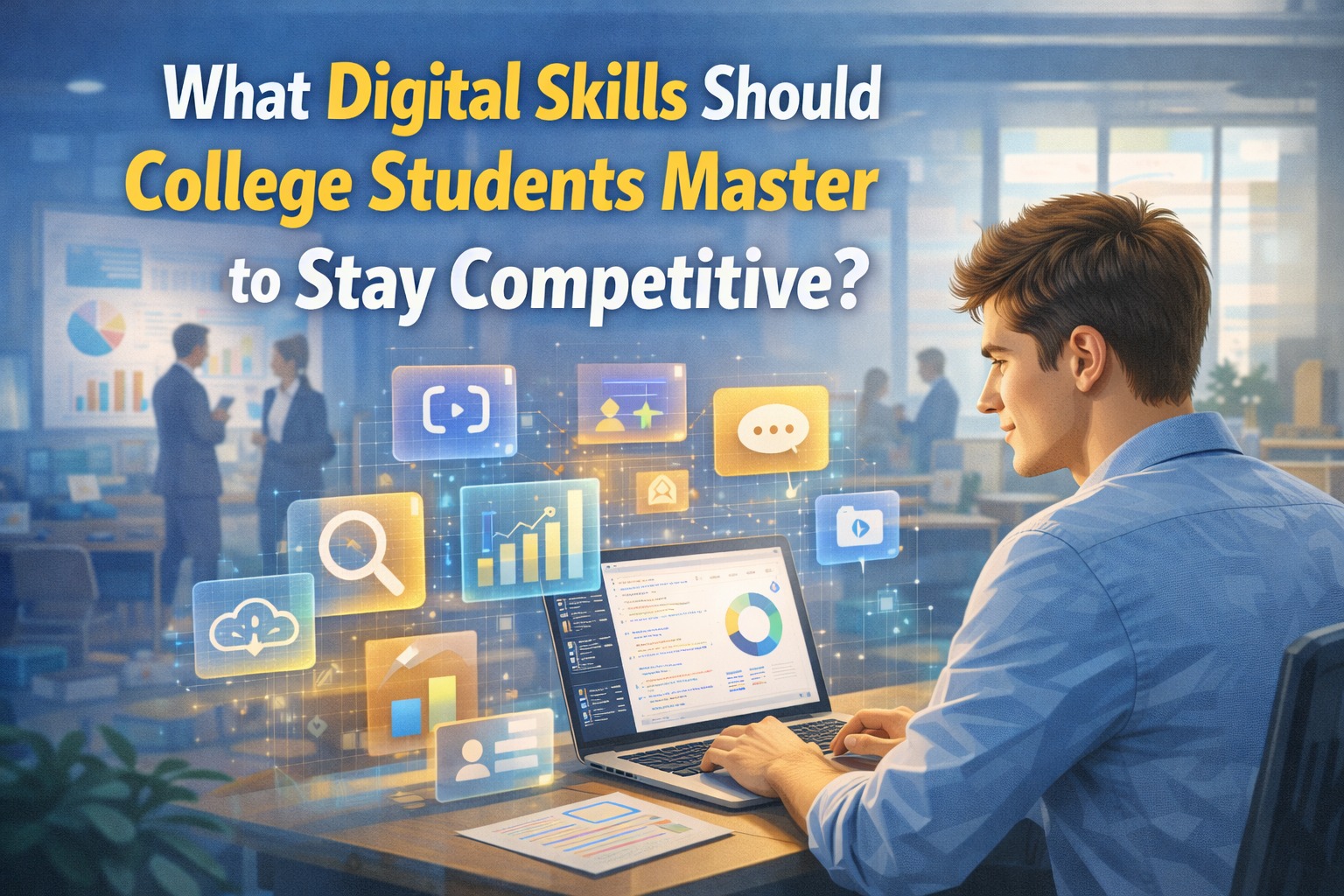
Amid rapid technological development, the job market increasingly depends on digital skills. For university students preparing to enter the professional world, mastering relevant digital competencies is crucial to remain competitive. Without sufficient digital skills, students risk falling behind in the fast-moving wave of technological transformation.
THE IMPORTANCE OF DIGITAL SKILLS IN GLOBAL COMPETITION
Technological advancement has transformed how we work, interact, and learn. Preparing with relevant digital skills is a strategic step for students to compete in a complex job market and adapt to industrial changes.
ESSENTIAL DIGITAL SKILLS FOR STUDENTS
1. Communication Through Technology
Digital communication skills are vital. Students should master tools such as email, video conferencing, and collaboration platforms like Slack and Microsoft Teams.
2. Office Software Proficiency
Basic tools like Microsoft Word, Microsoft Excel, and Microsoft PowerPoint remain essential across industries.
3. Basic Coding Knowledge
Understanding programming languages such as Python, JavaScript, or HTML/CSS provides strong competitive advantages and improves logical thinking and problem-solving skills.
4. Data Analytics and Big Data
Data analysis skills are highly valuable. Tools like Microsoft Power BI and Google Analytics help students gain insights for decision-making.
5. Digital Design Creativity
Design tools such as Adobe Photoshop, Adobe Illustrator, and Canva are valuable for producing visual content across industries.
6. Social Media and Content Development
Knowledge of platforms like Instagram, Facebook, LinkedIn, and Twitter provides advantages in marketing and communication fields.
7. Cloud Computing Skills
Understanding platforms such as Google Cloud, Amazon Web Services, and Microsoft Azure prepares students for flexible and collaborative work environments.
WHY THESE SKILLS MATTER
Digital skills prepare students to face workplace challenges and open opportunities across industries. Technical expertise increasingly differentiates job candidates, providing significant competitive advantages.
CONCLUSION
To remain competitive in the next 5–10 years, students must master various digital skills—from communication technology to data analysis and design. Proactive learners will be better prepared for a connected and automated future.
Tentang Penulis
Gusti Ayu Tita P
Penulis — Universitas STEKOM
Penulis aktif yang berfokus pada isu-isu akademik, teknologi pendidikan, dan pengembangan sumber daya manusia di lingkungan kampus.