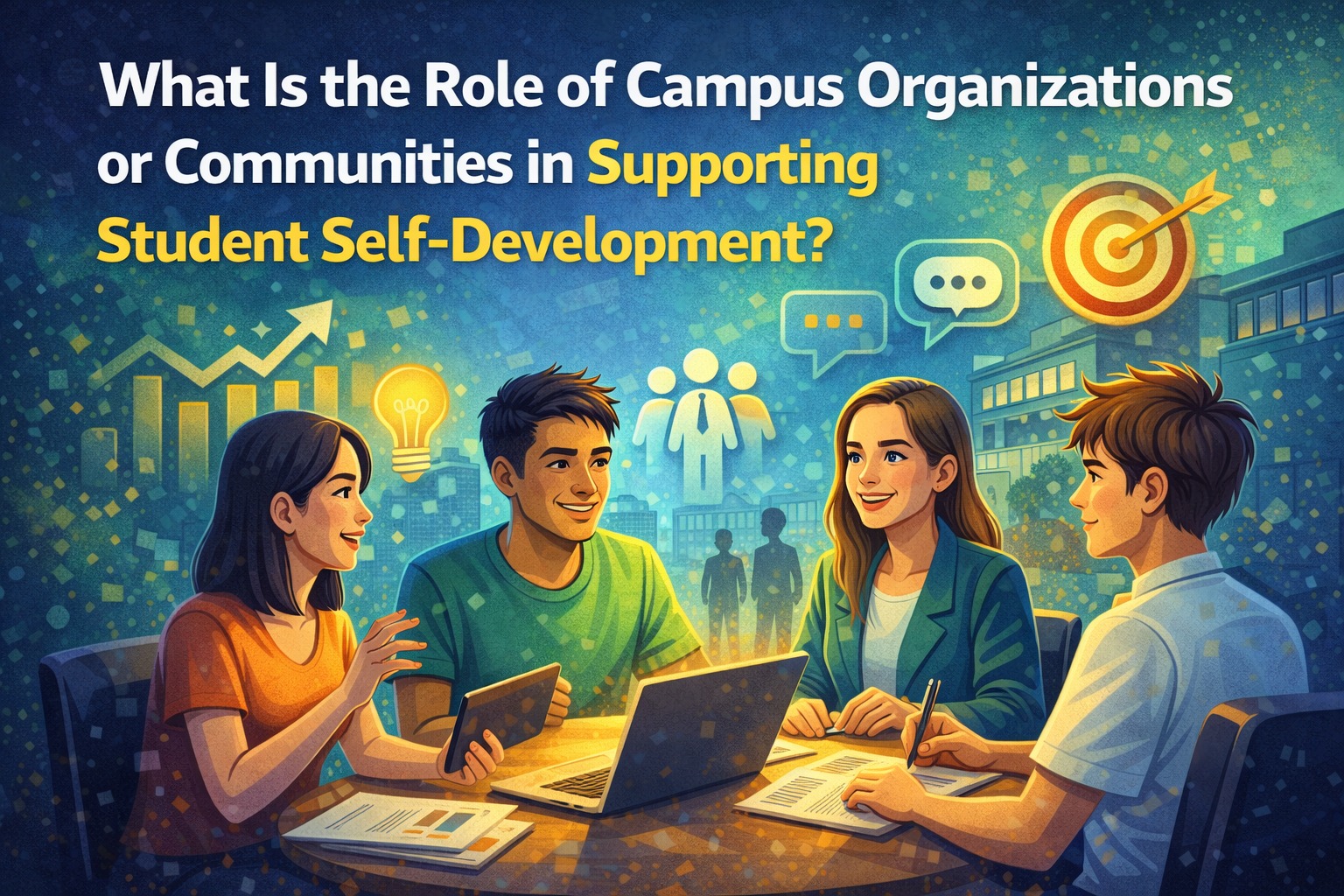
Campus life is not only about attending lectures and completing academic assignments. Universities also provide various organizations and communities that play an important role in shaping students’ personal and professional development. Through active involvement in campus organizations, students gain experiences that support self-development beyond the classroom.
Campus Organizations as Learning Spaces Outside the Classroom
Campus organizations and communities serve as informal learning spaces where students can develop practical skills. Unlike academic settings that focus on theory, organizations allow students to learn through real experiences. Students are encouraged to plan activities, work in teams, and solve problems, which helps them apply knowledge in real-life situations.
Developing Soft Skills Through Organizational Activities
One of the main contributions of campus organizations to student self-development is the improvement of soft skills. Skills such as communication, leadership, teamwork, and decision-making are naturally developed through organizational roles and responsibilities. These skills are essential for students as they prepare to enter a competitive professional environment.
Building Self-Confidence and Social Awareness
Participation in campus communities helps students build self-confidence and social awareness. Interacting with people from diverse backgrounds allows students to improve interpersonal skills and understand different perspectives. As students become more confident in expressing ideas and opinions, they are better prepared to face academic and professional challenges.
Expanding Networks and Career Opportunities
Campus organizations also provide valuable networking opportunities. Students can connect with peers, seniors, alumni, and even professionals through organizational events and collaborations. These networks can open doors to internships, career information, and future job opportunities, making campus involvement highly beneficial for long-term development.
Encouraging Responsibility and Leadership
Taking part in organizational activities teaches students responsibility and leadership. Holding positions within organizations requires students to manage tasks, make decisions, and take accountability for outcomes. These experiences strengthen students’ character and readiness for leadership roles in the future.
Conclusion
Campus organizations and communities play a vital role in supporting student self-development. By offering opportunities to develop soft skills, build confidence, expand networks, and practice leadership, these organizations complement academic learning. Active involvement in campus organizations helps students grow into well-rounded individuals who are better prepared for future challenges.
Tentang Penulis
Gusti Ayu Tita P
Penulis — Universitas STEKOM
Penulis aktif yang berfokus pada isu-isu akademik, teknologi pendidikan, dan pengembangan sumber daya manusia di lingkungan kampus.