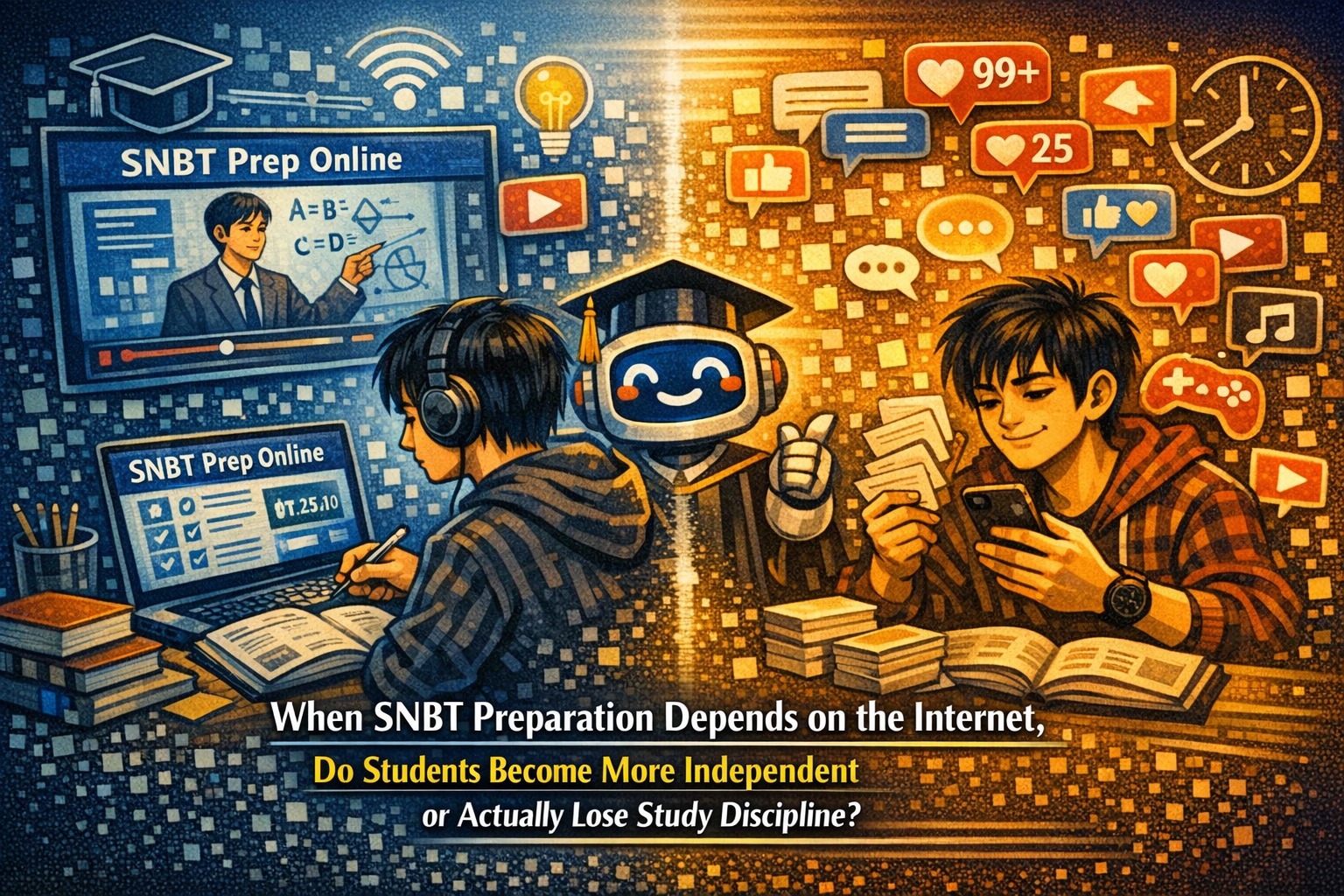
Preparing for SNBT (Seleksi Nasional Berdasarkan Tes) has become one of the most important academic journeys for students who dream of entering a public university. The competition is intense, the expectations are high, and the pressure often grows stronger as exam day approaches. In the past, students mainly relied on school lessons, printed books, face-to-face tutoring, and study groups in classrooms. Today, the situation has changed dramatically. The internet has become the center of preparation.
From learning videos and online tryouts to digital modules and discussion forums, almost every part of SNBT preparation can now happen online. Students can study from home, access explanations from top educators, and practice questions anytime using only a smartphone or laptop. This creates flexibility and freedom that previous generations did not experience.
Because of this convenience, many students feel more independent. They no longer wait for teachers to explain every concept. They can search, compare, and decide their own study strategies. However, this same freedom also creates new problems. Without strong discipline, flexibility can turn into procrastination. Easy access to learning can become easy access to distraction.
This raises an important question: when SNBT preparation depends on the internet, do students truly become more independent, or do they actually lose study discipline?
The answer depends on how students manage attention, habits, and responsibility. Technology itself is not the problem. The real challenge lies in whether students can control the digital world before the digital world controls them.
Success in SNBT is not only about intelligence or resources. It is also about consistency, discipline, and the ability to learn responsibly in an environment full of both opportunity and distraction.
THE INTERNET AS THE NEW LEARNING CENTER
The internet has changed education into something faster, broader, and more flexible.
Students preparing for SNBT no longer depend only on textbooks or classroom explanations. They can access educational videos, digital tryouts, online mentoring, and shared learning communities with only a few clicks.
This creates a new learning center where knowledge is always available. Difficult concepts in mathematics, literacy, and reasoning can be explained through multiple sources until students find the method that suits them best.
Learning becomes more personalized because students can study at their own pace. They can repeat difficult lessons, skip familiar topics, and focus on weak subjects more efficiently.
This independence gives students stronger control over their academic journey.
Education becomes less about waiting and more about active searching.
WHY STUDENTS FEEL MORE INDEPENDENT
One of the strongest advantages of internet-based preparation is the feeling of independence.
Students no longer need to depend entirely on school schedules or tutoring sessions. They can decide when to study, what to prioritize, and which resources to trust.
This builds academic responsibility. Students learn how to manage their own progress instead of relying only on external pressure.
They also gain confidence by solving problems independently. Searching for explanations, reviewing mistakes, and improving weak areas without constant supervision creates stronger learning habits.
For many students, this freedom feels empowering.
It teaches them that preparation is a personal journey, not something controlled entirely by teachers or parents.
This independence can become valuable not only for SNBT, but also for university life later.
THE HIDDEN RISK OF TOO MUCH FREEDOM
However, freedom without structure can quickly become a problem.
When students control their own schedules, they also control their own excuses. Without clear routines, it becomes easy to delay difficult tasks and choose comfort over responsibility.
The phrase “I will study later” becomes dangerous when repeated too often.
Because the internet provides both learning and entertainment on the same screen, procrastination becomes easier than ever. Students do not need to leave their desk to avoid studying. Distraction is already available in their hand.
Too much freedom can create weak discipline when students have no system to protect focus.
Independence should not mean studying without boundaries.
Real independence requires self-control, not only flexibility.
LEARNING APPS AS A TOOL FOR SELF-MANAGEMENT
Learning applications can strengthen discipline when used correctly.
Many educational platforms provide study schedules, progress tracking, reminders, and performance analysis. These features help students organize preparation more clearly.
Instead of studying randomly, students can create measurable goals and monitor improvement.
This structure reduces confusion and helps students stay accountable.
Applications also make learning more accessible during short periods of free time. Students can review formulas while commuting or complete quick practice sessions during breaks.
This increases consistency because learning becomes part of daily life.
Technology becomes helpful when it supports routine, not when it replaces responsibility.
The app is only a tool. The habit behind it determines success.
ONLINE TRYOUTS AND REAL ACADEMIC FEEDBACK
Online tryouts have become one of the most important parts of SNBT preparation.
They allow students to experience exam pressure before the real test day arrives. Time limits, score analysis, and ranking systems help students understand their readiness more clearly.
This creates honest feedback.
Students no longer guess whether they are improving. They can see which sections remain weak and where stronger effort is needed.
Regular tryouts also train emotional control. Students learn how to stay calm, manage time, and recover from difficult questions.
This psychological preparation is often as important as academic knowledge.
However, tryouts should be followed by reflection. Without reviewing mistakes, students only repeat the same problems.
Progress comes from understanding errors, not only collecting scores.
SOCIAL MEDIA AS THE BIGGEST DISCIPLINE TEST
While learning platforms support preparation, social media often challenges discipline.
Students open a phone to study and quickly find themselves watching unrelated videos, replying to messages, or scrolling endlessly.
This happens because social media is built to keep attention for as long as possible. Notifications, short videos, and constant updates create immediate rewards that feel easier than difficult academic tasks.
The brain naturally prefers quick pleasure over delayed achievement.
This makes discipline harder.
Many students lose hours through small distractions that feel harmless at first.
The danger is not only wasted time, but also broken concentration. Deep focus becomes difficult when attention is constantly interrupted.
Technology tests discipline every single day.
THE ILLUSION OF PRODUCTIVE STUDYING
Digital learning sometimes creates a false sense of productivity.
Students spend hours watching educational videos, saving PDF files, joining discussion groups, and following study accounts. These activities feel useful because they are connected to learning.
But real understanding does not always happen.
SNBT requires active problem-solving, not only passive exposure.
Watching explanations without solving questions creates familiarity, not mastery. Saving resources without reviewing them creates preparation in appearance, not in reality.
Many students mistake being busy for being effective.
This illusion is dangerous because it delays honest self-evaluation.
Technology should help students think, not only keep them occupied.
ACTIVE LEARNING BUILDS REAL INDEPENDENCE
True academic independence comes from active learning.
Students must solve questions independently, analyze mistakes carefully, and explain concepts in their own words.
This process is uncomfortable because it requires effort and uncertainty. However, it builds stronger understanding than passive consumption ever can.
Active learning teaches responsibility.
Students stop depending on instant answers and begin developing critical thinking.
This is especially important for SNBT because the exam rewards reasoning, not memorization.
Technology should support this process through practice, reflection, and repeated effort.
Independence is not about studying alone. It is about thinking deeply.
INFORMATION OVERLOAD AND LOST PRIORITIES
The internet gives unlimited access to information, but too much information can weaken focus.
Students often collect too many resources at once. They join multiple study groups, save dozens of modules, and follow too many strategies from different people.
Instead of clarity, they feel confused.
They spend more time choosing what to study than actually studying.
This creates decision fatigue and mental exhaustion.
When priorities are unclear, discipline becomes harder to maintain.
Sometimes fewer resources with stronger consistency produce better results than unlimited materials with scattered attention.
Learning becomes stronger when students choose depth over quantity.
THE ROLE OF DAILY ROUTINES IN DIGITAL DISCIPLINE
Discipline grows through routine, not motivation alone.
Students often wait to feel motivated before studying, but motivation changes every day. Strong preparation requires habits that continue even when motivation is low.
Daily routines create stability.
Simple systems such as fixed study hours, scheduled tryouts, and phone-free focus sessions reduce dependence on temporary emotions.
Consistency becomes easier when decisions are made in advance.
Routine protects students from random distraction.
Success in SNBT usually comes from repeated ordinary effort, not dramatic last-minute study sessions.
The internet can support discipline, but routine makes it sustainable.
PARENTS AS SUPPORTERS, NOT ONLY SUPERVISORS
Parents play an important role in internet-based preparation.
Many parents worry that screen time means distraction. While this concern is understandable, not all screen use is negative. Students may be studying seriously through digital platforms.
Supportive communication is more effective than constant suspicion.
Parents can help students create healthy schedules, balanced routines, and emotional stability instead of focusing only on restrictions.
Students perform better when they feel trusted and guided.
Pressure without understanding often creates resistance rather than responsibility.
Technology becomes safer when the home environment encourages discipline with empathy.
TEACHERS STILL MATTER IN A DIGITAL WORLD
Even with unlimited online resources, teachers remain essential.
Students need guidance to identify reliable sources, understand difficult concepts, and maintain realistic study strategies.
Without direction, too much information becomes confusing.
Teachers also shape academic mindset. When education emphasizes understanding and reflection, students become less dependent on shortcuts.
Digital tools work best when combined with human mentorship.
Technology should expand education, not replace meaningful teaching relationships.
The strongest preparation happens when digital access and human guidance work together.
MENTAL HEALTH AND ACADEMIC CONSISTENCY
SNBT preparation is not only an academic challenge. It is also an emotional one.
Students face pressure from competition, family expectations, and fear of failure. Internet-based learning can either reduce this pressure or increase it.
Study communities can provide motivation and support, but constant comparison on social media can create anxiety.
Students may feel behind when they compare themselves to others’ posted achievements.
This emotional exhaustion weakens discipline.
Healthy preparation requires rest, boundaries, and self-awareness.
Mental health is not separate from academic success. It protects consistency.
Students who manage emotions well often study more effectively than those who only chase perfect scores.
USING THE INTERNET WITH PURPOSE
The internet is powerful, but purpose determines its value.
Opening a learning app without a clear goal often leads to distraction. Joining discussion groups without direction often creates confusion.
Students need simple awareness: Why am I using this platform? What do I want to finish today? Is this helping my preparation or only filling time?
Purpose creates stronger focus.
Technology becomes useful when every action has intention.
Without purpose, convenience becomes delay.
With purpose, even simple tools become powerful.
MORE INDEPENDENT OR LESS DISCIPLINED?
So, when SNBT preparation depends on the internet, do students become more independent or actually lose discipline?
The honest answer is both are possible.
Students who use technology with structure, reflection, and responsibility often become more independent than ever before. They build self-management, critical thinking, and stronger academic confidence.
But students who use the internet without boundaries often fall into procrastination, distraction, and passive studying.
Technology does not decide the outcome. Habits do.
The internet can be a bridge to success or a trap of delay depending on how students respond to freedom.
In the end, independence is not about studying without supervision. It is about choosing discipline when no one is watching.
That is the real test behind SNBT preparation—and perhaps the most important lesson students will carry far beyond the exam itself.
Tentang Penulis
Gusti Ayu Tita P
Penulis — Universitas STEKOM
Penulis aktif yang berfokus pada isu-isu akademik, teknologi pendidikan, dan pengembangan sumber daya manusia di lingkungan kampus.