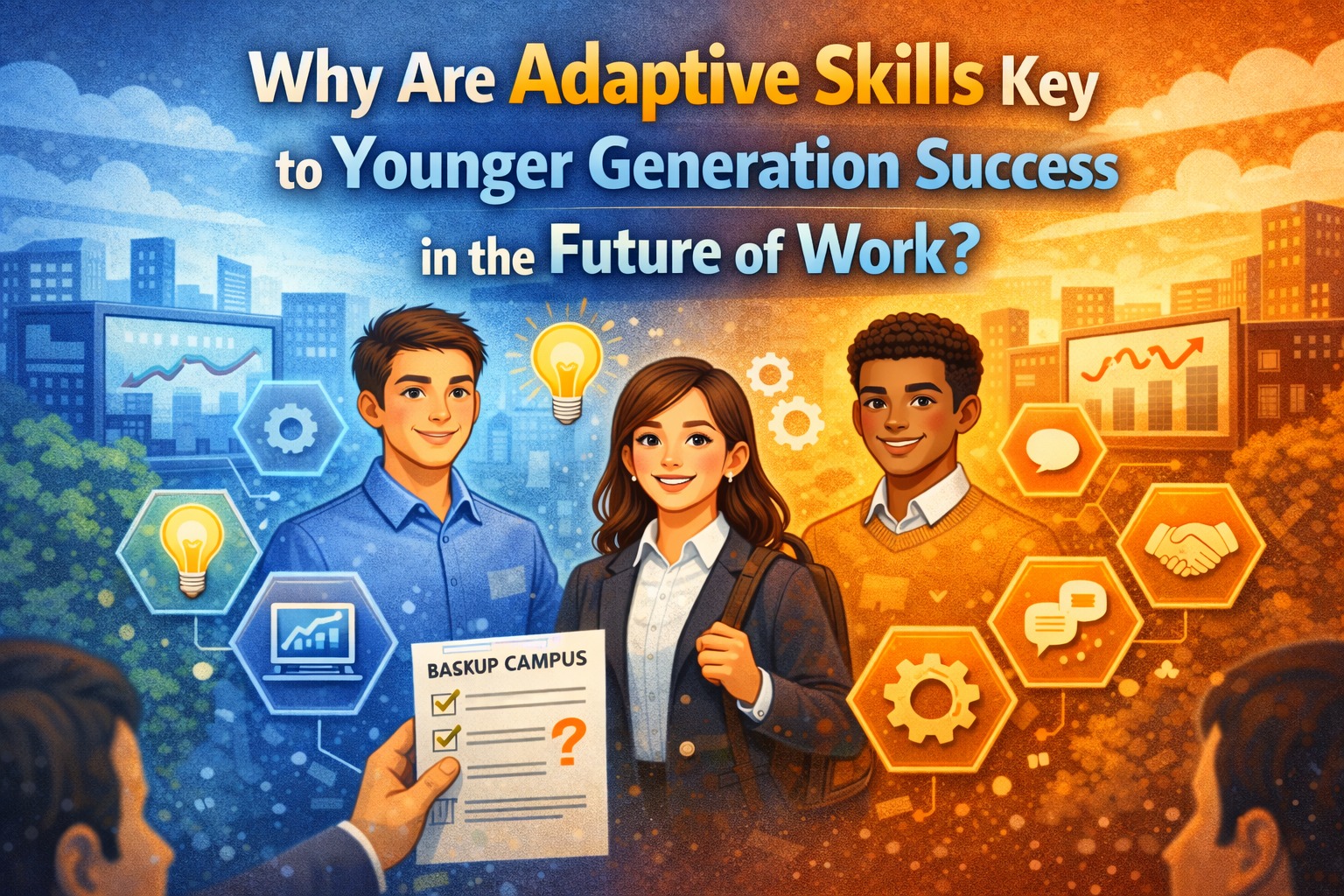
Why Adaptive Skills Are the Key to the Future Success of Young People
Rapid changes in the world of work are driven by technological advancement, automation, and globalization. Many new jobs are emerging, while several traditional professions are gradually being replaced. In this situation, young people are required to possess more than just academic abilities. One of the most essential competencies is adaptive skills. So, why are adaptive skills the key to the future success of young people in the workplace? The explanation is presented below.
1. The World of Work Is Constantly Changing Rapidly
The future of work is characterized by dynamic and continuous change. New technologies, hybrid work systems, and evolving industry demands have transformed how work is performed.
Young people who possess adaptive skills are able to adjust to these changes without losing productivity. They are more prepared to face challenges and are less likely to be left behind by rapid developments.
Adaptive skills help individuals stay relevant in a constantly changing work environment. Continuously update your knowledge by following industry trends and the latest technological developments.
2. Adaptive Skills Help Face Job Market Competition
Competition in the job market is becoming increasingly intense at both national and global levels. Companies no longer seek only graduates with high academic scores, but also individuals who can learn quickly and adapt effectively.
Adaptive skills make young people more flexible in taking on new roles and acquiring the skills required by the industry. This provides a competitive advantage in recruitment and career development processes.
Adaptability increases competitiveness in the job market. Demonstrate adaptability through internships, projects, or organizational experience.
3. Encouraging Lifelong Learning Ability
Adaptive skills are closely linked to a willingness to engage in lifelong learning. The future workplace demands individuals who continue learning even after graduating from university.
Young people with adaptive skills understand that learning can take place anytime and anywhere, whether through training programs, online courses, or hands-on work experience.
Adaptive skills support continuous learning and self-development. Set aside regular time to learn new skills relevant to your career field.
4. Helping to Handle Work Pressure and Challenges
Workplace changes and demands often create pressure. Adaptive skills help young people build mental resilience when facing stress, failure, and role changes.
With strong adaptability, individuals can manage emotions, seek solutions, and recover from challenges more quickly.
Adaptability strengthens mental resilience in the workplace. Develop a positive mindset and treat every challenge as an opportunity for growth.
5. Opening Broader Career Opportunities
Adaptive young people are not limited to a single career path. They are more open to new opportunities and able to shift across fields without losing direction.
Adaptive skills allow individuals to develop multiple competencies simultaneously, resulting in broader and more diverse career opportunities in the future job market.
Adaptability expands career possibilities across industries. Do not hesitate to explore cross-disciplinary experiences to discover your full potential.
Conclusion
Adaptive skills are the key to the future success of young people because an ever-changing world of work requires individuals who are flexible, resilient, and eager to learn. With strong adaptability, young people are not only able to survive but also grow and create new opportunities amid constant change.
Tentang Penulis
Gusti Ayu Tita P
Penulis — Universitas STEKOM
Penulis aktif yang berfokus pada isu-isu akademik, teknologi pendidikan, dan pengembangan sumber daya manusia di lingkungan kampus.