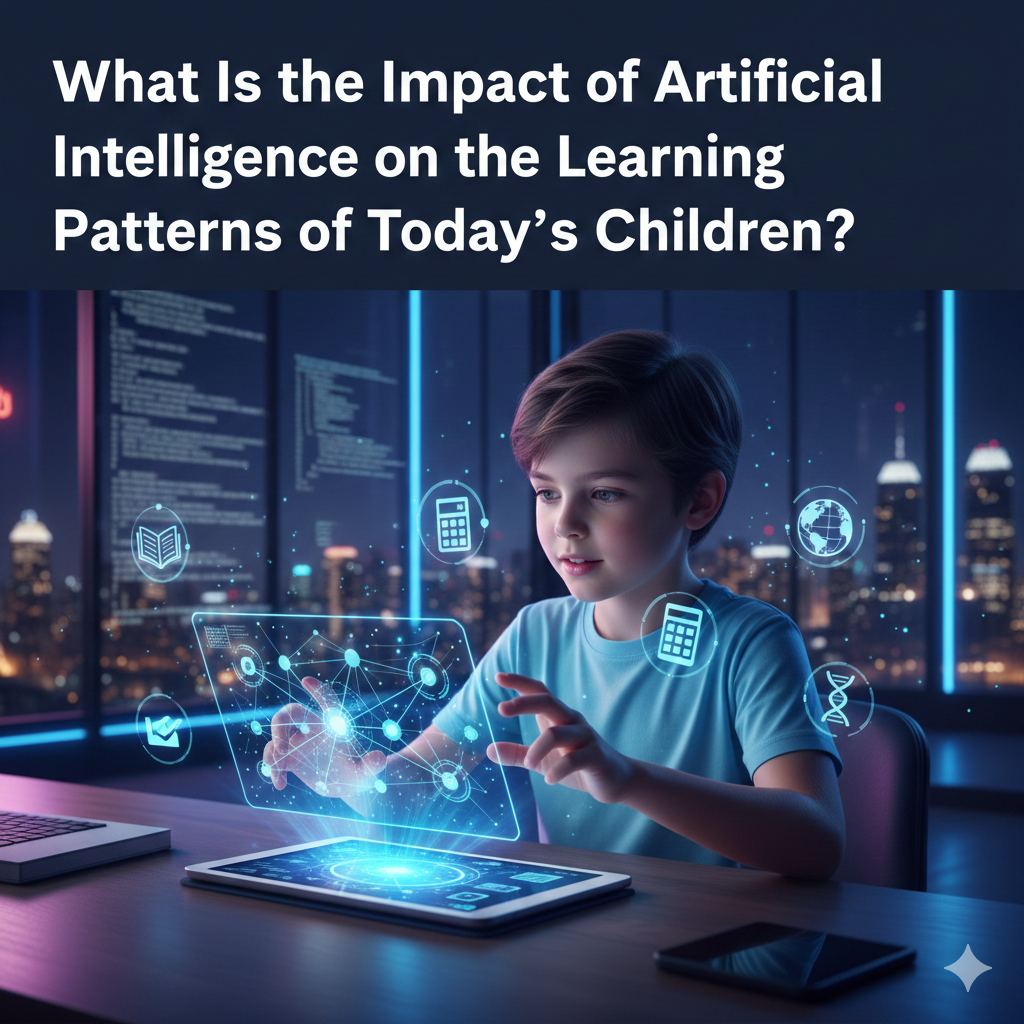
In today’s digital era, artificial intelligence (AI) is becoming increasingly integrated into everyday life, including education. Children now grow up surrounded by technology — from interactive learning apps to virtual assistants like ChatGPT or Google Assistant. However, alongside the convenience, important questions emerge: What is the impact of AI on children’s learning patterns today?
The Role of AI in Children’s Education
AI is not just a learning tool; it has transformed how children understand and access knowledge. Its roles include:
1. Personalized Learning
AI can tailor learning materials to each child’s abilities and interests. Apps like Duolingo or Khan Academy adjust the difficulty level based on user performance.
2. Virtual Tutors and Automated Learning Assistance
Children can now learn anytime without waiting for a teacher’s explanation. AI-based tutors can answer questions, provide exercises, and evaluate progress instantly.
3. More Interactive Learning Media
AI brings engaging learning experiences through educational games, 3D simulations, and augmented reality (AR), making children more active and creative.
Positive Impacts of AI on Children’s Learning
AI offers many benefits that support children’s development:
- Boosts motivation and curiosity through interactive materials,
- Encourages independent learning at their own pace,
- Builds digital literacy skills from an early age.
Negative Impacts to Watch Out For
Despite its benefits, excessive AI use may negatively affect children’s growth:
- Decline in social skills, due to reduced real-life interactions,
- Dependence on technology, making critical thinking weaker without AI assistance,
- Privacy risks, as many AI platforms collect user data.
The Role of Parents and Schools
To ensure children gain optimal benefits, parents and educators must guide their AI use:
1. Monitor and limit screen time,
2. Teach digital ethics including privacy and responsibility,
3. Balance AI with real-world interactions, such as discussions and hands-on learning.
Conclusion
AI has significantly changed how children learn today. While it makes learning easier, faster, and more engaging, it also carries risks if not used wisely.
The key is **balance** — using technology to support learning, not replace human connection.
About the Author
Gusti Ayu Tita
Author — STEKOM University
An active author focused on academic issues, educational technology, and human resource development in the campus environment.