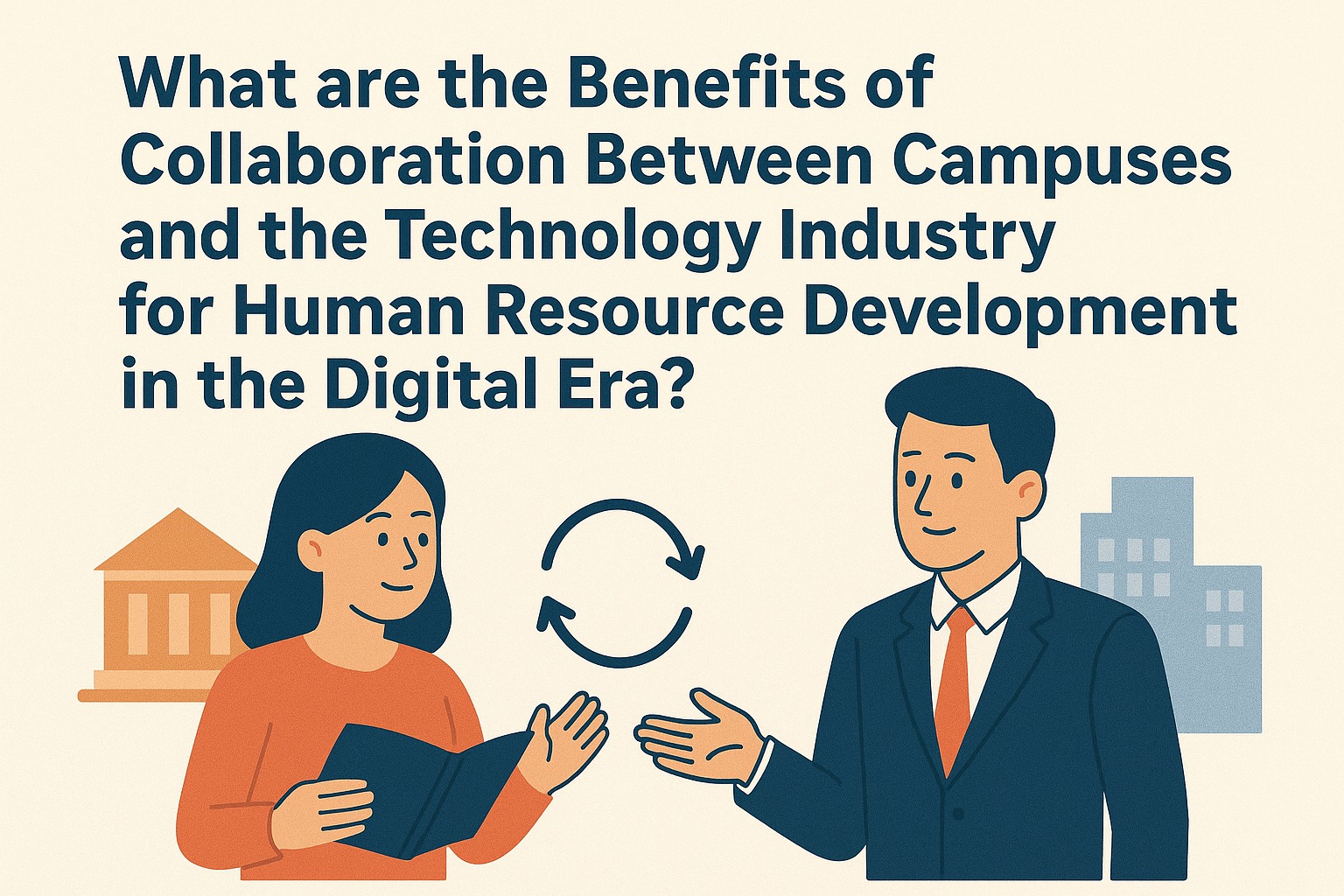
In the midst of rapid digital transformation, the need for skilled and competent human resources (HR) in the technology sector is becoming increasingly urgent. The tech industry is growing fast, while the education sector—especially universities—must adapt to these demands. One effective way to bridge this gap is through collaboration between universities and the technology industry. So, what are the benefits of such collaboration for HR development in the digital era?
1. STRENGTHENING STUDENTS’ PRACTICAL SKILLS
Collaboration between universities and the technology industry enables students to gain direct, hands-on experience that the industry highly values. Although university curricula are designed to provide solid foundational knowledge, the industry requires more specific and up-to-date practical skills. Through internships, collaborative projects, or joint classes organized by tech companies, students can learn directly from practitioners and participate in real-world technology development.
For example, many major tech companies such as Google, Microsoft, and local start-ups partner with universities to provide internship opportunities or research collaborations. Students engaged in these programs can sharpen both their technical abilities and soft skills, including problem-solving, teamwork, and communication—skills that are highly sought after in the job market.
2. INCREASING CURRICULUM RELEVANCE TO INDUSTRY NEEDS
One of the biggest challenges in education is ensuring that the curriculum remains relevant to the rapidly evolving needs of the industry. Collaboration between universities and the tech industry helps ensure that students learn material aligned with the latest trends and technologies used in the workforce. With direct input from industry professionals, universities can update their curricula to include emerging technologies such as artificial intelligence (AI), blockchain, and the Internet of Things (IoT).
In addition, university lecturers can expand their insights by working with industry experts, enabling them to teach more practical and current knowledge. This produces graduates who not only understand theory but are also ready to face real-world challenges.
3. PREPARING JOB-READY TALENT WITH CURRENT SKILLS
The digital era requires HR who possess not only strong technical expertise but also the ability to adapt quickly to technological changes. Collaboration between universities and industry enables students to develop highly in-demand skills such as programming, data analysis, cybersecurity, and technology project management.
With training programs or bootcamps conducted jointly by universities and tech companies, students can acquire skills that meet industry standards. Moreover, involvement in technology-based projects exposes students to the latest tools and platforms widely used in the industry.
4. ENCOURAGING INNOVATION AND CREATIVITY THROUGH COLLABORATIVE LEARNING
Collaboration between academia and the tech industry also creates a more innovative learning environment. Within this collaborative setting, students can learn from diverse perspectives—from both academic and industry viewpoints. This opens opportunities for them to develop new ideas that can be applied directly in real-world scenarios.
For instance, universities can serve as research and development centers for creating new solutions that can be adopted by the industry, while companies provide input and guidance on practical applications of the research. This process enhances students’ innovation capabilities and improves the quality of the technological solutions produced.
5. ACCELERATING GRADUATE ABSORPTION INTO THE WORKFORCE
One of the major issues often faced by university graduates is difficulty finding jobs that match their skill sets. Collaboration between universities and the industry can accelerate the employment process by providing clear pathways for students to interact directly with companies.
Through strong partnerships, companies can identify student potential through internships, joint research, or project-based recruitment. This allows companies to find the right talent for their needs, while students gain opportunities to enter the workforce immediately after graduation.
6. DEVELOPING A SUSTAINABLE INNOVATION ECOSYSTEM
This collaboration not only benefits students but also helps build a sustainable innovation ecosystem. Universities, as centers of research and innovation, together with tech companies, can become key drivers in developing technologies beneficial for society and the economy.
With continuous collaboration, both universities and industry can keep innovating to create better solutions. For example, tech companies working with universities on software development or health-tech applications may produce products that benefit not only industry but also the wider community. In this sense, collaboration plays an essential role in fostering an ecosystem that supports innovation, creativity, and technological progress.
CONCLUSION
Collaboration between universities and the technology industry offers tremendous benefits for HR development in the digital era. By strengthening students’ practical skills, ensuring curriculum relevance, preparing job-ready talent, and encouraging innovation and creativity, such collaboration plays a crucial role in developing a competent digital workforce. Moreover, these strong partnerships accelerate graduate employment and help build a sustainable innovation ecosystem. Therefore, it is essential for universities, industry, and the government to continue strengthening and expanding these collaborations to advance Indonesia’s human resources in the digital age.
About the Author
Gusti Ayu Tita
Author — STEKOM University
An active author focused on academic issues, educational technology, and human resource development in the campus environment.