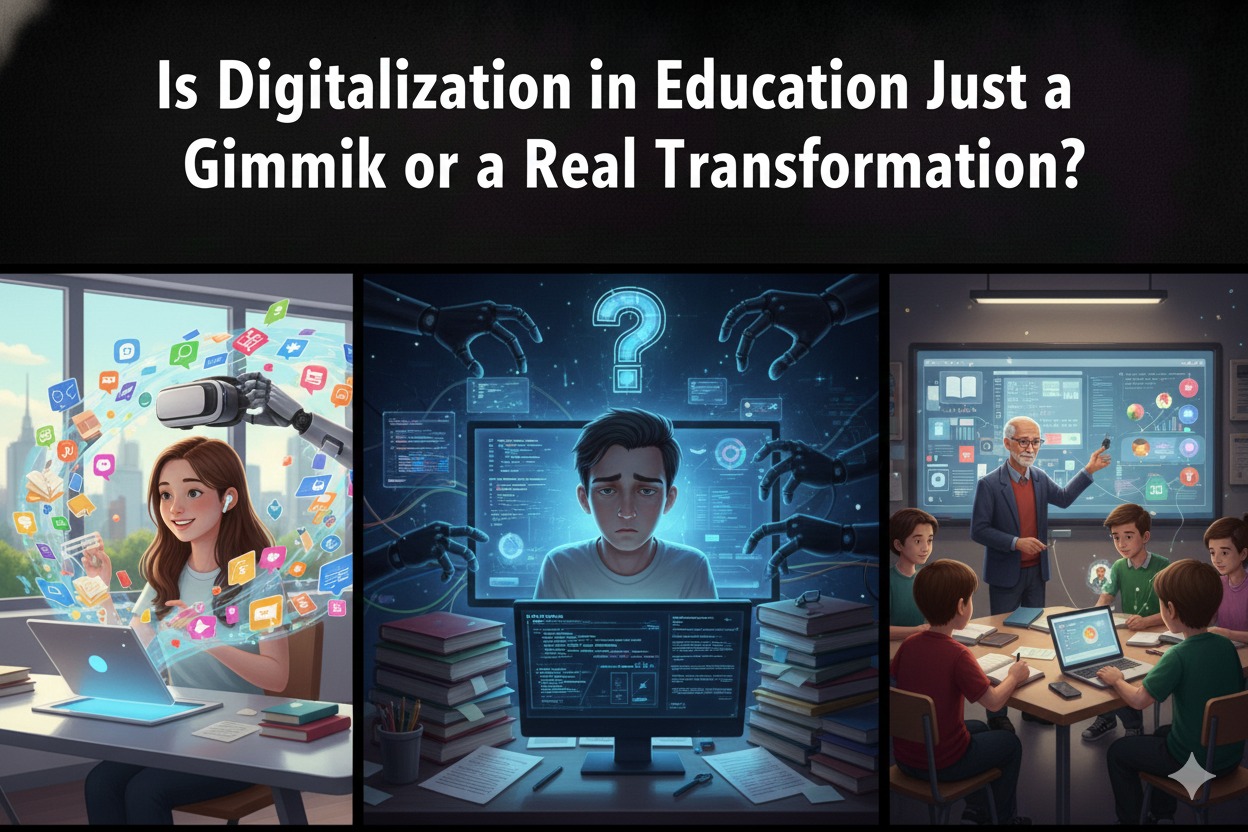
In today’s fast-paced digital era, technology has permeated almost every aspect of life, including the field of education. From the use of computers in classrooms to online learning platforms, digitalization has become an inseparable part of the teaching and learning process. However, as more digital initiatives are introduced in schools, a common question often arises: Is digitalization in education merely a gimmick, or is it a genuine transformation that brings significant change?
This article explores the phenomenon of digitalization in education more deeply, examining whether it is just a passing trend or a major step capable of redefining the future of education.
DIGITALIZATION IN EDUCATION: WHAT DOES IT MEAN?
Educational digitalization refers to the implementation of digital technology in various aspects of education, ranging from learning processes and administrative management to interactions between teachers, students, and parents. It can include simple tools such as projectors and computers for presentations, as well as web-based educational platforms like Google Classroom, Moodle, and other learning applications that allow students to access materials and assignments online.
Through digitalization, learning is no longer confined to physical classrooms. Students can learn anytime and anywhere, access a wider variety of learning resources, and interact with teachers and peers through digital media. This transformation carries great promise for improving educational quality and reaching a broader range of learners.
Despite its advantages, some still question whether digitalization is merely a gimmick or a temporary solution. Let us take a closer look.
DIGITALIZATION IN EDUCATION: MORE THAN JUST A GIMMICK
From its benefits alone, it is clear that digitalization in education is not merely a gimmick. Several strong reasons show that it represents a real transformation of the education system.
1. Increased Accessibility and Inclusivity
One of the most significant positive impacts of digitalization is improved access to education. In the past, students living in remote or underdeveloped areas often struggled to obtain quality education due to limited facilities or trained teachers. With technology, students from different regions can now access the same learning materials through online platforms.
For example, in areas lacking qualified teachers, students can still receive lessons prepared by experts through video tutorials or online courses. This not only expands educational reach but also ensures equal learning opportunities for all students, regardless of location.
2. More Personalized and Flexible Learning
Digitalization enables learning experiences tailored to individual student needs. Each learner has a different pace and style, and technology offers solutions to accommodate these differences. Digital platforms allow students to learn at their own speed, review difficult materials, or move ahead if they have already mastered certain topics.
In addition, digital learning offers flexibility, allowing students to study anytime and anywhere. This is especially beneficial for students with limited time, such as those who work while studying or have mobility challenges.
3. Improved Teaching Quality
Technology can also enhance teaching quality. Teachers can use various digital tools—such as instructional videos, animations, and simulations—to explain lessons in more engaging and interactive ways. This makes learning more interesting and helps students understand complex concepts more effectively.
Moreover, technology-based learning management systems enable teachers to monitor student progress more easily, provide faster feedback, and adapt teaching methods to suit diverse learning needs.
4. Preparing Students for a Digital Workforce
As the modern workplace becomes increasingly technology-driven, digital skills are essential. Educational digitalization allows students to develop these skills from an early stage. By integrating technology into learning, students become familiar with relevant digital tools such as productivity software, online collaboration platforms, and applications commonly used in professional environments.
Skills such as data management, programming, digital communication, and media literacy are now highly valued in the job market. Therefore, integrating technology into education helps prepare students to face future professional challenges.
CHALLENGES OF EDUCATIONAL DIGITALIZATION
Despite its many advantages, several challenges must be addressed to ensure that digital transformation in education is truly effective.
1. Access and Infrastructure Gaps
One major obstacle is unequal access to technology and the internet. Not all students have the necessary devices or reliable connectivity to participate in digital learning. In remote areas, schools often lack basic infrastructure, which can widen existing educational inequalities instead of reducing them.
2. Adaptation Difficulties for Teachers and Students
Successful digital implementation requires strong digital skills from both teachers and students. Many educators are not yet fully trained to use technology effectively, which can hinder digital learning initiatives. Similarly, not all students possess sufficient digital literacy to benefit optimally from educational technology.
3. Varying Quality of Digital Content
Another challenge lies in the quality of available digital learning materials. Not all online content meets educational standards or aligns with national curricula and local contexts. Without proper curation and supervision, students may access inaccurate or unsuitable information.
4. Overdependence on Technology
Excessive reliance on technology can also pose risks. Without proper guidance, students may become overly dependent on digital devices and lose critical thinking skills or face-to-face interaction abilities. Technical issues such as poor internet connections or device failures can also disrupt the learning process.
CONCLUSION: EDUCATIONAL DIGITALIZATION—GIMMICK OR REAL TRANSFORMATION?
Digitalization in education undeniably offers great potential to transform how we teach and learn. By improving accessibility, enabling flexible and personalized learning, and preparing students for a digital workforce, it represents a genuine transformation rather than a mere gimmick.
However, challenges such as access inequality, content quality, and human resource readiness must be addressed. To ensure that digitalization does not become just a temporary trend, technology must be implemented wisely, equitably, and effectively.
About the Author
Gusti Ayu Tita
Author — STEKOM University
An active author focused on academic issues, educational technology, and human resource development in the campus environment.