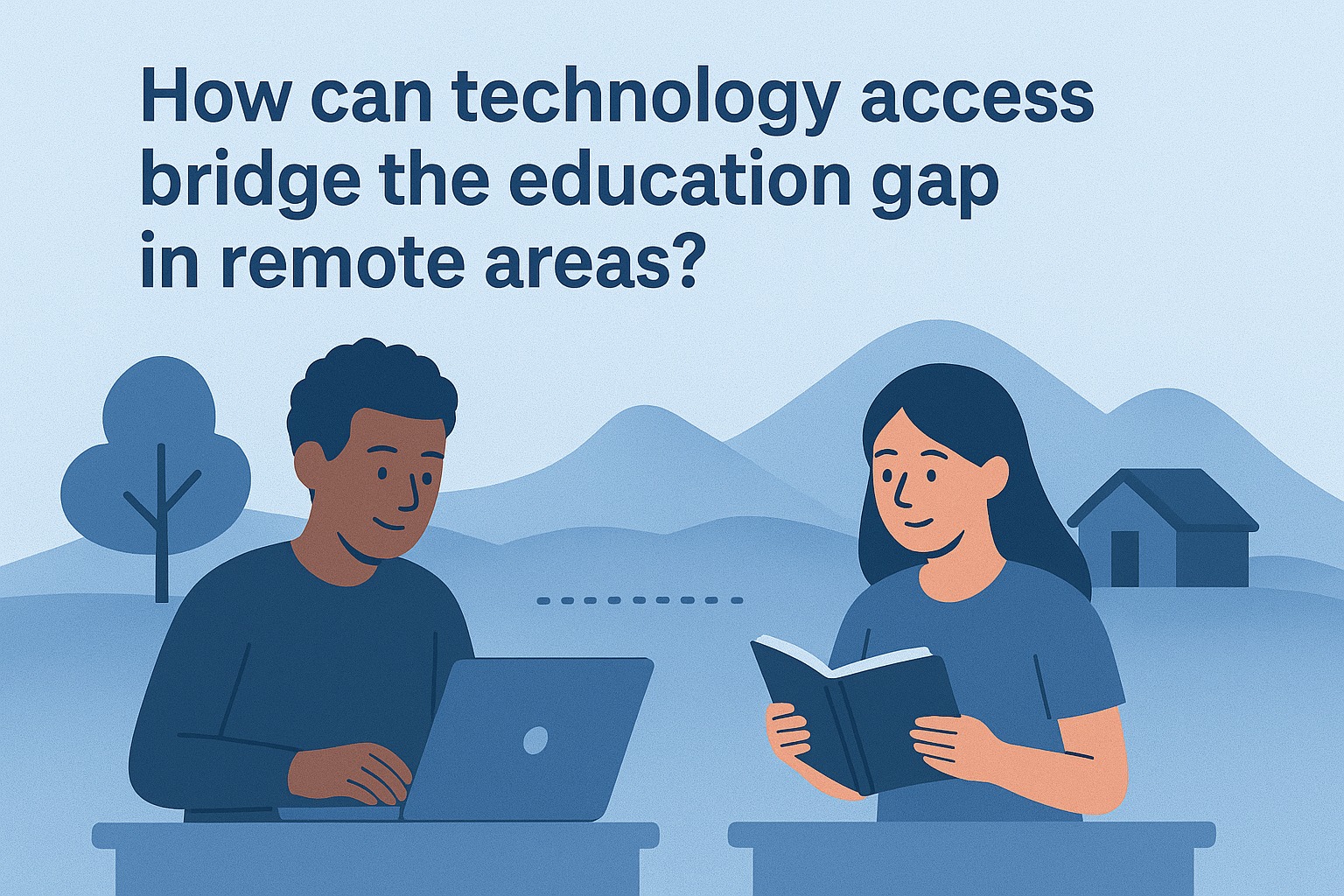
Educational inequality remains a real challenge in many remote areas of Indonesia. One of the main causes is the limited access to high-quality learning resources. However, in today’s digital era, technology access presents a significant opportunity to bridge this gap. So, how can technology serve as an effective solution for educational equity?
THE ROLE OF TECHNOLOGY IN EDUCATION EQUALIZATION
Technology not only facilitates communication but also opens unlimited access to educational information. With the internet and digital devices, students in remote areas can access high-quality learning materials just like students in urban environments.
Key Roles of Technology:
* Expands access to digital learning resources such as e-books and learning videos
* Supports distance learning (PJJ) and virtual classrooms
* Connects teachers and students with expert educators from various regions
* Provides platforms for independent practice and evaluation through educational apps
Thus, technology can act as a catalyst for accelerating educational equity.
BENEFITS OF TECHNOLOGY ACCESS FOR EDUCATION IN REMOTE AREAS
The presence of technology brings significant positive impacts on improving education quality.
Major Benefits:
Improved Student Competence
Technology enables students to access diverse and up-to-date learning materials.
More Equitable Learning Opportunities
Educational resources no longer depend solely on local teachers or limited textbooks.
Enhanced Digital Literacy
Technological skills become an essential asset for future careers.
Innovative Learning Methods
Teachers can use interactive and more effective media in teaching.
Reducing Geographical Limitations
Schools in islands, mountains, or isolated areas can stay connected to the outside world.
All these benefits support the creation of inclusive education for everyone.
CHALLENGES IN IMPLEMENTING EDUCATIONAL TECHNOLOGY
Despite its great potential, the use of technology in remote areas still faces several obstacles, such as:
* Unequal internet access
* Limited digital devices (smartphones/laptops)
* Lack of training in using technology for teachers and students
* Insufficient budget support
These challenges must be addressed through collaboration among various stakeholders to ensure successful implementation.
STRATEGIES FOR UTILIZING TECHNOLOGY TO REDUCE EDUCATION GAPS
To achieve educational equity through technology, several strategic steps can be taken:
Recommended Steps:
* Expanding internet networks in 3T regions (frontier, outermost, underdeveloped)
* Providing digital devices through government aid or CSR programs
* Training teachers and students in using educational technology
* Developing accessible and locally relevant learning platforms
* Regular monitoring and evaluation of technology usage
With the right approach, technology can make a truly meaningful impact.
CONCLUSION
So, how can technology bridge educational gaps in remote areas?
The answer: **Technology can become the bridge that connects students in isolated regions with high-quality educational resources**, ensuring learning opportunities are no longer limited by distance or physical facilities.
With shared commitment from the government, schools, and the community, technology can become the key solution in creating fair, inclusive, and sustainable education for all students across the nation.
About the Author
Gusti Ayu Tita
Author — STEKOM University
An active author focused on academic issues, educational technology, and human resource development in the campus environment.