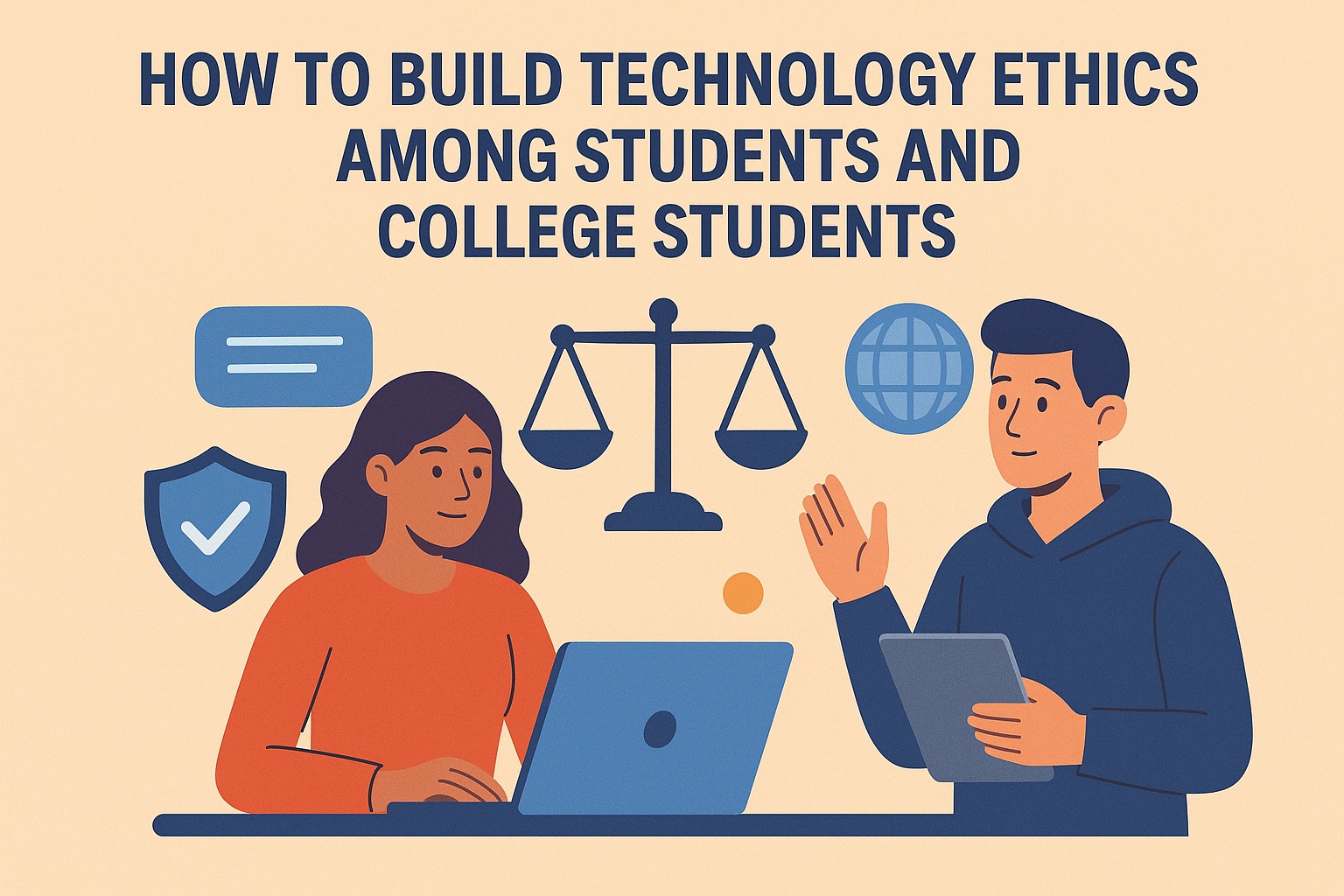
In the digital era filled with convenience, students and university learners are becoming increasingly familiar with technology—from social media, cloud storage, AI, to online learning systems.** However, technical skills alone are not enough. They must also possess technological ethics: the ability to use technology responsibly, safely, wisely, and without harming themselves or others.
So, how can digital ethics be developed among young users? Here is the discussion.
WHAT IS TECHNOLOGICAL ETHICS?
Technological ethics is a set of moral principles and behaviors that govern how individuals use technology.
Some values included in technological ethics are:
* Honesty in using information
* Respecting others' privacy
* Avoiding plagiarism or digital theft
* Preventing the spread of misinformation
* Using technology for positive purposes
By understanding these ethics, students can become responsible and integrity-driven technology users.
WHY IS TECHNOLOGICAL ETHICS IMPORTANT FOR STUDENTS?
There are several strong reasons why technological ethics should be developed early:
1. Increasing Cases of Technology Misuse
Such as plagiarism, cyberbullying, or spreading fake information.
2. Technology as Part of Academic Evaluation
Many schools and campuses now monitor the use of AI and digital tools to maintain originality in students’ work.
3. Building a Strong Digital Character for the Future
The professional world considers digital footprints and online behavior as part of personal qualification.
4. Protecting Personal Data and Privacy
Weak awareness makes students more vulnerable to phishing and data misuse.
HOW TO BUILD TECHNOLOGICAL ETHICS AMONG STUDENTS
1. Teach Digital Literacy from an Early Stage
Students must understand how technology works, including its risks and consequences. Digital literacy is the foundation for developing technological ethics.
2. Establish Clear Technology Usage Rules
Schools and universities can implement:
* Plagiarism regulations
* AI usage policies
* Data privacy guidelines
So students understand limitations and responsibilities.
3. Educate About Digital Security
Technological ethics is closely tied to safety. Students need to learn:
* How to create strong passwords
* The risk of clicking unknown links
* The importance of protecting personal data
* How to verify information
4. Build Awareness That Digital Footprints Are Permanent
Students must realize that what they post today may affect their future careers. This encourages responsible online behavior.
5. Train Critical Thinking Skills
Before sharing content, students should ask:
* Is this information accurate?
* Could this content harm others?
* Does it violate privacy or copyright?
Critical thinking is the core of technological ethics.
6. Encourage Positive Use of Technology
For example:
* Creating educational content
* Using AI for learning, not cheating
* Using social media for good purposes
This helps students understand that technology is a tool, not an excuse for wrongdoing.
THE ROLE OF TEACHERS, PARENTS & UNIVERSITIES IN DIGITAL ETHICS DEVELOPMENT
1. Teachers and Lecturers
* Serve as digital behavior role models
* Give fair evaluation regarding technology usage
* Explain ethical boundaries in academic work
2. Parents
* Supervise gadget usage at home
* Discuss what is allowed and prohibited online
* Instill moral values during digital activity
3. Schools and Universities
* Hold digital literacy workshops
* Implement systems that detect plagiarism or misinformation
* Develop special curriculum on digital ethics
CONCLUSION
Building technological ethics among students is not only the responsibility of schools or universities but a shared responsibility of the entire environment.
With proper digital literacy, awareness of privacy, critical thinking skills, and positive use of technology, the younger generation will grow into ethical, responsible users who are ready to face the challenges of the digital age.
About the Author
Gusti Ayu Tita
Author — STEKOM University
An active author focused on academic issues, educational technology, and human resource development in the campus environment.