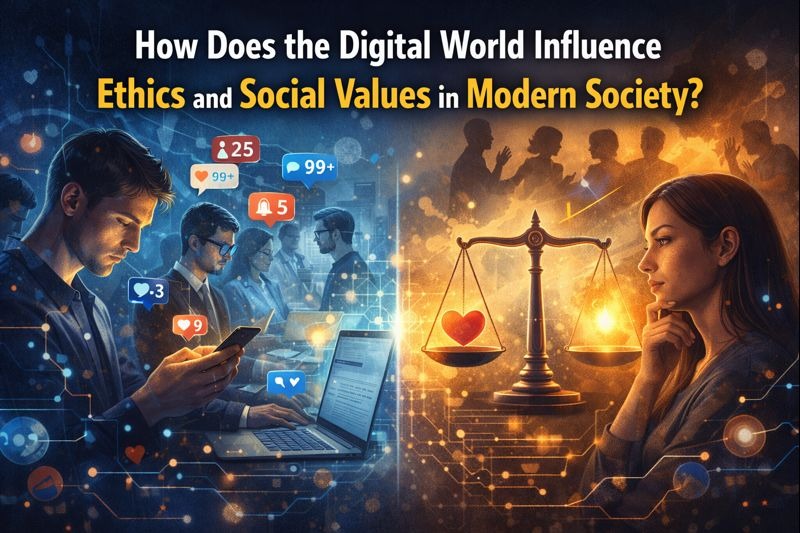
Digital transformation is not merely about technological advancement. More than that, digitalization gradually reshapes how society defines right and wrong, appropriateness, and the ways people express their opinions. Social ethics that were once formed through face-to-face interactions are now heavily influenced by digital spaces that operate rapidly and openly.
This raises an important question: does the digital world strengthen social values, or does it blur them?
Shifting Ethical Standards Toward Online Validation
In digital spaces, public opinion often becomes a new standard for judging individual behavior. Netizen comments, likes, and trending topics can shape perceptions of right and wrong within minutes. As a result, ethics are no longer deeply reflected upon but are judged instantly based on public reactions.
This phenomenon causes many people to fear **online social punishment** more than engaging in genuine moral reflection.
Privacy Is Becoming Increasingly Fragile in the Digital Era
In digital culture, sharing personal life has become normalized. However, this normalization reduces public sensitivity toward privacy.
Photos of children, home locations, and sensitive personal information are often shared without considering potential risks. Every digital action leaves a trace, and these traces can affect personal safety, reputation, and even one’s future.
Social Behavior Is Strongly Influenced by Online Culture
Digital spaces remove geographical boundaries, allowing social trends and communication styles to spread rapidly across countries. Unfortunately, not all trends are positive. Many online cultures promote polarization, hate speech, and the normalization of toxic behavior.
When such cultures are followed without critical awareness, social values can gradually shift without people realizing it.
Digital Literacy as the New Foundation of Modern Ethics
In today’s era, digital literacy goes beyond technical skills. It includes understanding the impact of content, considering long-term consequences, protecting personal data, and critically evaluating information.
Modern society needs these skills to avoid being overwhelmed by an information ecosystem that is not always healthy.
Conclusion
The digital world has a powerful influence on ethics and social values in modern society. It can serve as a space for positive education, but it can also distort values when used without awareness. Therefore, **digital ethics must be understood and practiced** so that social values remain intact while staying relevant in a rapidly changing world.
**Keywords:**
About the Author
Gusti Ayu Tita
Author — STEKOM University
An active author focused on academic issues, educational technology, and human resource development in the campus environment.