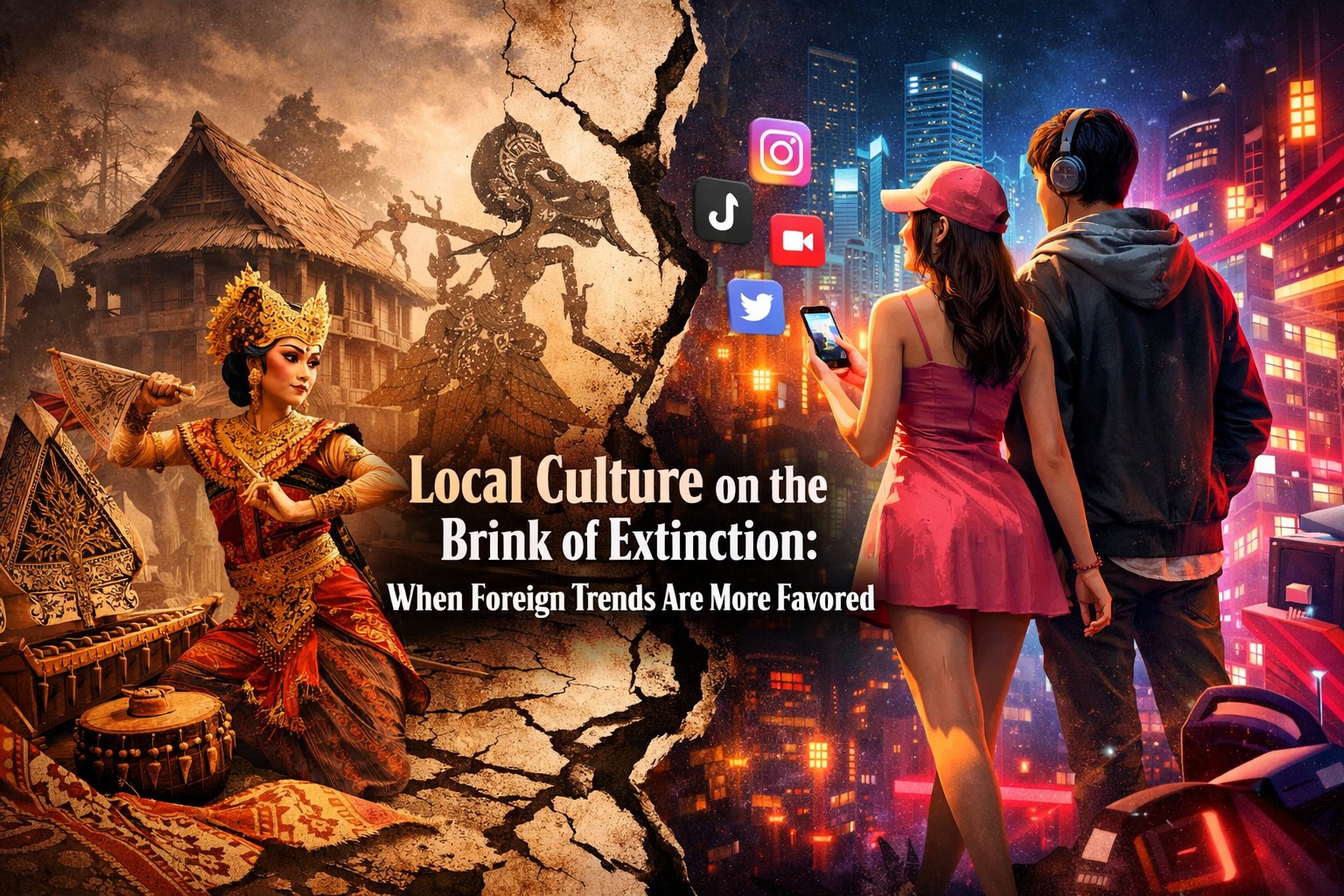
The development of technology and globalization has brought major changes to modern society. Information and culture from around the world can now be easily accessed through social media, films, music, and popular lifestyles. Unfortunately, amid the dominance of foreign trends, local culture is gradually losing its existence. This condition poses a serious challenge to national identity and cultural integrity.
THE IMPACT OF GLOBALIZATION ON LOCAL CULTURE
Globalization opens space for unrestricted cultural exchange between countries. Fashion trends, music, languages, and consumption patterns from abroad are quickly accepted and adapted by society, especially the younger generation. Foreign culture is often considered more modern, stylish, and relevant to contemporary developments. As a result, local culture is frequently viewed as outdated and less attractive to learn or preserve.
The entry of foreign culture does not always have negative impacts. However, without cultural filters and awareness, the dominance of global trends can displace local values passed down through generations.
THE ROLE OF SOCIAL MEDIA IN CULTURAL SHIFT
Social media is one of the main factors accelerating cultural shifts. Viral content from abroad appears more frequently and is consumed more than local cultural content. Digital platform algorithms tend to promote globally popular trends, further marginalizing local culture in digital spaces.
The lack of local cultural representation in modern media leaves young people with limited references to understand and appreciate their own heritage. If this condition continues, local culture risks becoming merely a historical record rather than a living daily practice.
DECLINING INTEREST AMONG THE YOUNGER GENERATION
The younger generation plays a crucial role in the sustainability of local culture. However, their interest in traditions, regional languages, and local arts continues to decline. Many young people are more fluent in following foreign trends than understanding the culture of their own environment.
This is often caused by the lack of cultural education that is packaged in engaging and relevant ways. Without proper approaches, local culture will drift further away from future generations.
EFFORTS TO PRESERVE CULTURE IN THE MODERN ERA
Preserving local culture does not have to conflict with modernity. Culture can be creatively packaged through digital media, contemporary arts, festivals, and engaging educational content. Collaboration between tradition and technology is key to keeping local culture alive and appealing.
The roles of government, educators, communities, and young people are essential in maintaining cultural sustainability. By instilling pride in one’s own culture, society can strengthen local culture as a resilient identity amid globalization.
CONCLUSION
The gradual loss of local culture due to foreign trends is a real issue that demands serious attention. Globalization cannot be avoided, but cultural preservation must remain a priority. Through collective awareness and continuous innovation, local culture can survive and develop without losing its identity.
**Keywords:**
About the Author
Gusti Ayu Tita
Author — STEKOM University
An active author focused on academic issues, educational technology, and human resource development in the campus environment.