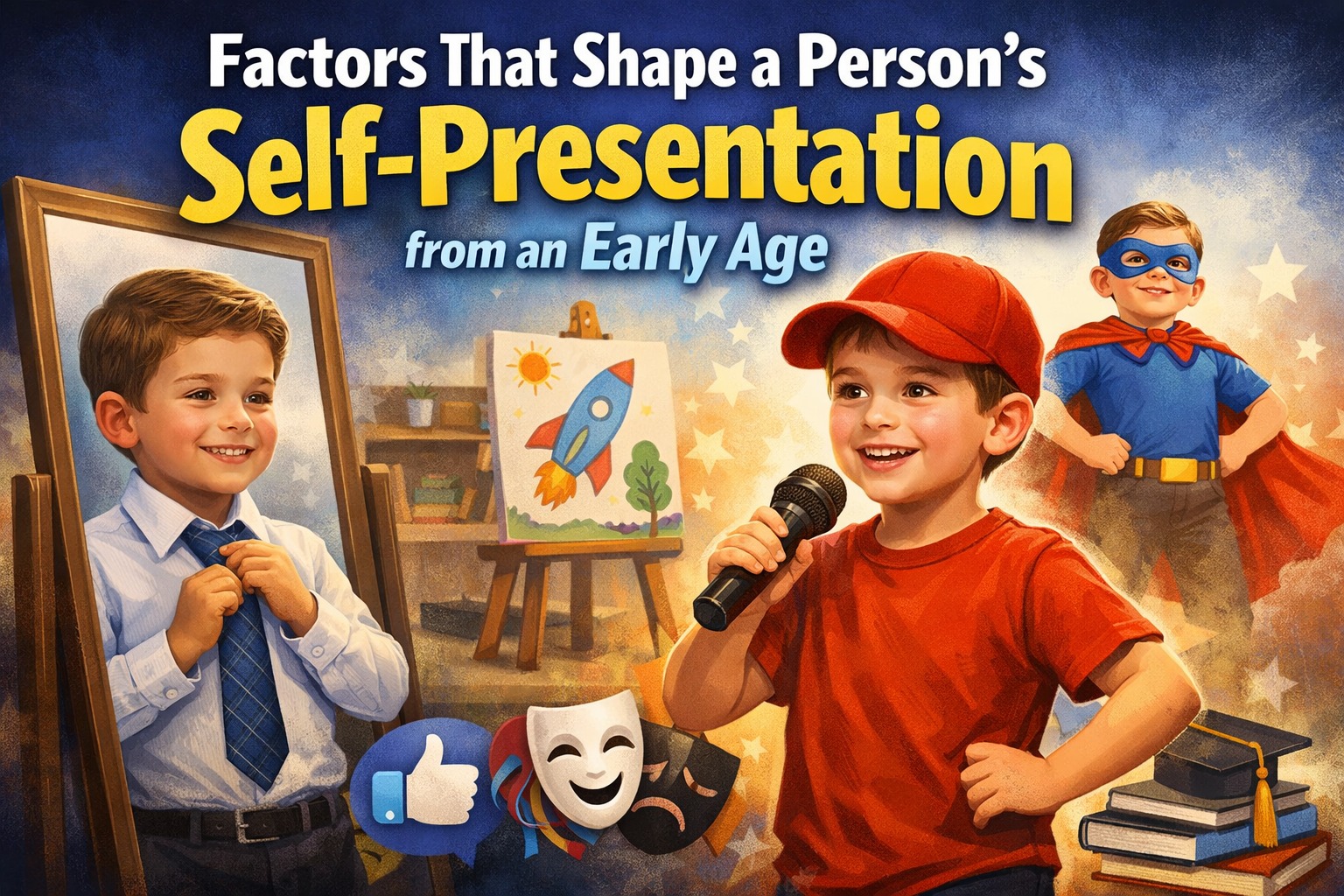
Self-presentation is the way people express themselves through behavior, communication, appearance, and attitude. From childhood, individuals begin to develop habits that influence how they are seen by others. A person’s self-presentation can affect social relationships, academic performance, career opportunities, and personal confidence. Many factors contribute to the development of self-presentation from an early age, including family environment, education, social interactions, and media exposure.
FAMILY ENVIRONMENT
Family plays the most important role in shaping a child’s self-presentation. Parents and close family members become the first examples that children observe every day. Children often imitate the way adults speak, behave, dress, and respond to situations. If parents demonstrate confidence, politeness, and emotional control, children are more likely to develop similar characteristics.
Positive parenting also helps children build self-esteem. When children receive encouragement and appreciation, they feel more comfortable expressing themselves in social environments. On the other hand, constant criticism or lack of emotional support may create insecurity and fear of judgment.
Family values also influence communication styles. Some families encourage open discussions, while others prioritize silence and obedience. These differences can shape how children present themselves in public and interact with others later in life.
EDUCATION AND SCHOOL EXPERIENCE
Schools provide children with opportunities to interact with teachers, classmates, and different social situations. Educational environments help children learn discipline, teamwork, leadership, and communication skills. Through classroom activities, presentations, and group discussions, students gradually develop confidence in expressing their opinions.
Teachers also have a strong influence on self-presentation. Supportive teachers can motivate students to participate actively and improve their public speaking abilities. In contrast, negative experiences such as bullying or harsh criticism may reduce confidence and make students more withdrawn.
Extracurricular activities such as sports, music, debate clubs, and student organizations also contribute to self-presentation development. These activities teach children how to manage emotions, cooperate with others, and present themselves in front of audiences.
SOCIAL INTERACTIONS
Friendships and social circles significantly shape self-presentation during childhood and adolescence. Children naturally adapt their behavior to fit into groups and gain acceptance from peers. Social interactions teach them about communication, empathy, humor, and personal identity.
Peer influence can be both positive and negative. Supportive friendships may encourage confidence and healthy self-expression. However, unhealthy social pressure can lead children to hide their true personalities or imitate behaviors that do not reflect their real values.
As children grow older, social experiences help them understand how different behaviors create different impressions. This awareness gradually shapes their ability to manage self-presentation in various situations.
MEDIA AND DIGITAL INFLUENCE
Modern children are heavily influenced by television, social media, online videos, and digital platforms. Media often presents idealized images of beauty, success, confidence, and lifestyle. As a result, many young people compare themselves to public figures or influencers.
Social media especially affects how individuals present themselves online and offline. Many children and teenagers become more conscious about appearance, communication style, and public image. While digital platforms can inspire creativity and self-confidence, excessive exposure may also create unrealistic expectations and social anxiety.
Parents and educators play an important role in guiding children to use media wisely. Teaching digital literacy helps children develop authentic self-presentation rather than seeking validation from online audiences.
CULTURE AND COMMUNITY VALUES
Culture strongly affects how people are expected to present themselves. Different societies have different standards regarding politeness, confidence, body language, and communication styles. In some cultures, being outspoken is seen as a sign of confidence, while in others humility and quiet behavior are more appreciated.
Community traditions, religious values, and local customs also shape personal identity from an early age. Children learn social expectations through ceremonies, traditions, and everyday interactions within their communities.
Understanding cultural values helps individuals develop self-presentation that aligns with social norms while still maintaining personal authenticity.
PERSONAL EXPERIENCES AND PERSONALITY
Every child has unique experiences and personality traits that influence self-presentation. Some children naturally feel comfortable speaking in front of others, while some are more reserved. Personal experiences such as success, failure, praise, or rejection gradually shape confidence levels and communication styles.
Children who experience supportive environments often become more confident in expressing themselves. Meanwhile, difficult experiences may create fear, insecurity, or hesitation in social situations. However, self-presentation can continue to improve through learning, practice, and personal growth.
Developing self-awareness is an important step in building healthy self-presentation. Individuals who understand their strengths and weaknesses are more likely to communicate authentically and confidently.
CONCLUSION
Self-presentation begins developing from an early age through the influence of family, education, friendships, culture, media, and personal experiences. These factors work together to shape how individuals communicate, behave, and express themselves in different situations. Positive guidance and supportive environments help children develop confidence, authenticity, and strong interpersonal skills. As society continues to evolve in the digital era, teaching healthy self-presentation becomes increasingly important for personal and social success.
About the Author
Gusti Ayu Tita P
Author — STEKOM University
An active author focused on academic issues, educational technology, and human resource development in the campus environment.