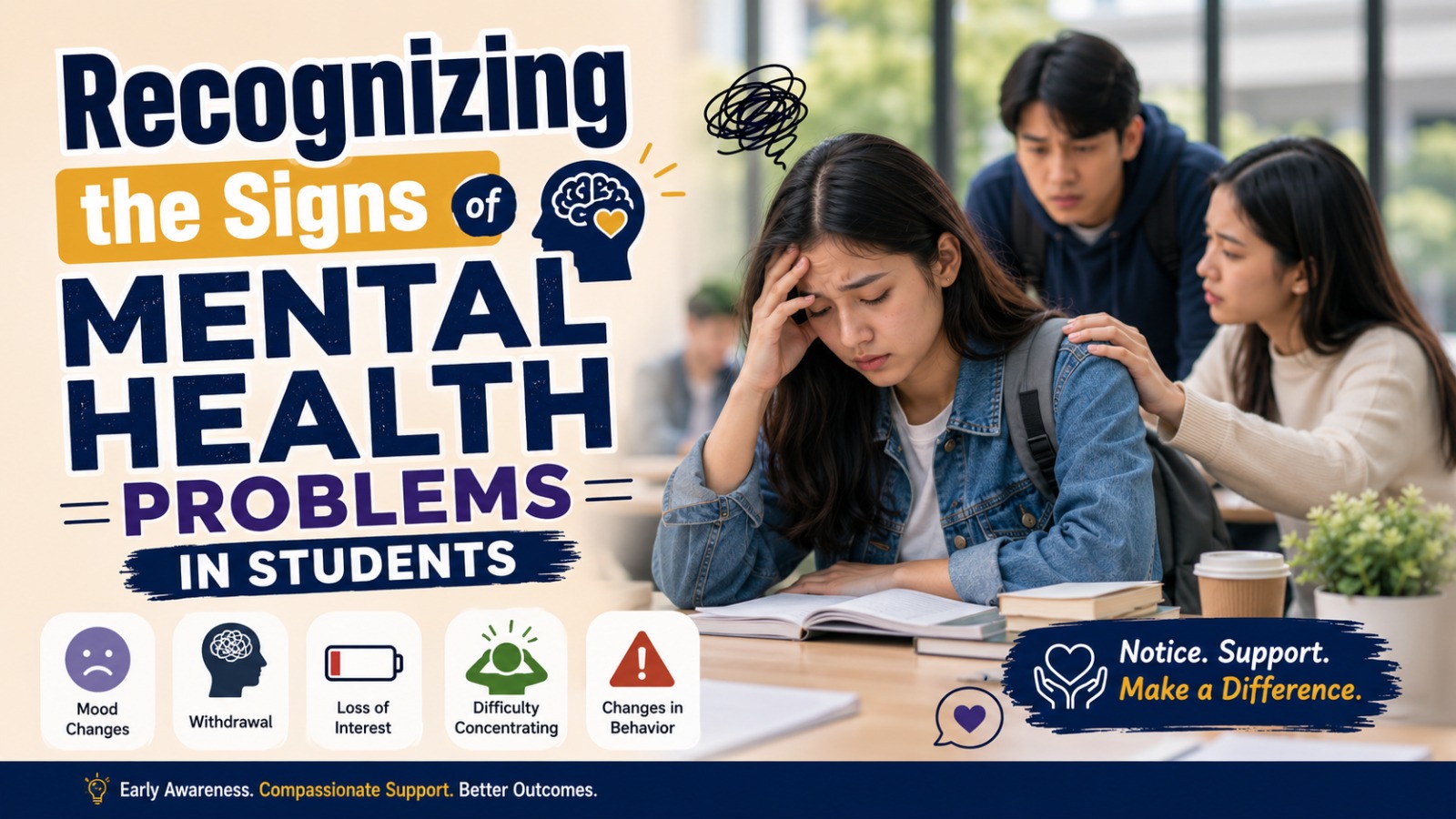
Mental health is an essential part of a student’s overall well-being and academic success. In today’s fast-paced educational environment, students often face pressure from academic demands, social expectations, financial difficulties, and personal challenges. These pressures can sometimes lead to mental health problems that affect their daily lives.
Unfortunately, many mental health issues in students go unnoticed because the signs are often misunderstood or ignored. Recognizing the early signs of mental health problems is important so students can receive support and proper assistance before the condition becomes more serious.
WHY STUDENT MENTAL HEALTH IS IMPORTANT
Mental health influences how students think, feel, and behave. Good mental health helps students stay motivated, focus on learning, and maintain healthy relationships. On the other hand, poor mental health can interfere with academic performance, social interactions, and emotional stability.
Students who struggle with mental health problems may experience difficulties completing assignments, participating in class activities, or managing their emotions. If left untreated, these challenges can negatively impact both education and personal development.
COMMON CAUSES OF MENTAL HEALTH PROBLEMS IN STUDENTS
There are many factors that can contribute to mental health problems among students. Academic pressure is one of the most common causes. Exams, deadlines, and competition can create high levels of stress and anxiety.
Social issues such as bullying, loneliness, or relationship problems may also affect emotional well-being. In addition, financial difficulties, family conflicts, and lack of sleep can increase the risk of mental health disorders.
The transition to college or university life can also be overwhelming for many students. Adjusting to a new environment and increased responsibilities sometimes creates emotional stress that becomes difficult to handle alone.
EMOTIONAL SIGNS OF MENTAL HEALTH PROBLEMS
One of the earliest signs of mental health issues is emotional change. Students may appear unusually sad, anxious, hopeless, or emotionally unstable. Frequent mood swings and excessive irritability can also indicate emotional distress.
Some students lose interest in activities they once enjoyed. Others may feel overwhelmed by simple tasks or experience constant worry about academic or personal matters. Persistent feelings of fear, guilt, or worthlessness should not be ignored.
BEHAVIORAL CHANGES TO WATCH FOR
Behavioral changes are often clear indicators that a student may be struggling mentally. Students experiencing mental health problems may isolate themselves from friends, avoid social activities, or stop participating in class discussions.
Changes in eating habits, sleeping patterns, and personal hygiene can also be warning signs. Some students become easily angry or frustrated, while others show a sudden decline in academic performance.
Skipping classes frequently, losing motivation, or having trouble concentrating may indicate that emotional stress is affecting their ability to function normally.
PHYSICAL SYMPTOMS RELATED TO MENTAL HEALTH
Mental health problems do not only affect emotions and behavior. They can also create physical symptoms. Students may complain about headaches, stomach pain, fatigue, or low energy without clear medical reasons.
Stress and anxiety often disturb sleep quality, leading to insomnia or excessive sleeping. Poor mental health can weaken the immune system and make students feel physically exhausted most of the time.
Recognizing these physical symptoms is important because many students may not realize that their emotional condition is connected to their physical health.
THE IMPORTANCE OF EARLY SUPPORT
Early recognition and support can prevent mental health problems from becoming more severe. Students who receive emotional support from friends, family, lecturers, or counselors are more likely to recover and manage stress effectively.
Open communication plays a major role in helping students feel safe discussing their feelings. Educational institutions should also provide mental health resources such as counseling services, peer support programs, and awareness campaigns.
Creating a supportive environment encourages students to seek help without fear of judgment or stigma.
HOW STUDENTS CAN MAINTAIN GOOD MENTAL HEALTH
Students can take several steps to protect their mental well-being. Maintaining a healthy lifestyle through regular exercise, balanced nutrition, and enough sleep can improve emotional stability.
Time management is also important for reducing academic stress. Students should learn to balance study, rest, and social activities. Building positive relationships and staying connected with supportive people can strengthen emotional resilience.
If emotional difficulties become overwhelming, seeking professional help is a responsible and important decision.
CONCLUSION
Recognizing the signs of mental health problems in students is essential for creating a healthier and more supportive educational environment. Emotional, behavioral, and physical changes should never be ignored because they may indicate deeper mental health struggles.
By increasing awareness and encouraging open conversations, students can receive the support they need to maintain emotional well-being and succeed academically. Mental health care is not only important for personal happiness but also for long-term growth and success.
About the Author
Gusti Ayu Tita P
Author — STEKOM University
An active author focused on academic issues, educational technology, and human resource development in the campus environment.