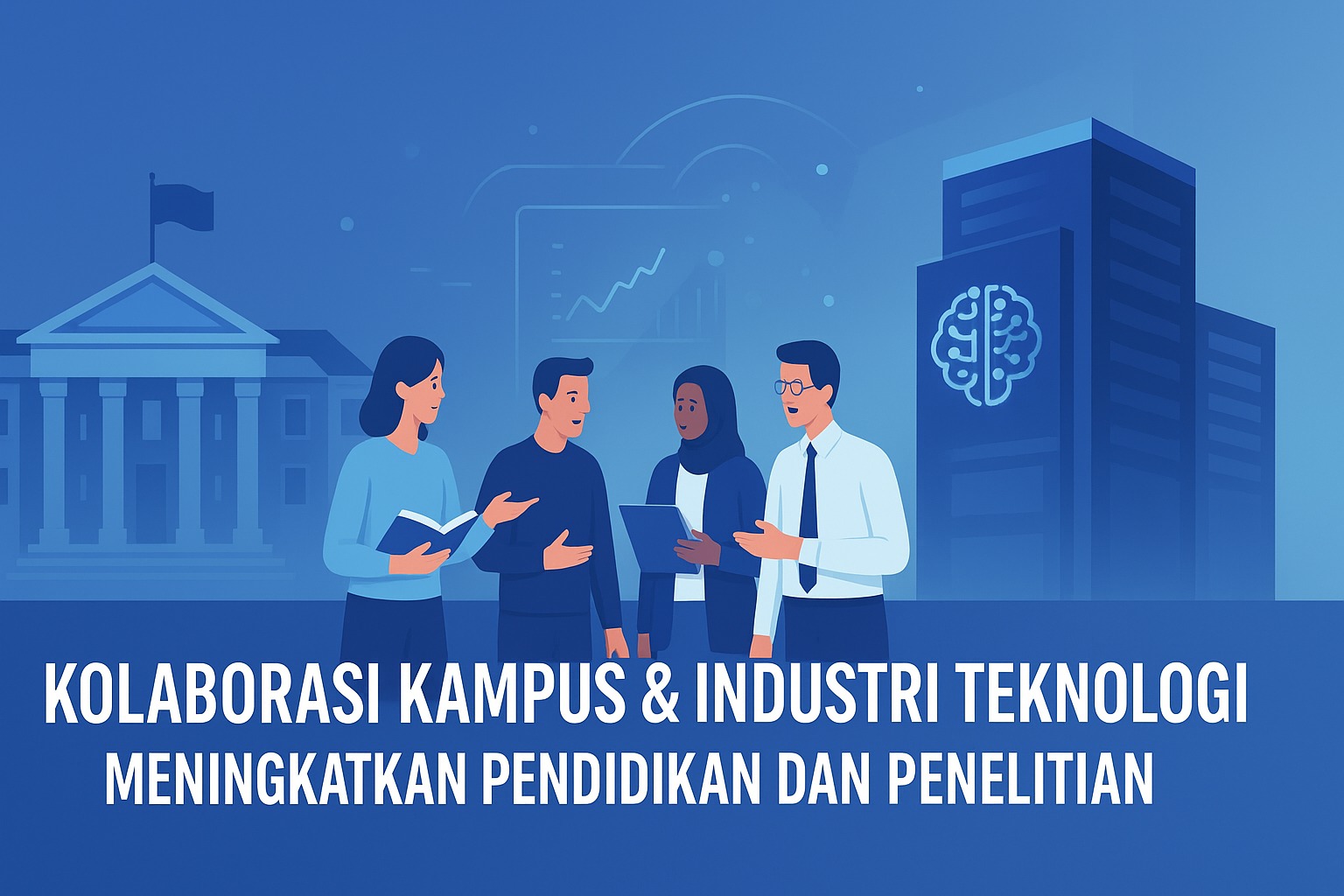
In facing the rapidly evolving digital era, it is crucial for the world of education to adapt quickly so it can produce graduates who are ready to meet industry challenges. One of the most effective ways to achieve this is by establishing stronger collaboration between universities and the technology industry. This collaboration not only benefits students but also enhances the overall quality of education and research produced by higher education institutions. So, to what extent can cooperation between universities and the technology industry improve the quality of education and research in Indonesia?
1. ALIGNING CURRICULUMS WITH INDUSTRY NEEDS
One of the biggest challenges in higher education is ensuring that the curriculum taught on campus remains relevant to technological developments and industry needs. This is where collaboration between universities and the tech industry plays an important role. Through such partnerships, universities can gain direct input from tech companies about the skills and knowledge required in the job market.
For example, technology companies like Google, Microsoft, or local startups often have specialized expertise in rapidly evolving fields such as artificial intelligence (AI), big data, and cybersecurity. By establishing collaborations, universities can adjust their curricula and provide education that is more aligned with current industry trends. This not only benefits students but also strengthens the competitiveness of universities in producing job-ready graduates.
2. DEVELOPING INTERNSHIP PROGRAMS AND JOINT RESEARCH
Collaboration between universities and the tech industry also creates opportunities for students to engage directly in cutting-edge technology projects through internships or practical work programs. Internships allow students to apply theories learned on campus to real-world industry projects. Additionally, these experiences help students refine professional skills, expand networks, and increase their chances of being hired after graduation.
Furthermore, such collaboration opens doors to joint research involving lecturers and students. Many tech companies are interested in partnering with universities for research and development—whether in creating new products, implementing modern technologies, or solving industry challenges. Research conducted through these partnerships not only enriches academic knowledge but also produces innovative solutions useful for industry and society.
3. IMPROVING LECTURER QUALITY THROUGH TRAINING AND CERTIFICATION
In an increasingly digital world, it is essential for lecturers to continuously update their knowledge and skills to remain relevant. Collaboration with the tech industry provides opportunities for lecturers to receive training or certification from leading technology companies. This helps them teach more practical and up-to-date material to students.
Many tech companies offer training or certification courses that lecturers can take. Through these programs, lecturers not only learn about the latest technologies but also gain insights into how these technologies are applied in real-world industry settings. This positively impacts the quality of teaching, enabling lecturers to deliver more applicable and industry-aligned content.
4. DRIVING INNOVATION AND TECHNOLOGICAL DEVELOPMENT
Collaboration between universities and the tech industry can also accelerate innovation and technological development. Many industries require research and development to improve their products or services, and universities often have the resources to support such research. Through collaboration, universities can become innovation hubs that produce new technologies ready to be implemented in industry.
For example, joint research in fields such as artificial intelligence (AI), blockchain, and robotics can lead to impactful innovations. The results not only improve existing technology products but also open new market opportunities, create jobs, and strengthen Indonesia’s global competitiveness in the technology sector.
5. INCREASING ACCESS TO RESOURCES AND INFRASTRUCTURE
The tech industry possesses advanced resources and infrastructure that are not always available on campus. Collaboration gives universities access to modern technologies and tools commonly used in the industry. For instance, universities may benefit from laboratories or software provided by tech companies, such as data analytics tools or cloud computing platforms, to support learning and research.
With access to more advanced technology, students and lecturers can conduct deeper and more relevant research or experiments. This enhances the quality of university-produced research and innovation, while providing students with hands-on learning experiences that reflect real industry conditions.
6. OPENING GLOBAL NETWORKING AND COLLABORATION OPPORTUNITIES
Collaboration with the tech industry is not limited to domestic partnerships; it also opens doors to global cooperation with international technology companies. Many major tech companies have global networks that universities can tap into to expand research and educational collaborations. Through such partnerships, universities gain access to global research opportunities, knowledge exchange with international experts, and exposure for students to global professional networks.
This enriches academic experiences and helps students develop international career prospects. Additionally, universities with global industry partnerships gain higher recognition, contributing to improved institutional reputation and academic quality.
CONCLUSION
Collaboration between universities and the tech industry holds great potential for enhancing the quality of education and research in Indonesia. By aligning curricula with industry needs, strengthening internship and joint research programs, and improving lecturer competencies, such partnerships produce graduates who are better prepared for future workforce demands. Moreover, this collaboration accelerates technological innovation, provides access to modern infrastructure, and opens global networking opportunities.
Therefore, it is essential for universities, industry, and government to continue strengthening these partnerships to enhance Indonesia’s educational and research quality and to prepare high-quality human resources for the future.
About the Author
Gusti Ayu Tita
Author — STEKOM University
An active author focused on academic issues, educational technology, and human resource development in the campus environment.