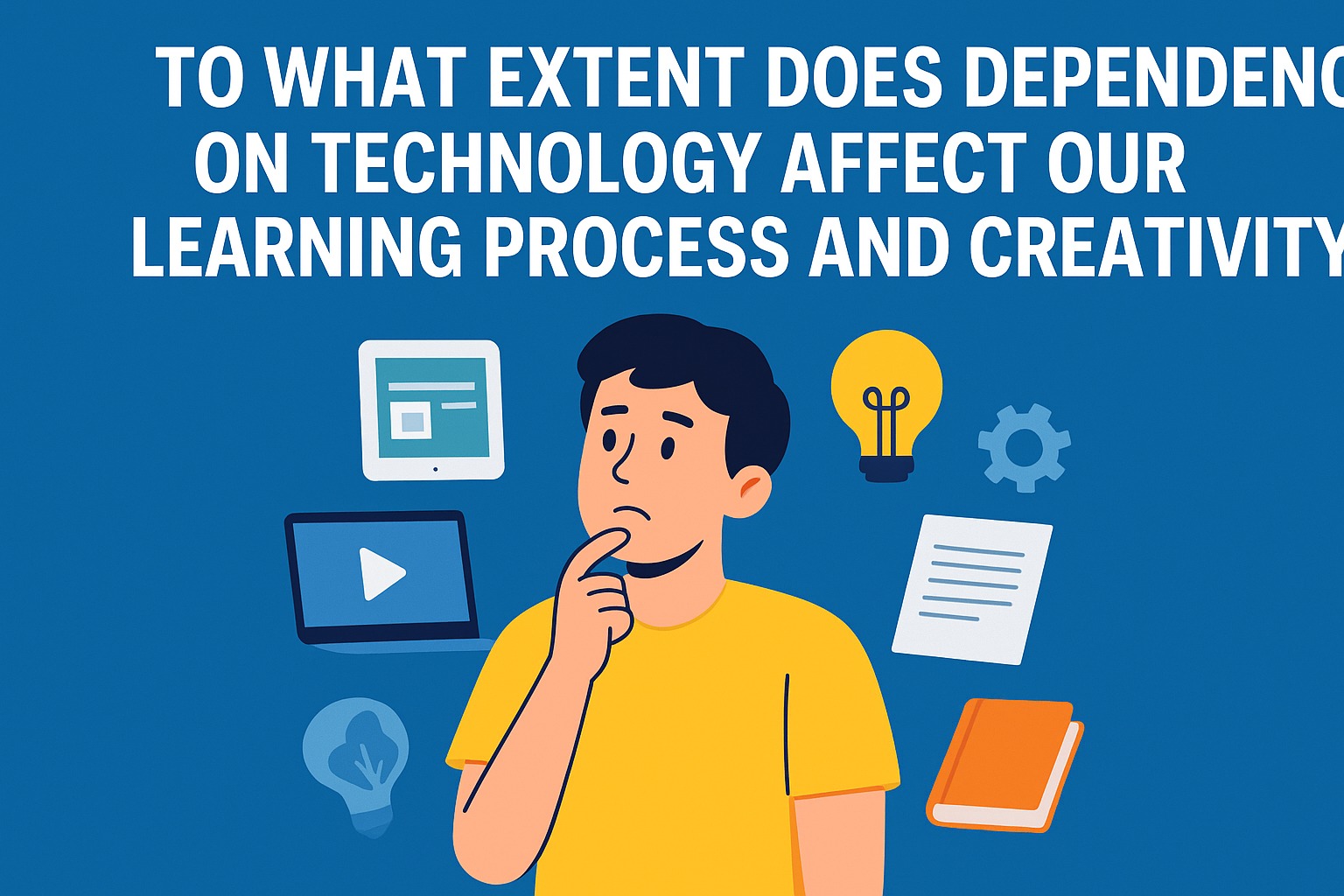
Technology has become an inseparable part of our lives, especially in the fields of education and creativity. From learning apps and online platforms to digital creative tools, technology offers countless conveniences. However, behind all these benefits lies a big question: to what extent does our dependence on technology affect our learning process and creativity? This article discusses the impact of technological dependency on these two important aspects—learning and creativity—and how we can find the right balance.
TECHNOLOGY AND THE LEARNING PROCESS: DOES IT ACCELERATE OR LIMIT US?
Technology has brought a major revolution to the education world. Online learning platforms such as Coursera, edX, and Udemy provide access for anyone to learn anytime and anywhere. This undoubtedly increases opportunities to gain broader knowledge. Applications like Google Scholar and digital journal databases allow students and researchers to access scholarly literature easily without needing to visit physical libraries.
However, this convenience can become risky when we become too dependent on technology for instant answers. Often, technology use makes us less inclined to think critically or explore topics more deeply. For example, if we always rely on Google to search for information, we may not spend time truly understanding or processing that information because the answers appear so quickly.
In addition, technological dependence can reduce our ability to solve problems independently. In the past, to find answers to questions, we had to read books or discuss them with others. Now, we only need to type a keyword and within seconds the answer appears on the screen. This dependence can weaken our ability to think logically and construct arguments systematically.
CREATIVITY IN THE DIGITAL ERA: A BOOST OR A BARRIER?
On the other hand, technology also plays a significant role in the world of creativity. Digital tools such as design software, video editing programs, and programming platforms have opened new doors for creators. Artists, designers, musicians, and writers can now work more efficiently and freely thanks to technological advancements.
However, while technology expands creative possibilities, excessive dependence on certain devices and applications can reduce our originality. For instance, many musicians rely heavily on music software, focusing more on advanced features rather than developing fundamental techniques or creating something truly new. Likewise, graphic designers often use templates or automated tools instead of crafting designs from scratch using pure skill and imagination.
The same applies to writing. Many writers now depend on tools like Grammarly or automated writing assistants to check grammar, rather than honing their writing skills and strengthening their understanding of language structure. While these tools offer convenience, overuse can diminish one’s ability to think creatively and enrich their writing with personal nuance.
FACING TECHNOLOGICAL DEPENDENCE: THE KEY TO PRESERVING CREATIVITY AND LEARNING
To prevent harmful technological overdependence, we must recognize the importance of balance. Technology should serve as a tool, not a replacement for our foundational abilities. Here are several ways to maintain balance between technology, learning, and creativity:
1. Use Technology to Enhance Quality, Not Replace the Process
Technology can speed things up, but deep reflection remains essential. In learning, don’t just seek answers—understand the reasoning behind them. In creative work, use technology to elevate your ideas without losing the personal touch that makes them unique.
2. Set Technology-Free Time
Dedicate certain moments each day to activities that don’t rely on technology, such as reading physical books, handwriting notes, or drawing with traditional tools. These activities help train skills that are often neglected due to digital dependence.
3. Focus on Developing Fundamental Skills
Though advanced digital tools are helpful, maintaining strong foundational skills is crucial for critical thinking and creativity. Mastering the basics in science, art, or writing gives us a solid foundation—even when technology helps achieve more complex results.
4. Explore Beyond the Limits
Technology allows rapid exploration, but don’t let it restrict your imagination. Try thinking freely and creatively without feeling bound by tools or apps. Critical thinking and originality remain the core of meaningful learning and creative work.
CONCLUSION
Dependence on technology in learning and creativity can bring great benefits, but if not managed properly, it can reduce our ability to think independently and creatively. Technology should support—not replace—the essential skills that shape deep understanding and authentic creativity. With the right balance, we can harness technology to accelerate learning and enhance creativity without losing the quality of our thinking process or creative expression
About the Author
Gusti Ayu Tita
Author — STEKOM University
An active author focused on academic issues, educational technology, and human resource development in the campus environment.