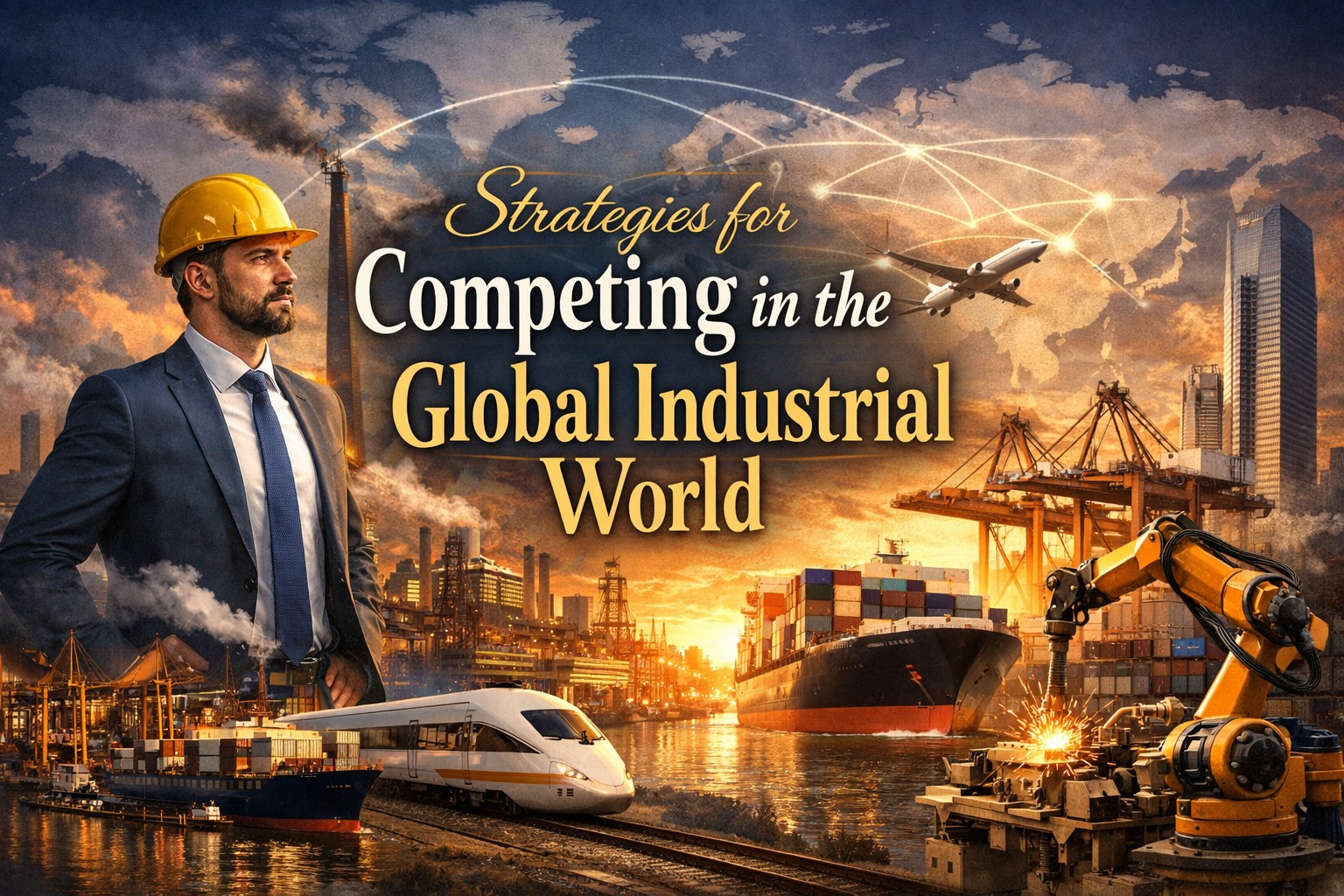
The global industrial sector is growing rapidly alongside technological advances and international market competition. Companies and workers are now required to adapt quickly in order to survive and achieve success in the modern industrial era. Competition is no longer limited to local markets because businesses from different countries can easily enter global trade networks. This condition encourages industries to improve quality, efficiency, and innovation continuously.
Understanding the right strategies for competing in the global industrial world is very important for companies, entrepreneurs, and workers. Strong competitiveness can help industries expand market reach, increase profits, and maintain business stability in the long term. In addition, industries that are able to adapt to change usually have a greater opportunity to dominate international markets. Therefore, every industrial player needs to understand the key factors that support global competitiveness.
UNDERSTANDING THE GLOBAL INDUSTRIAL ENVIRONMENT
The global industrial world is heavily influenced by technological developments, international trade, and changing consumer behavior. Companies are now competing not only in product quality but also in innovation speed and operational efficiency. Businesses that fail to adapt to these changes often struggle to survive in highly competitive markets. Therefore, understanding global market trends is an important first step for industrial success.
Industrial competition today also requires companies to pay attention to sustainability and environmental responsibility. Many international consumers prefer products from companies that apply environmentally friendly production systems. In addition, governments in many countries are implementing stricter regulations regarding industrial waste and energy use. As a result, industries that focus on sustainable development usually gain a stronger reputation and wider market opportunities.
IMPROVING TECHNOLOGICAL INNOVATION
Technological innovation is one of the most important strategies for competing in the global industrial world. Modern industries use advanced technologies such as automation, artificial intelligence, and digital systems to improve productivity. These technologies help companies reduce production costs and increase operational efficiency. Businesses that invest in innovation are generally more competitive than companies that rely on traditional methods.
In addition, innovation can help industries create unique products that attract international consumers. Companies that continuously develop new ideas usually gain stronger customer loyalty and market recognition. Technology also allows businesses to analyze market trends more accurately and respond to customer needs faster. Because of this, innovation has become a major factor in achieving industrial growth and long-term success.
DEVELOPING SKILLED HUMAN RESOURCES
Human resources are a valuable asset in the industrial sector. Companies need workers who have strong technical skills, creativity, and adaptability to technological changes. Skilled employees can improve production quality and support business development more effectively. Therefore, industries should provide regular training and professional development programs for their workforce.
In addition to technical abilities, communication and teamwork skills are also important in global industries. Many industrial companies work with international partners, suppliers, and clients from different countries. Workers who can collaborate effectively in multicultural environments usually contribute more to business growth. By improving employee quality, industries can strengthen competitiveness and maintain long-term productivity.
BUILDING STRONG GLOBAL NETWORKS
A strong international network can provide significant advantages for industrial businesses. Companies that cooperate with global suppliers and distributors often gain easier access to international markets. Strategic partnerships can also help businesses reduce operational costs and improve product distribution efficiency. As a result, networking becomes an essential strategy for industrial expansion.
Global networking also opens opportunities for knowledge sharing and technological collaboration. Businesses can learn new production techniques, management systems, and market strategies from international partners. This exchange of knowledge helps industries remain competitive and innovative. In today’s connected world, strong global relationships are becoming increasingly important for industrial success.
FOCUSING ON PRODUCT QUALITY AND CUSTOMER TRUST
Product quality is one of the main factors that determine success in the industrial market. Consumers around the world prefer products that are durable, reliable, and safe to use. Companies that maintain high-quality standards usually gain stronger customer trust and loyalty. Therefore, industries should always monitor and improve product quality consistently.
Customer trust can also be strengthened through excellent service and transparent business practices. Fast responses to customer complaints and clear communication can improve brand reputation significantly. In highly competitive global markets, businesses with positive reputations often attract more consumers and investors. Because of this, maintaining customer satisfaction is an important strategy for industrial growth.
ADAPTING TO DIGITAL TRANSFORMATION
Digital transformation has changed the way industries operate and compete globally. Many companies now use digital platforms for marketing, communication, and supply chain management. Digital systems help businesses operate more efficiently and reach wider international audiences. Industries that successfully adopt digital technology usually gain better market competitiveness.
The use of data analysis and online platforms also allows companies to understand consumer behavior more accurately. Businesses can create more effective marketing strategies and improve customer experiences through digital innovation. Furthermore, digital transformation supports faster decision-making and operational flexibility. This is why adapting to digital changes is essential for modern industrial success.
CONCLUSION
Competing in the global industrial world requires strong strategies, continuous innovation, and high adaptability. Industries that focus on technology, skilled human resources, product quality, and digital transformation usually achieve stronger competitiveness in international markets. In addition, building global partnerships and maintaining customer trust can help businesses grow more sustainably. Companies that are prepared to face global challenges will have greater opportunities to achieve long-term success.
The industrial world will continue to evolve as technology and market demands change over time. Businesses that are willing to learn, innovate, and adapt quickly will remain competitive in the future. By implementing the right strategies, industries can improve efficiency, expand market reach, and strengthen their position globally. Therefore, continuous improvement is the key to surviving and succeeding in the modern industrial era.
About the Author
Gusti Ayu Tita
Author — STEKOM University
An active author focused on academic issues, educational technology, and human resource development in the campus environment.