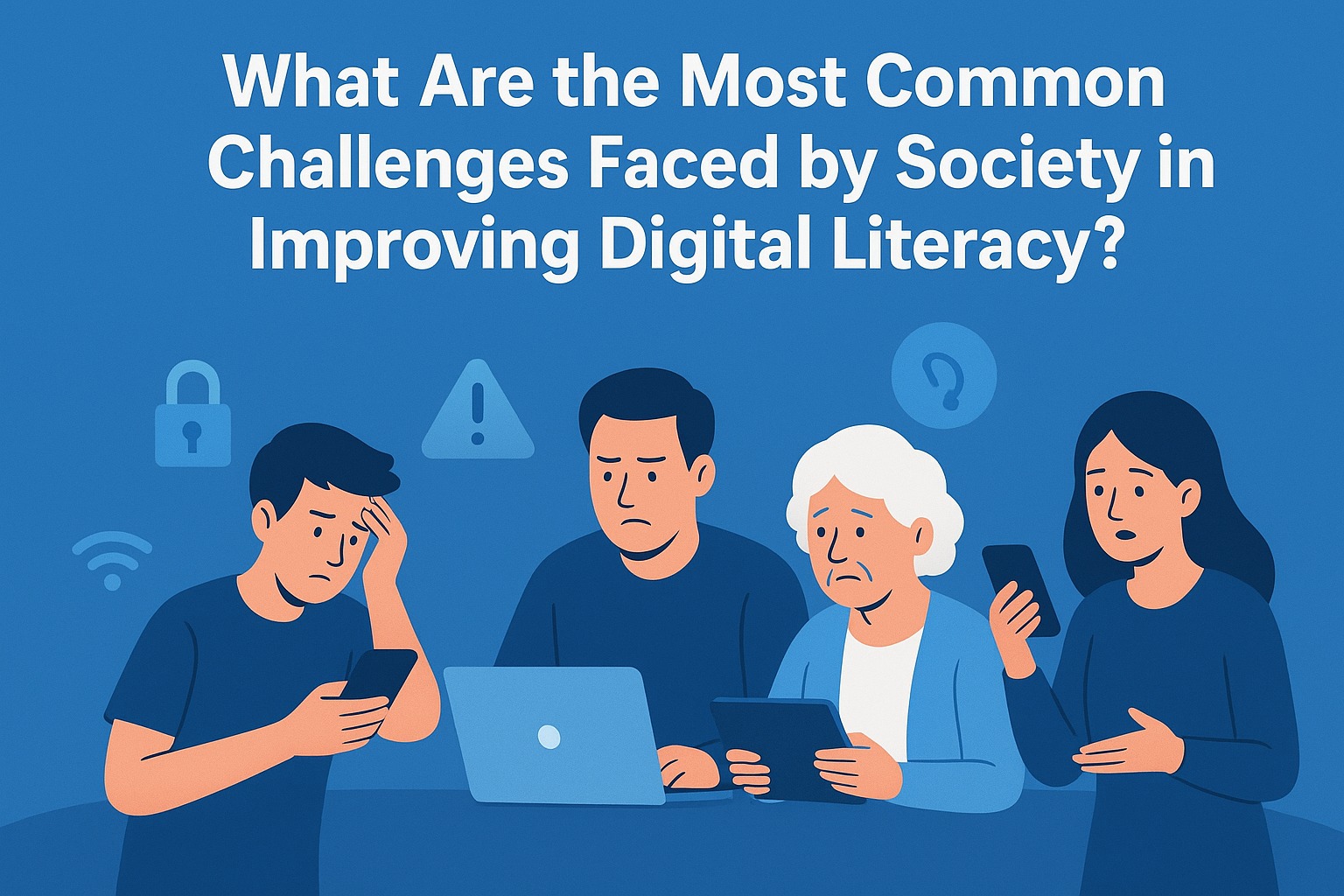
The development of digital technology brings many opportunities, but it also presents new challenges for society. One of the biggest challenges is how to improve digital literacy equitably. Despite the increasing access to the internet, there are still many barriers preventing society from fully utilizing technology effectively, safely, and productively.
NEQUALITY IN TECHNOLOGY ACCESS
One of the most noticeable barriers is the gap in access. Not all regions have adequate internet infrastructure. In some areas, connections are still slow, expensive, or even unavailable. This condition makes digital learning difficult, especially for students and workers who heavily rely on technology.
LOW BASIC DIGITAL SKILLS
Many people still lack even basic digital skills, such as using devices correctly, managing applications, or understanding security features. This limitation makes it hard for them to keep up with technological advancements or fully leverage digital opportunities.
LACK OF DIGITAL SECURITY AWARENESS
Cybercrime threats continue to rise, from online fraud to data theft. Low awareness of digital security makes people vulnerable to becoming victims. Many users still use weak passwords, share personal data easily, and fail to recognize online scams.
INFORMATION OVERLOAD AND HOAXES
The rapid flow of information makes it difficult for society to distinguish between valid information and misinformation. The inability to evaluate information sources becomes a major barrier in digital literacy. This leads to the spread of hoaxes, opinion polarization, and ill-informed decisions.
LIMITED EDUCATION AND TRAINING OPPORTUNITIES
Not all educational institutions have included digital literacy as an essential part of their curriculum. Meanwhile, opportunities for training in digital skills for the general public are often limited, both in terms of cost and access. As a result, many people do not have the opportunity to improve their digital skills.
LACK OF DIGITAL ETHICS AWARENESS
Digital ethics is often overlooked due to a lack of education and awareness. Many users still do not understand the importance of maintaining a digital footprint, respecting others' privacy, and communicating healthily on social media. Without this awareness, digital literacy cannot develop fully.
SOLUTIONS TO IMPROVE DIGITAL LITERACY
Improving digital literacy requires collaboration between the government, educational institutions, communities, and society at large. Continuous education, accessible training, and digital literacy campaigns can provide a solution. Encouraging information verification and implementing digital ethics are also crucial steps in addressing these challenges.
About the Author
Gusti Ayu Tita
Author — STEKOM University
An active author focused on academic issues, educational technology, and human resource development in the campus environment.