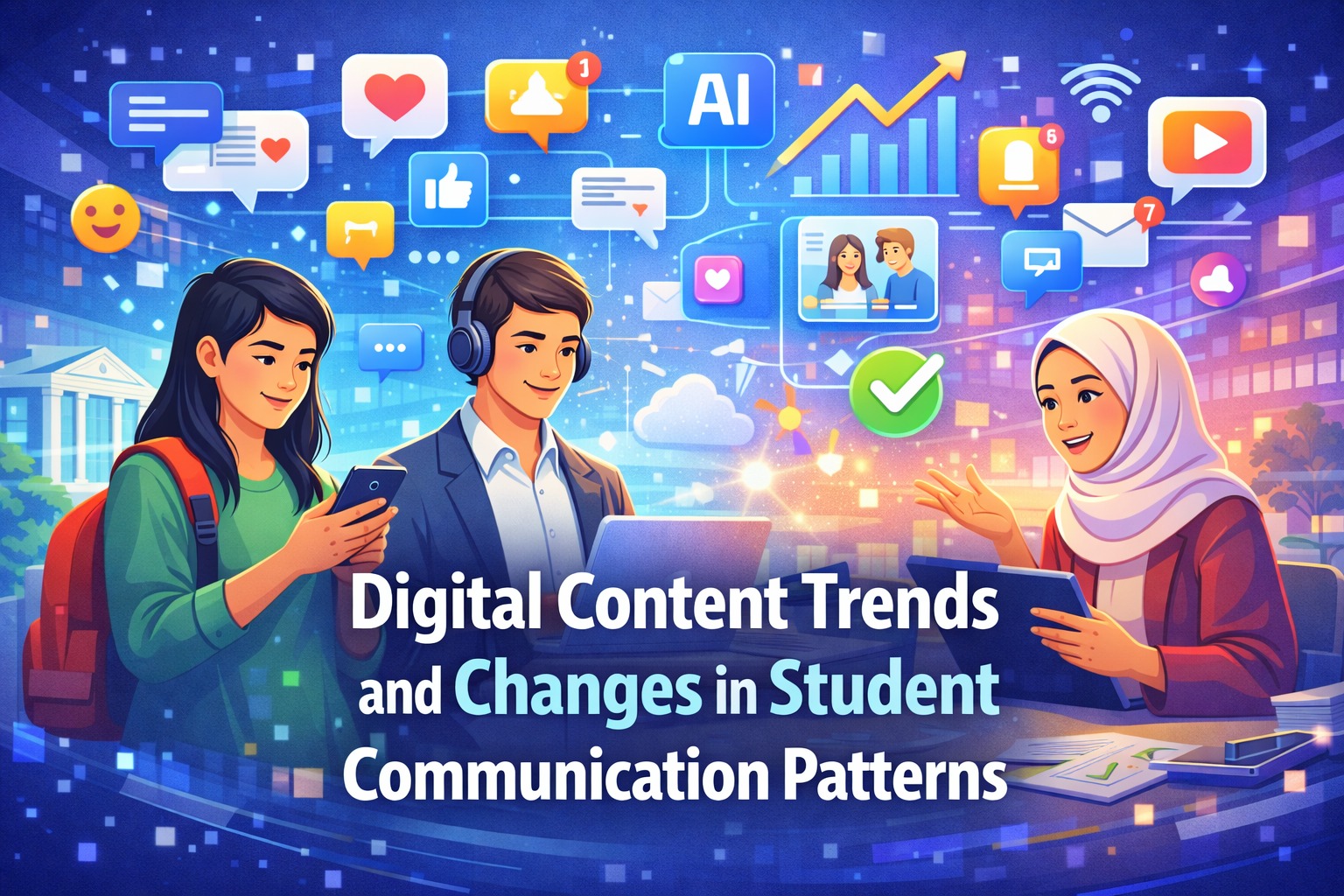
The rapid development of digital technology has significantly transformed communication methods, especially among students. Evolving digital content trends influence how students communicate both academically and socially. Understanding these changes helps students adapt positively and productively.
1. DEVELOPMENT OF DIGITAL CONTENT TRENDS AMONG STUDENTS
Digital content trends are becoming increasingly diverse and accessible. Social media has become the primary platform for information sharing and interaction.
- Increased use of social media
- Dominance of visual content and short videos
- Faster and wider information distribution
2. CHANGES IN STUDENT COMMUNICATION METHODS
Digital content trends shift communication from direct interaction to platform-based communication.
- Messaging apps and social media communication
- Use of emojis and visuals as expressions
- Shorter and faster interactions
3. THE ROLE OF DIGITAL CONTENT IN ACADEMIC COMMUNICATION
In academic environments, digital content plays an essential role in communication between students and lecturers.
- Academic discussions via online platforms
- Digital groups for coordination
- Multimedia-based learning materials
4. SOCIAL IMPACT OF CHANGING COMMUNICATION PATTERNS
Digital communication trends also impact students’ social interactions.
- Reduced face-to-face interaction
- Increased virtual communication
- Changes in relationship-building methods
5. POSITIVE AND NEGATIVE IMPACTS ON STUDENTS
Digital content trends bring mixed effects on communication.
- Easier access to communication
- Increased risk of miscommunication
- Dependence on digital media
6. TIPS FOR STUDENTS IN RESPONDING TO DIGITAL COMMUNICATION CHANGES
To communicate wisely, students can:
- Use digital media proportionally
- Maintain online communication ethics
- Prioritize direct communication when necessary
CONCLUSION: STUDENTS MUST WISELY ADAPT TO DIGITAL CONTENT TRENDS
Digital content trends have significantly changed student communication patterns. With a balanced and thoughtful approach, students can use digital content as an effective, productive communication tool that supports academic and social development.
About the Author
Gusti Ayu Tita
Author — STEKOM University
An active author focused on academic issues, educational technology, and human resource development in the campus environment.