
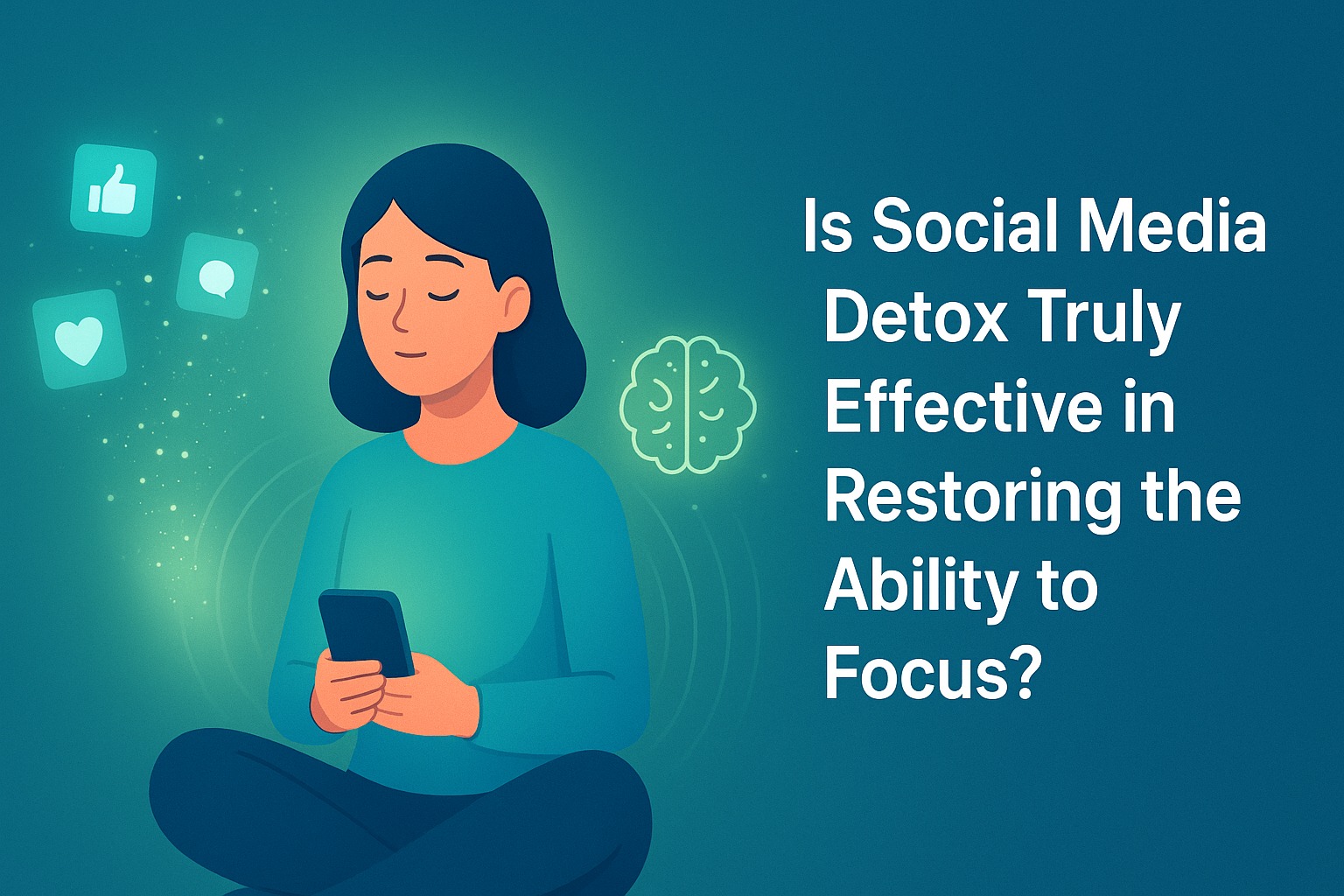
Social media is undeniably fun, but spending too much time staring at screens can scatter your focus. Recently, the term *social media detox* has become popular as a solution to “restore” lost concentration. But is this method truly effective? This article explores the facts, benefits, and strategies of social media detox in detail.
WHAT IS A SOCIAL MEDIA DETOX?
A social media detox is a temporary break from digital platforms, either by not opening the apps at all or by limiting their use. The goal is to give the brain time to rest from rapid stimulation and constant notifications. A detox can last for a few hours, days, or even weeks.
PARTS OF THE BRAIN AFFECTED BY SOCIAL MEDIA
Social media affects dopamine, a chemical in the brain that makes us feel happy when we receive notifications, likes, or comments. Continuous exposure makes the brain dependent on instant rewards. As a result:
- It becomes difficult to focus on long tasks.
- The mind gets bored quickly when doing serious work.
- Concentration ability gradually decreases.
A social media detox is designed to break this cycle and give the brain a break from instant stimulation.
BENEFITS OF A SOCIAL MEDIA DETOX FOR FOCUS
Taking a temporary break from social media can provide several benefits:
- Reduces distractions, making it easier for the brain to enter focus mode.
- Increases productivity, as time usually spent scrolling can be used for other activities.
- Improves self-awareness by helping you understand how social media affects your emotions and habits.
- Enhances sleep quality by avoiding screen exposure before bedtime.
However, the effects are temporary if old habits return without proper strategy.
CHALLENGES OF A SOCIAL MEDIA DETOX
Not everyone finds a detox easy. Some common challenges include:
- Anxiety or FOMO (Fear of Missing Out) from not staying updated.
- Habitual returns to apps because the brain is used to rapid stimulation.
- Difficulty staying consistent, especially if work or communication requires social media.
Therefore, a detox must be done with a clear plan to be effective.
STRATEGIES TO MAKE SOCIAL MEDIA DETOX MORE EFFECTIVE
To truly regain focus, the following strategies can be helpful:
- Reduce social media use gradually instead of quitting abruptly.
- Set specific times to open apps, such as 30 minutes in the morning and evening.
- Replace scrolling time with offline activities like exercising, reading, or journaling.
- Turn off unnecessary notifications.
- Do regular evaluations and note changes in focus and productivity.
These steps help social media detox become more effective in restoring concentration.
CONCLUSION
A social media detox can indeed improve focus and productivity, but its effectiveness depends on consistency and strategy. Without healthy digital habits, your ability to focus may become disrupted
again after the detox ends. Therefore, a social media detox is not just about “disappearing from apps,” but part of a wiser and more mindful digital lifestyle.
Tentang Penulis
Gusti Ayu Tita
Penulis — Universitas STEKOM
Penulis aktif yang berfokus pada isu-isu akademik, teknologi pendidikan, dan pengembangan sumber daya manusia di lingkungan kampus.



