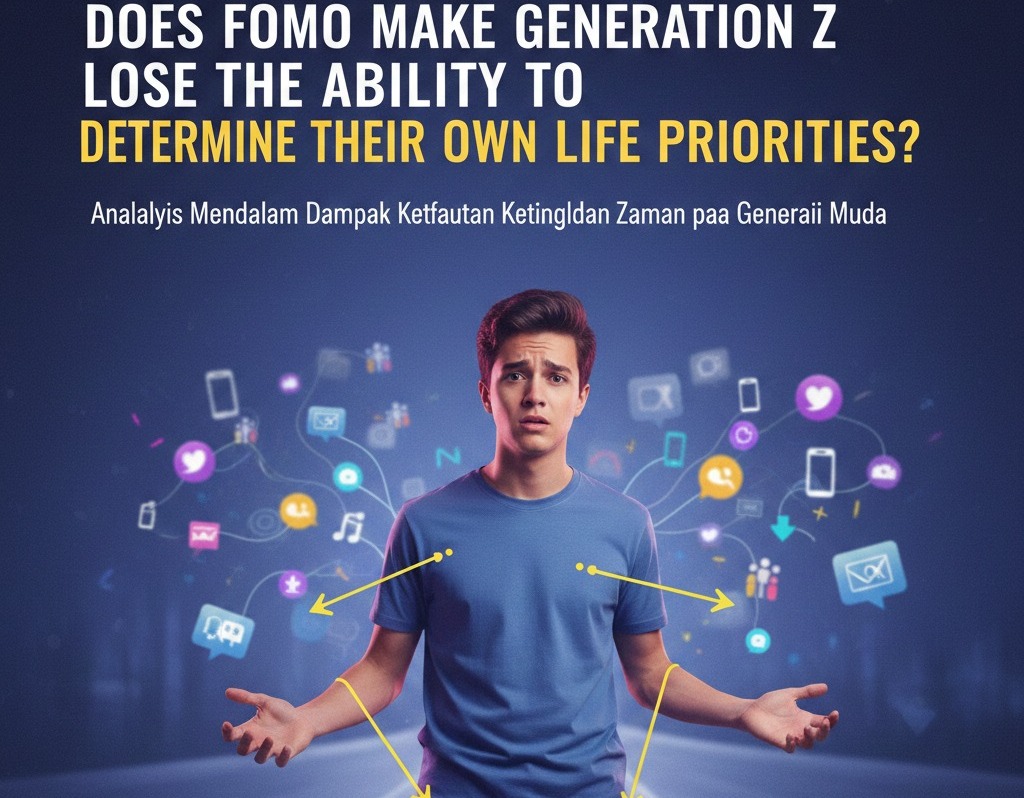
The phenomenon of Fear of Missing Out (FOMO) is increasingly intertwined with the lives of Generation Z, who grew up with social media and fast-paced information. Behind the desire to always follow trends and stay updated lies a bigger question: does FOMO make Generation Z struggle to determine their life priorities?
This article discusses how FOMO influences the mindset, decisions, and life direction of today’s young generation.
WHAT IS FOMO AND WHY IS ITS INFLUENCE SO STRONG?
FOMO is the fear of being left out or not participating in an activity, trend, or achievement considered important by one’s surroundings. For Generation Z, this pressure is amplified by social media, which constantly displays others’ lives instantly.
Every post about achievements, vacations, or lifestyles raises perceived life standards. Without realizing it, Generation Z chases after the same things, even if they don’t align with their needs or personal goals.
THE IMPACT OF FOMO ON DECISION-MAKING
FOMO can affect Generation Z’s ability to make rational decisions. Instead of considering long-term needs, they focus on what’s popular at the moment.
Common effects include:
- Blurred priorities due to wanting to try too many things.
- Impulsive behavior, such as purchasing viral products or joining activities just for approval.
- Difficulty staying focused because they feel the need to stay constantly updated.
- Loss of direction from frequently comparing themselves to others.
This is what leads to unclear personal goals.
SOCIAL MEDIA AS THE MAIN TRIGGER OF FOMO
Social media plays a major role in intensifying FOMO. Platform algorithms actively show content that matches users’ interests, encouraging continuous involvement.
Posts of friends appearing productive or happy make Generation Z feel left behind, even though what they see doesn’t represent full reality. As a result, they struggle to differentiate between what’s truly important and what simply looks appealing online.
HOW FOMO SHIFTS LIFE PRIORITIES
FOMO makes Generation Z prioritize what seems important to others rather than what’s personally meaningful. They may:
- Focus on achievements that gain quick recognition.
- Ignore long-term processes.
- Delay important goals for short-lived trends.
- Lose balance between real needs and social expectations.
Over time, the ability to set healthy priorities weakens.
STEPS TO REGAIN CONTROL OF PRIORITIES
To avoid being trapped by FOMO-driven lifestyle patterns, several strategies can help:
1. Limit social media consumption, especially when feeling easily influenced.
2. Identify personal goals by writing down what truly matters.
3. Focus on process rather than external representation.
4. Say no to activities that don’t support mental health or long-term plans.
5. Curate digital environments by following positive and meaningful accounts.
With stronger awareness, Generation Z can take back control over their life decisions.
CONCLUSION
FOMO can cause Generation Z to lose focus and struggle with prioritizing life goals. But by understanding its triggers and improving digital habits, they can regain clarity. Healthy priorities are not shaped by trends but by personal values and objectives.
Tentang Penulis
Gusti Ayu Tita
Penulis — Universitas STEKOM
Penulis aktif yang berfokus pada isu-isu akademik, teknologi pendidikan, dan pengembangan sumber daya manusia di lingkungan kampus.