
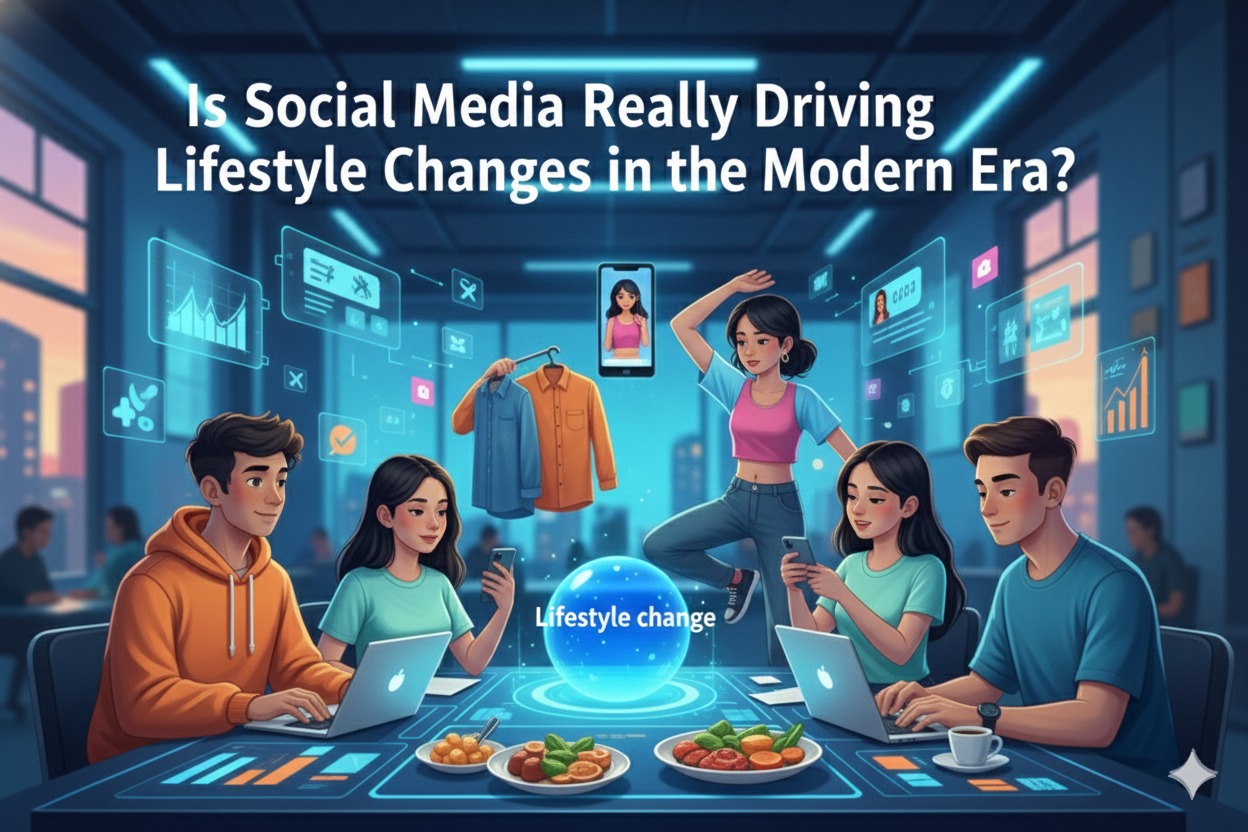
In recent years, social media has become an inseparable part of modern life. Almost every activity—from waking up in the morning to going back to sleep at night—is closely connected to smartphone screens. With millions of pieces of content flowing every second, social media is no longer merely a source of entertainment, but a powerful force that influences choices, habits, and even the way we think.
This raises an important question: does social media truly drive lifestyle changes in the modern era?
Social Media: From a Communication Tool to a Trend Shaper
Initially, social media was created to make communication easier. Today, however, its role has expanded significantly.
Trends form rapidly, ranging from fashion styles and viral food to productivity habits.
Visual content has become the primary language, encouraging users to judge and imitate lifestyles considered attractive.
Content creators now act as role models, gradually replacing traditional public figures.
These changes indicate that social media has become a trend-generating engine that influences millions of people.
The Power of Algorithms: Shaping What We See and Follow
The influence of social media cannot be separated from algorithms that determine which content is most relevant to users.
Content that is frequently watched tends to appear more often, reinforcing certain consumption patterns.
Trends can emerge almost instantly as algorithms push viral content to wider audiences.
User preferences are shaped unconsciously, making new lifestyles feel like necessities.
In other words, algorithms subtly guide the digital lifestyle of modern society.
Changes in Daily Habits and Routines
Modern lifestyles are increasingly shaped by what becomes popular on social media.
People develop habits of documenting daily activities such as eating, working, or exercising.
Viral routines like morning routines, self-care days, or specific diets gain widespread adoption.
Aesthetic standards rise, particularly in fashion, skincare, and room decoration.
What was once private has now become public content.
Influence on Communication and Relationship Building
Social interaction has also changed significantly.
Conversations now take place more through chats, emojis, and direct messages than face-to-face interactions.
Emotional closeness can develop through consistent digital interaction.
However, communication can become shallow as relationships are often built on appearances rather than depth.
Social media has created new communication patterns that differ greatly from previous generations.
Changes in Consumption Patterns and Purchasing Decisions
Consumption trends today are strongly influenced by digital content.
Influencers have become primary sources of recommendations, often more trusted than traditional advertisements.
Viral products sell out quickly, even when they are not truly needed.
The convenience of in-app shopping features encourages impulsive buying decisions.
With all its features, social media has become a major driver of consumer behavior change.
Psychological Impacts That Cannot Be Ignored
Alongside positive changes, social media also brings psychological challenges.
Social comparison can make people feel inadequate or left behind.
Pressure to appear perfect can lead to stress and anxiety.
Digital validation such as likes and comments influences self-esteem.
This shows that lifestyles shaped by social media also carry emotional consequences.
Does Social Media Truly Drive Lifestyle Changes?
Considering various aspects—habits, consumption, communication, and identity—the answer is yes.
Social media has become a major force driving lifestyle changes in the modern era. However, its influence can be positive or negative depending on how users filter and manage it.
Ultimately, the determining factor is not technology itself, but user awareness in selecting and processing information. Social media brings powerful change by creating trends, introducing new habits, and reshaping how we communicate and make decisions. Yet control remains in the hands of individuals. When used wisely, social media can be a source of inspiration and education rather than a social pressure that limits personal identity.
Tentang Penulis
Gusti Ayu Tita
Penulis — Universitas STEKOM
Penulis aktif yang berfokus pada isu-isu akademik, teknologi pendidikan, dan pengembangan sumber daya manusia di lingkungan kampus.



