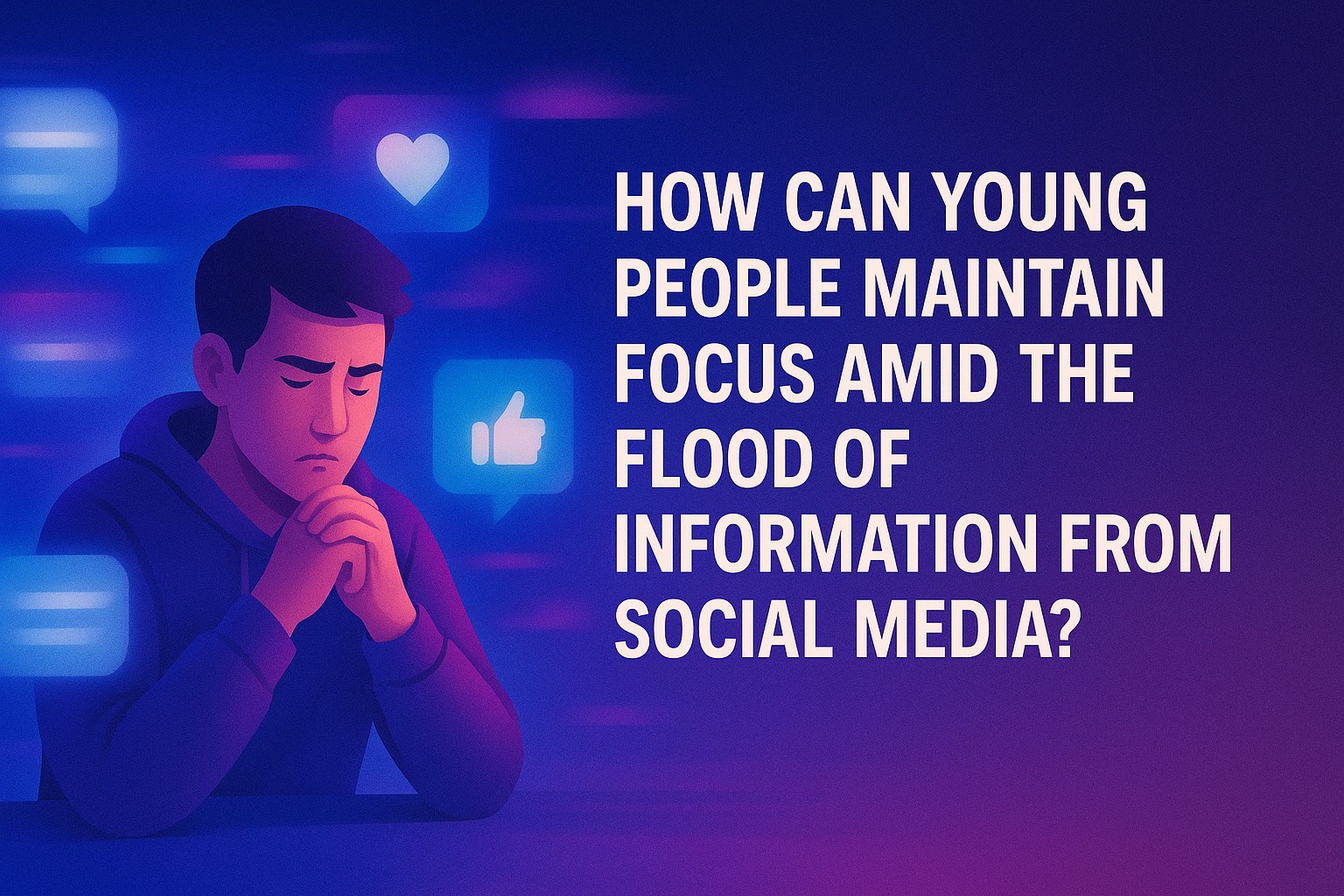
Social media has become an endless source of information and entertainment. Every second, new content appears—ranging from news, memes, celebrity gossip, to addictive short videos. On one hand, this makes it easier for young people to gain knowledge. On the other hand, the flood of information makes it harder to stay focused. So, how can we stay focused amid the constant stream of digital content? Here’s the full explanation.
RECOGNIZE THAT INFORMATION OVERLOAD IS REAL
Young people need to understand that the brain has limited capacity. When information comes too quickly, the brain can experience overload. As a result, concentration becomes easily disrupted and difficult to maintain on a single task. This awareness is important so we can be wiser in choosing what content to consume and how much time to spend scrolling.
LIMIT UNNECESSARY NOTIFICATIONS
Notifications are one of the biggest distractions. Even a small sound can break a concentration chain you’ve been building. Here’s how to handle it:
- Turn off notifications from apps that aren’t important.
- Use Do Not Disturb mode when studying or working.
- Set specific times to check certain apps.
By doing this, the brain doesn’t have to constantly respond to small interruptions throughout the day.
MANAGE YOUR SOCIAL MEDIA TIME
Time management is crucial. Young people can use techniques such as:
- Setting app usage timers, like 30 minutes in the morning and 30 minutes at night.
- Avoiding social media before starting important activities.
- Designating “screen-free hours” to give the brain a break.
This helps balance entertainment with the need to stay focused.
BUILD FOCUS HABITS WITH THE POMODORO TECHNIQUE
The Pomodoro Technique is effective for training the brain to stay focused. It’s simple: focus for 25 minutes, take a 5-minute break, and repeat for several sessions. This pattern helps the brain get used to entering deep-work mode without feeling overwhelmed. It’s perfect for studying, completing tasks, or doing creative work.
CHOOSE USEFUL CONTENT
Not all social media content is bad. There are many educational accounts, career tips, and motivational pages that can support self-development. By being more selective, social media consumption can actually strengthen focus because the information received is more relevant and less mentally exhausting.
DO OFFLINE ACTIVITIES TO BALANCE THE BRAIN
Activities like reading books, light exercise, journaling, or simply taking a walk can help stabilize the mind. Offline activities give the brain a break from the rapid stimulation often found on social media, allowing focus to recover.
DON’T IGNORE MENTAL AND PHYSICAL HEALTH
Lack of sleep, stress, and anxiety greatly affect concentration. Make sure to get enough sleep, eat well, and practice relaxation so your brain is more prepared to handle digital information. When your body and mind are in good condition, staying focused becomes much easier.
CONSISTENCY IS KEY
Maintaining focus requires habits, not just intention. Young people need to consistently apply the strategies they choose. The more frequently these habits are practiced, the stronger the brain’s ability becomes to stay focused—even in the middle of an overwhelming flow of information.
Tentang Penulis
Gusti Ayu Tita
Penulis — Universitas STEKOM
Penulis aktif yang berfokus pada isu-isu akademik, teknologi pendidikan, dan pengembangan sumber daya manusia di lingkungan kampus.