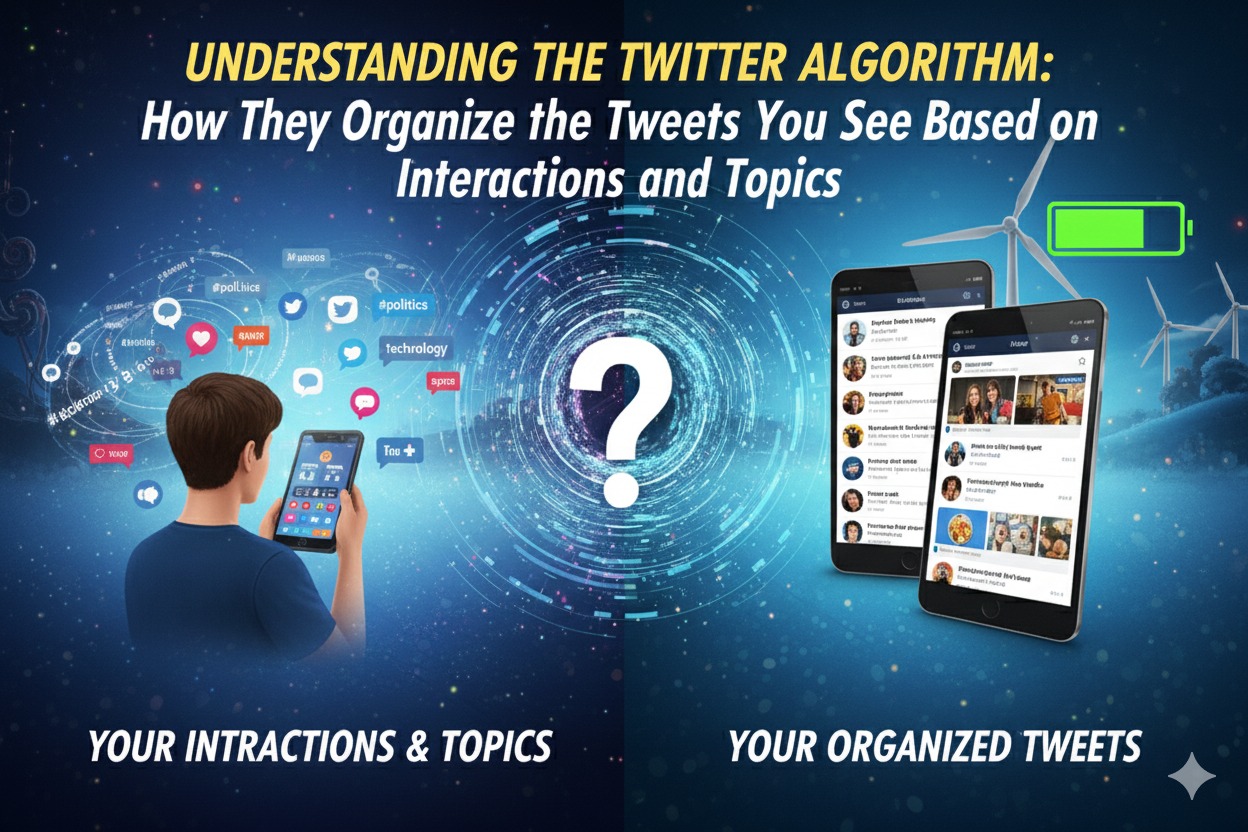
How the Twitter (X) Algorithm Works: Understanding Your Timeline
The Twitter algorithm—now known as X after its rebranding—is one of the most dynamic recommendation systems in the social media landscape. Unlike the purely chronological feed of the past, the platform now combines various signals to determine which tweets appear on your home timeline. Its goal is to present content that is considered most relevant, engaging, and aligned with your interests, based on your behavior and interaction patterns.
In this article, we will explore in detail how the Twitter algorithm works, what factors influence the content you see on your timeline, and how you can partially “control” those recommendations.
1. HOW DOES THE TWITTER ALGORITHM WORK IN GENERAL?
Twitter uses a system called Home Timeline Ranking, which arranges tweets not solely by posting time but by their relevance to you.
This process involves three main steps:
* Candidate Generation– The system gathers thousands of potential tweets from accounts you follow, along with popular or relevant tweets outside your network.
* Ranking– The algorithm evaluates each tweet using hundreds of signals and assigns a relevance score.
* Filtering– Tweets considered duplicate, inappropriate, or too similar to previous ones are removed.
The result is a timeline that feels “personalized,” tailored to your habits and interests.
2. KEY FACTORS THAT INFLUENCE THE TWEETS YOU SEE
Twitter evaluates many signals to determine tweet relevance. The most important include:
A. Your Interaction with Specific Accounts
Twitter closely tracks how often you interact with other users, including:
* How often you like their tweets
* Whether you frequently reply to them
* How often you retweet their content
* How often you visit their profile
* How long you spend reading their tweets
Frequent interaction signals high relevance, causing tweets from those accounts to appear more often on your timeline.
B. Your Interest in Certain Topics
Twitter tracks topics you are interested in, based on:
* Tweets you read to completion
* Themes you frequently like
* Accounts you follow
* Keywords you search for
* Spaces or threads you engage with
If you often read about football, for example, the algorithm will surface more football-related content—even from accounts you do not follow.
C. Tweet Popularity
Engagement metrics also affect ranking, such as:
* Number of likes
* Number of retweets
* Number of replies
* Speed of engagement after posting
Tweets with high interaction are considered higher quality and are more likely to be widely distributed.
D. Recency
Although not fully chronological, Twitter still prioritizes newer content by:
* Lowering the ranking of older tweets
* Boosting newly posted and trending tweets
* Adjusting visibility based on your active hours
This ensures that the content you see remains timely and relevant.
3. WHAT TYPES OF TWEETS APPEAR ON YOUR TIMELINE?
Your timeline typically consists of a mix of:
1. Tweets from Accounts You Follow
Not all tweets appear—only those deemed most relevant.
2. Recommended Tweets Outside Your Network
Such as “Suggested for you,” “Because you follow…,” or “In case you missed it.”
3. Popular Tweets Within Communities You Like
For example, tech threads, K-pop content, or memes—depending on your engagement history.
This combination makes the experience feel highly personalized.
4. HOW DOES THE ALGORITHM ANALYZE YOUR BEHAVIOR?
Twitter analyzes various behavioral signals, including:
* Dwell Time– How long you pause on a tweet before scrolling.
* Media Clicks– Clicking images, playing videos, or expanding threads.
* Scroll Patterns– Frequently stopping on certain types of tweets.
* Following Activity– Following new accounts signals shifting interests.
* Search Activity– Your search history helps define your preferences.
5. HOW CAN YOU CONTROL THE TWITTER ALGORITHM?**
While the algorithm works automatically, you still have some control:
1. Use “Following” Mode for a purely chronological feed.
2. Like tweets you genuinely enjoy to reinforce your interests.
3. Select “Not Interested in This” to reduce unwanted content.
4. Unfollow or mute accounts that feel irrelevant.
5. Clear search history to reset certain recommendations.
6. Manage topics you explicitly follow.
6. CONTROVERSIES BEHIND THE TWITTER ALGORITHM
Twitter’s recommendation system has drawn criticism for:
* Echo Chambers– Reinforcing similar viewpoints.
* Rapid Information Spread– Both positive and negative content can go viral quickly.
* Lack of Transparency– Users often do not know why certain tweets appear.
* Algorithmic Bias– Some content types are favored over others.
CONCLUSION
The Twitter (X) algorithm operates not merely on posting time but through a sophisticated recommendation system that deeply analyzes user behavior. From the tweets you read and the accounts you follow to the topics you engage with and the time you spend on each post—every action becomes a signal that shapes what appears on your timeline.
Tentang Penulis
Gusti Ayu Tita
Penulis — Universitas STEKOM
Penulis aktif yang berfokus pada isu-isu akademik, teknologi pendidikan, dan pengembangan sumber daya manusia di lingkungan kampus.