
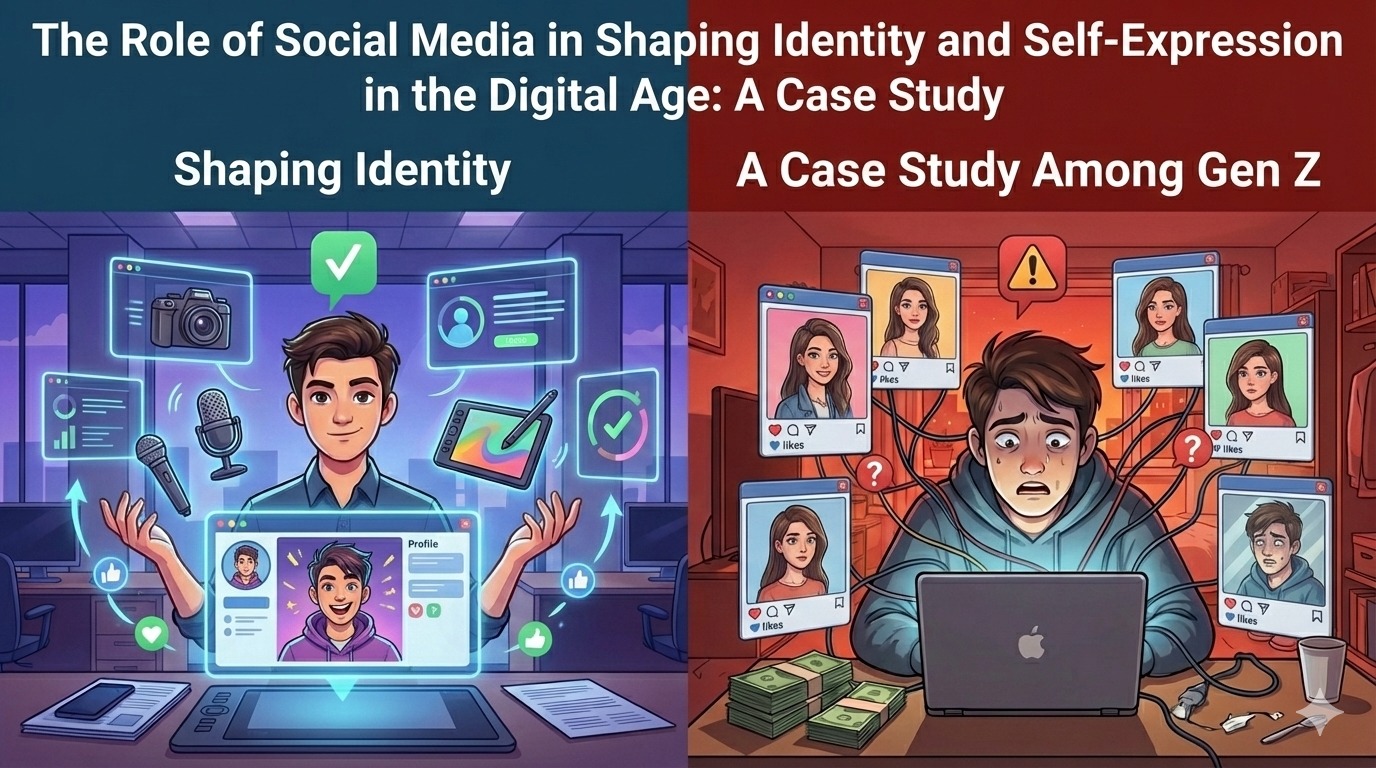
The Role of Social Media in Shaping Gen Z’s Identity and Self-Expression
Social media has become a primary space for young people to express themselves, communicate, and shape their identities. In the digital era—especially among Generation Z, those born between the mid-1990s and early 2010s—social media is not merely a source of entertainment, but an essential part of identity formation. Through platforms such as Instagram, TikTok, YouTube, and X (Twitter), Gen Z builds digital personas that influence how they are perceived by the world.
This article explores in depth how social media plays a crucial role in shaping Gen Z’s identity and self-expression, as well as its social and psychological implications.
1. Gen Z: The Digital Native Generation
Gen Z is the first generation to grow up with digital technology from an early age. They are accustomed to:
* using smartphones from a young age,
* accessing the internet on a daily basis,
* communicating through digital platforms,
* expressing themselves through visual content.
This familiarity makes social media a natural space for Gen Z to explore and present their identities.
2. Social Media as a Space for Self-Expression
Social media provides Gen Z with vast opportunities to express who they are through:
a. Visual Content
Photos, short videos, and creative designs allow them to showcase interests, fashion styles, hobbies, and ways of thinking.
b. Personal Storytelling
Many Gen Z users share life experiences, mental health journeys, friendships, and personal growth through social media.
c. Artistic and Creative Expression
TikTok dances, humorous videos, creative filters, digital illustrations, and original music become tools for self-exploration.
d. Freedom to Build a Digital Persona
Gen Z can choose how they want to be seen—serious, energetic, humorous, aesthetic, or minimalist.
This digital persona may differ from their offline self, yet it remains an important part of their identity.
3. The Process of Identity Formation on Social Media
Gen Z’s identity is shaped not only by offline experiences but also by online interactions. Several processes occur:
a. Observation and Imitation
They observe lifestyles, values, and perspectives from influencers or online communities and may imitate them.
b. Adaptation of Values and Beliefs
Educational content, digital activism, and online discussions influence their worldview.
c. Feedback Loop
Likes, comments, and engagement act as validation that reinforces certain identities.
d. Identity Experimentation
Social media allows Gen Z to try new looks, ideas, or hobbies with less fear of direct judgment.
4. The Role of Online Communities in Identity Formation
Digital communities play a major role in Gen Z’s personal development.
a. Safe Spaces
Many online communities provide safe environments for sharing stories, struggles, and interests that may not be accepted offline.
b. Finding Like-Minded Peers
Gen Z can connect with people worldwide who share interests such as gaming, photography, art, education, or music.
c. Digital Activism
Gen Z is known for its concern about social issues like environmental protection, mental health, and social justice. Online communities strengthen their identity as a socially aware and vocal generation.
5. Positive Impacts of Social Media on Gen Z’s Identity
Social media is not always negative. It offers several positive impacts, including:
* increased self-confidence through appreciation and support,
* a space for creativity and free expression,
* access to education and information,
* higher social awareness of global and local issues.
6. Negative Impacts of Social Media on Gen Z’s Identity
Despite its benefits, social media also presents challenges:
* excessive social comparison,
* identity confusion due to differing online and offline personas,
* pressure to appear perfect and happy,
* cyberbullying that can harm mental health and self-esteem.
7. Case Study: Gen Z and TikTok as an Identity Space
TikTok is one of the most popular platforms among Gen Z. A simple case study shows that:
* teenagers create videos about lifestyle and hobbies such as dancing, cooking, studying, and skincare,
* “aesthetic routine” content promotes visually based lifestyle identities,
* viral trends (outfit checks, daily vlogs, POV videos) shape collective Gen Z personas,
* music and visual effects strengthen self-expression.
Positive responses from the TikTok community often increase confidence and emotional stability. However, TikTok also accelerates social comparison due to its algorithm that highlights idealized content.
8. The Influence of Influencers on Gen Z’s Identity
Influencers are often seen as role models who shape:
* fashion choices,
* music preferences,
* political views,
* daily routines,
* even career aspirations.
Gen Z tends to follow influencers who feel relatable rather than overly glamorous. They value honesty, transparency, and authenticity.
Tentang Penulis
Gusti Ayu Tita
Penulis — Universitas STEKOM
Penulis aktif yang berfokus pada isu-isu akademik, teknologi pendidikan, dan pengembangan sumber daya manusia di lingkungan kampus.



