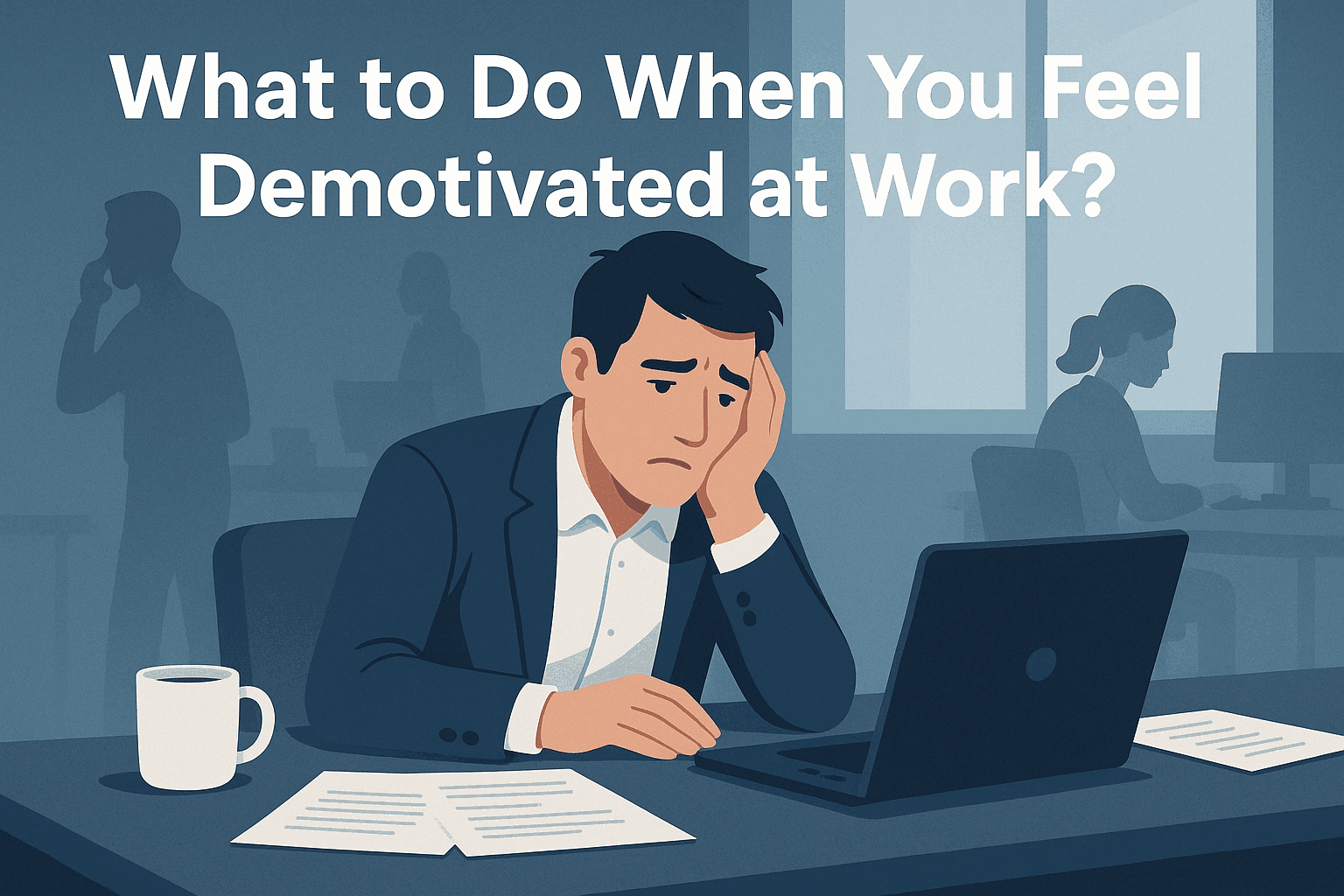
Work demotivation is a condition where a person loses enthusiasm and motivation to carry out their job responsibilities. This can be caused by various factors such as an unsupportive work environment, excessive workload, or lack of recognition for achievements. When you feel demotivated, it’s important to take the right steps to regain your motivation and boost your productivity. In this article, we’ll explore practical ways to overcome work demotivation and get back on track.
1. IDENTIFY THE CAUSE OF DEMOTIVATION
The first step is to identify the root cause of your demotivation. Is it due to stress, burnout, lack of challenges, or poor management? Understanding what triggers your low motivation will help you address it effectively. Take time to reflect and write down the specific factors that are making you feel uninspired at work.
2. SET SMALL,ACHIEVABLE DOALS
Once you understand the cause, try breaking down your tasks into smaller, more manageable goals. Large goals can often feel overwhelming and increase your sense of demotivation. By focusing on small wins, you can build momentum, rebuild confidence, and regain motivation little by little.
3. SEEK SOCIAL SUPPORT
Don't hesitate to reach out to colleagues, friends, or even your supervisor for support. Talking about your feelings can offer relief and provide new perspectives. Sometimes, just sharing your concerns and listening to others' experiences can give you fresh insights and help you find unexpected solutions.
4. TAKE CARE OFF YOUR MENTAL HEALTH
Good mental health is essential for staying motivated. Make time for activities that you enjoy, such as exercise, meditation, or creative hobbies. Healthy stress management improves your emotional well-being and helps you return to work with a renewed mindset.
5. FIND NEW INSPIRATION
Feeling stuck in a monotonous routine can lead to burnout and demotivation. Try to explore new interests or learn something new—whether it’s a course, a book, or a new project. Discovering fresh sources of inspiration can reignite your passion for work.
6. PRACTICE SELF-REFLECTION
After implementing these strategies, take time to reflect: “Do I feel better now?” or “Which strategies have helped me the most?” Regular self-evaluation allows you to track your progress and stay focused. It also encourages continuous growth and self-awareness in your professional journey.
CONCLUSION
When you're feeling demotivated at work, it’s important to acknowledge your emotions and take proactive steps to overcome them. From identifying the causes and setting small goals to seeking support, taking care of your mental health, finding new inspiration, and practicing self-reflection—each step plays a key role in helping you recover your motivation. Remember, overcoming work demotivation is a process that takes time, but with patience and consistent effort, you can get through it and thrive again.
About the Author
Gusti Ayu Tita
Author — STEKOM University
An active author focused on academic issues, educational technology, and human resource development in the campus environment.