
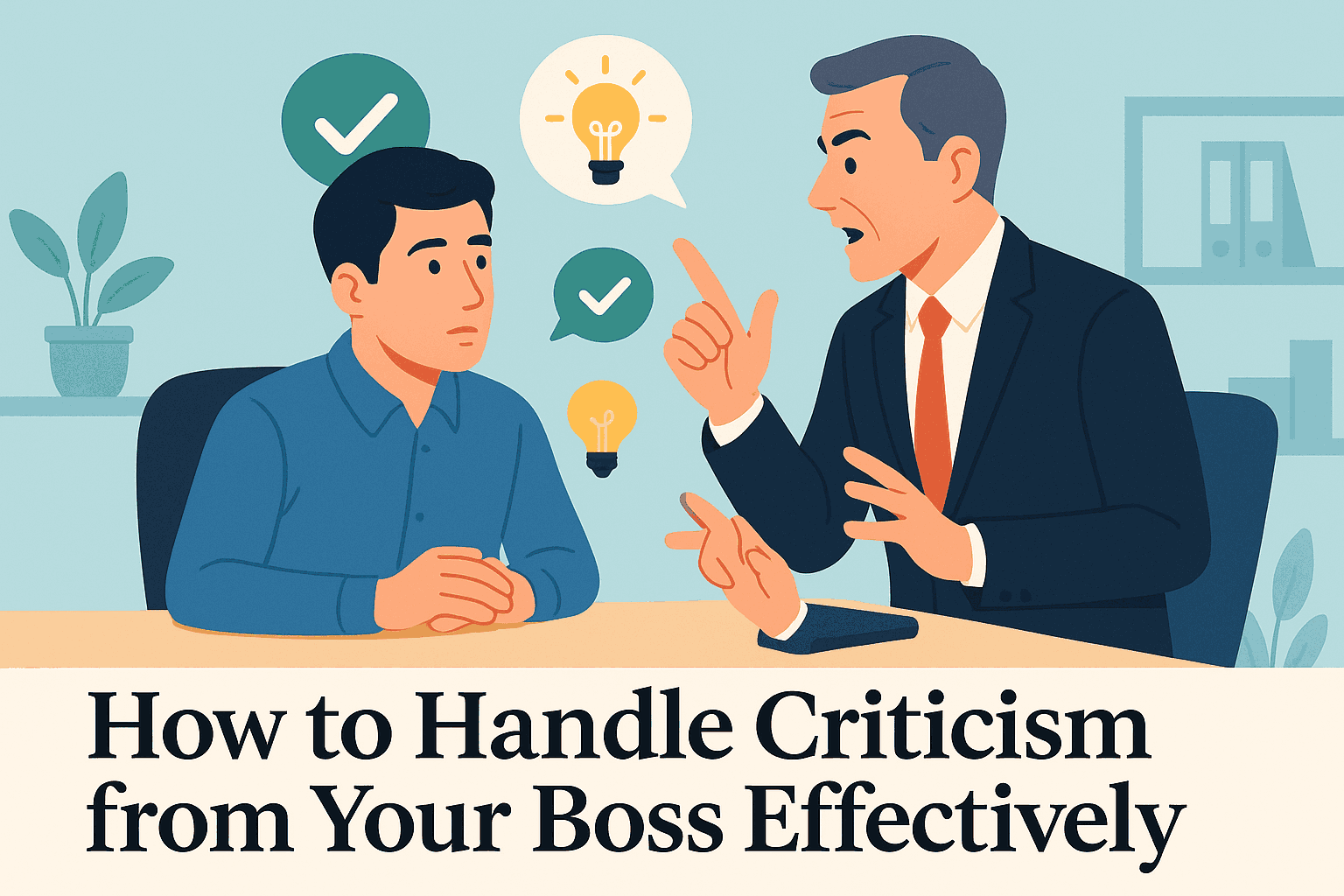
Criticism from a supervisor is inevitable in any professional setting. Although it can feel challenging or uncomfortable, it is actually a valuable tool for personal growth and career development. Learning how to manage criticism properly can help you grow, improve performance, and strengthen professional relationships. In this article, we’ll explore practical strategies for accepting and responding to feedback from your boss in a constructive way.
1. LISTEN CAREFULLY
The first step in handling criticism is to listen attentively. Avoid rushing to defend yourself or interrupting. Focus on what your boss is saying, especially the specific aspects that need improvement. By listening actively, you can better understand the core message and reduce the chance of miscommunication.
2. DON’T TAKE IT PERSONALY
Workplace criticism typically targets the outcome of your work, not your character. Try not to internalize feedback as a personal attack. Instead, view it as part of a continuous learning process. Maintaining emotional distance helps you respond with professionalism and clarity.
3. ASK FOR CLARIFICATION IF NEEDED
If the criticism is vague or unclear, don’t hesitate to ask for clarification. Asking thoughtful questions shows that you are committed to improving and want to fully understand what’s expected. It also helps prevent misunderstandings and ensures you’re aligned with your boss's expectations.
4. RESPOND WITH A POSITIVE ATTITUDE
Even if the feedback is tough to hear, accept it with a constructive mindset. Thank your boss for their input and for taking the time to guide you. This shows emotional maturity and openness to growth, which can strengthen trust and collaboration within your team.
5. USE CRITTICISM AS A LEARNING TOOL
Rather than dwelling on negative feedback, turn it into an opportunity for self-improvement. Reflect on what went wrong, identify what can be improved, and create a plan for better performance in the future. This demonstrates accountability and a proactive attitude toward progress.
6. IMPLEMENT CHANGES CONSISTENTLY
Receiving feedback is only part of the process—taking action is crucial. Apply your boss’s recommendations and strive to turn those changes into consistent habits. Over time, these small improvements build trust and credibility with your manager.
7. REQUEST FOLLOW-UP FEEDBACK
After making improvements, ask your supervisor for follow-up feedback. This shows that you’re committed to growth and open to ongoing input. Continuous feedback also allows you to fine-tune your work and reinforces your willingness to evolve professionally.
CONCLUSION
Handling criticism from your boss effectively is a vital professional skill. By listening closely, maintaining a positive outlook, and using feedback as a stepping stone for improvement, you position yourself as a committed and adaptable team member. Remember, constructive criticism isn’t a setback—it’s an opportunity to grow, improve, and build stronger workplace relationships.
About the Author
Gusti Ayu Tita
Author — STEKOM University
An active author focused on academic issues, educational technology, and human resource development in the campus environment.



