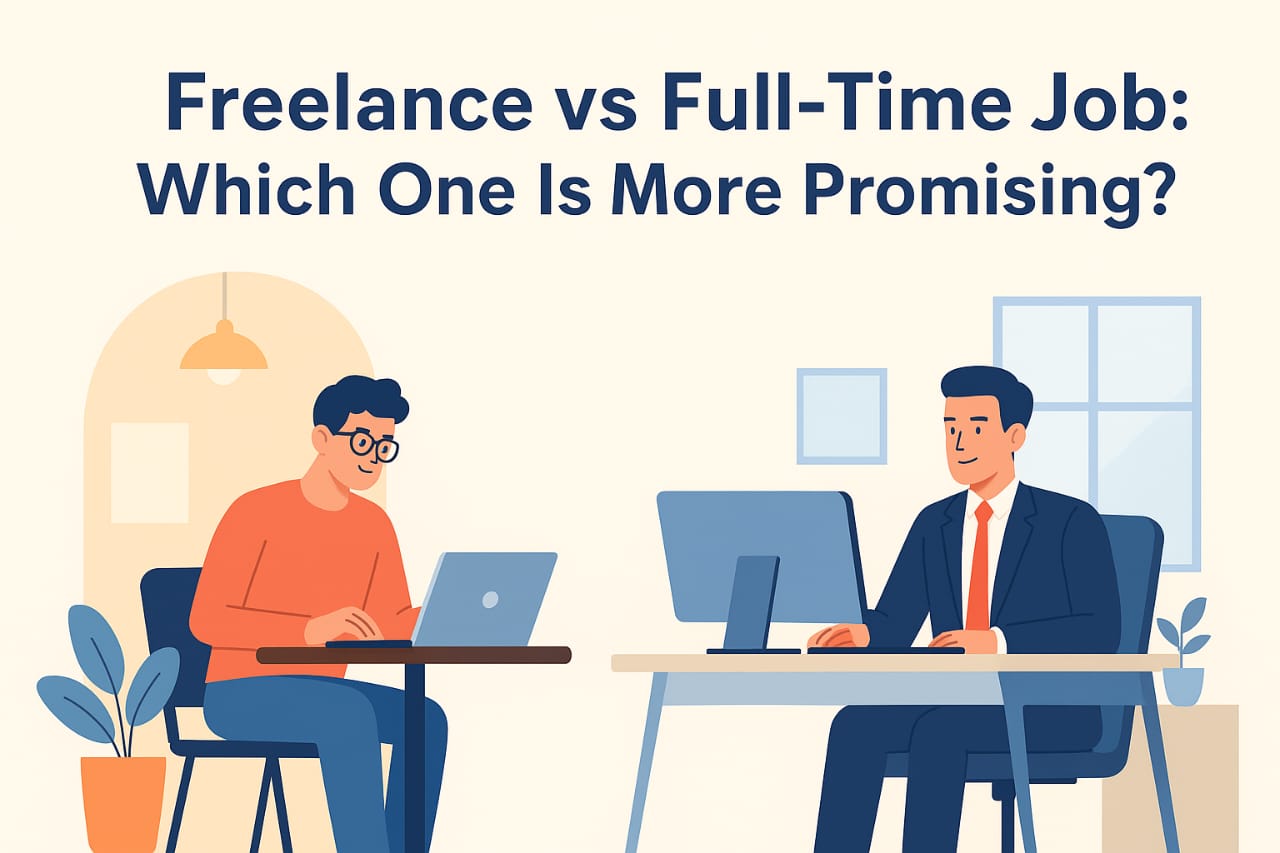
Many people find themselves torn between working as a freelancer or pursuing a full-time job. Both career paths have their own advantages and challenges. This article will compare the two options to help you make the right decision.
Table of Contents
- Advantages and Disadvantages of Freelancing
- Benefits of Full-Time Jobs
- Income and Job Security
- Flexibility and Work-Life Balance
- Conclusion
1. Advantages and Disadvantages of Freelancing
As a freelancer, you enjoy high flexibility in managing your time and workplace. You can choose projects based on your interests, with the potential to earn higher income.
However, freelancing also comes with risks: unstable income, no benefits such as health insurance or paid leave, and the challenge of building a stable client network, which requires time and extra effort.
2. Benefits of Full-Time Jobs
Full-time jobs provide the stability of a monthly salary and benefits such as health insurance, retirement plans, and paid leave. Employees also have opportunities for growth within the company through promotions and training.
On the downside, full-time jobs usually come with stricter working hours and less flexibility compared to freelancing.
3. Income and Job Security
Freelancers have the potential to earn more, especially when they secure multiple projects. However, full-time employees enjoy consistent income and higher job security, even though salary increases tend to be slower and tied to company policies.
4. Flexibility and Work-Life Balance
Freelancers have full control over their schedules, allowing them to adjust work according to their lifestyle. Meanwhile, full-time jobs offer a more structured schedule but may limit work-life balance, especially when workload is high.
5. Conclusion
Freelancing offers flexibility and potentially higher earnings but comes with instability and a lack of benefits. Full-time jobs ensure financial stability and job security but sacrifice flexibility.
About the Author
Gusti Ayu Tita
Author — STEKOM University
An active author focused on academic issues, educational technology, and human resource development in the campus environment.