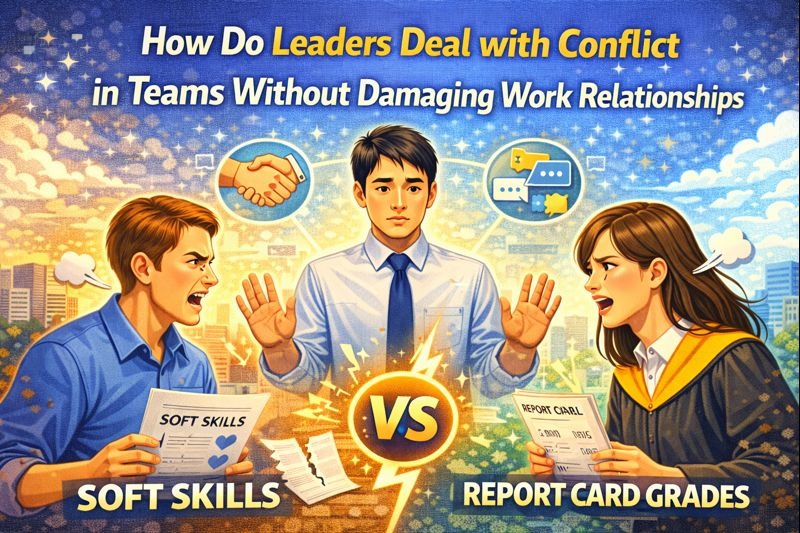
How Leaders Should Handle Conflict Within a Team
Conflict within a team is unavoidable. Differences in opinions, work pressure, and misunderstandings can easily lead to disputes. However, how a leader handles conflict will determine whether it leads to positive outcomes or damages team relationships.
Why Conflict Management Matters in Leadership
Conflict is not always negative if handled correctly.
In a dynamic work environment, conflict can become an opportunity for growth. A leader’s response plays a crucial role in maintaining trust, collaboration, and team morale.
Effective Ways Leaders Handle Team Conflict
1. Listen to All Parties
Leaders must remain neutral and open-minded. A good leader acts as an impartial listener and gives every team member the chance to express their perspective. Avoid rushing to conclusions or blaming one side too quickly.
2. Find Common Ground
Conflict should lead to a win-win solution. Rather than choosing sides, leaders should focus on identifying shared goals and finding a middle ground. This approach helps all team members feel respected and valued.
3. Stay Professional
Personal emotions should not interfere with leadership decisions. Leaders must keep personal issues out of team conflicts. Even when emotionally involved, maintaining fairness and professionalism is essential to preserve credibility and trust.
4. Turn Conflict into a Learning Opportunity
Every conflict offers valuable lessons. Leaders should reflect on what caused the conflict and identify improvements to prevent similar situations in the future. Constructive reflection strengthens both the leader and the team.
Conclusion
Wise leaders use conflict to strengthen, not divide, their teams.
Conflict is a natural part of teamwork, but when managed effectively, it becomes a powerful tool for growth. A wise leader transforms conflict into an opportunity to build stronger relationships, improve communication, and create a more resilient team.
About the Author
Gusti Ayu Tita
Author — STEKOM University
An active author focused on academic issues, educational technology, and human resource development in the campus environment.