
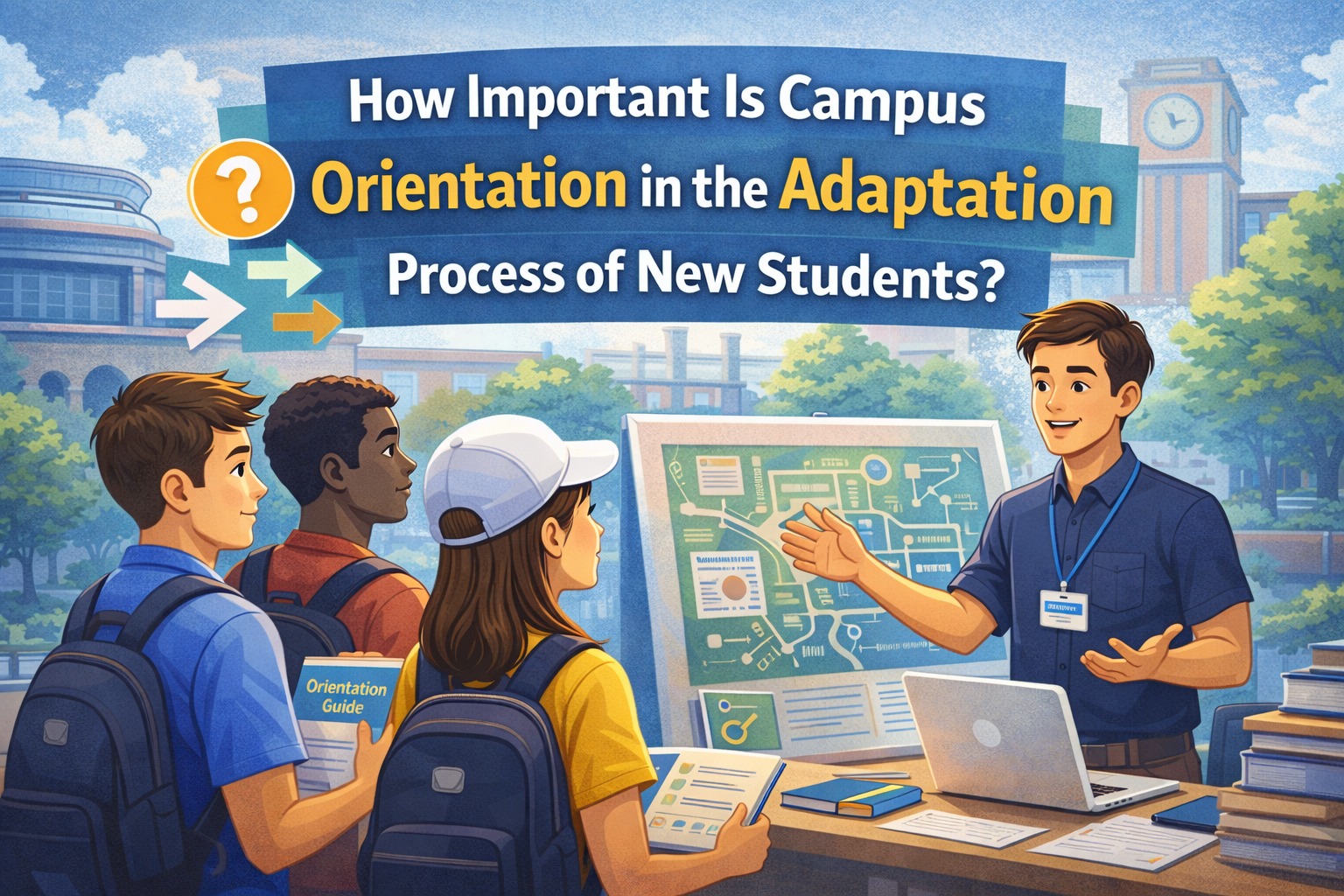
Entering college is a new experience filled with challenges for first-year students. Changes in environment, a more independent learning system, and academic demands that differ from high school often make students feel awkward and unprepared. This is where campus orientation plays an important role as an initial bridge to support the adaptation process.
Orientation programs are not just about introducing the campus environment, but also about building students’ mental and academic readiness. So, how significant is the role of campus orientation in helping new students adapt? Here is the discussion.
INTRODUCING THE CAMPUS ENVIRONMENT AND FACILITIES
One of the main goals of campus orientation is to familiarize students with the college environment. New students are introduced to classrooms, libraries, laboratories, and administrative services.
By understanding the available facilities from the beginning, students will not feel confused when they need academic or administrative assistance. This speeds up the adjustment process and helps students feel more confident in carrying out campus activities.
HELPING STUDENTS UNDERSTAND THE ACADEMIC SYSTEM
Campus orientation is also an important moment to explain the academic system, such as course registration procedures, attendance rules, grading methods, and classroom etiquette.
This understanding is crucial so students do not make mistakes at the beginning of the semester. When rules and academic procedures are clear, students can focus more on learning without administrative confusion.
BUILDING SOCIAL NETWORKS EARLY ON
Through orientation activities, new students meet peers from various backgrounds. These interactions help them form friendships and study groups from the start.
Positive social networks can become a source of emotional and academic support. Students who have friends tend to adapt more easily and do not feel alone in facing college challenges.
FOSTERING A SENSE OF BELONGING TO THE CAMPUS
Campus orientation also functions to instill institutional values, academic culture, and a sense of community. When students feel they are part of the campus community, their motivation to learn and contribute increases.
This sense of belonging makes students more comfortable in the new environment and better prepared to face the dynamics of college life.
PREPARING STUDENTS MENTALLY FOR ACADEMIC CHALLENGES
In addition to introducing the environment, orientation programs often include motivational sessions, time management guidance, and effective study tips. These provisions help students handle academic pressure more maturely.
Students who are mentally prepared usually adjust more quickly and are better able to manage stress during their first semester.
CONCLUSION
Campus orientation plays a very important role in the adaptation process of new students. Through environmental introduction, understanding of the academic system, social network building, and mental preparation, students can go through the transition more smoothly. A well-designed orientation program not only helps students feel comfortable but also becomes an early foundation for academic success in higher education.
About the Author
Gusti Ayu Tita
Author — STEKOM University
An active author focused on academic issues, educational technology, and human resource development in the campus environment.



