Challenges and Solutions for Working Students
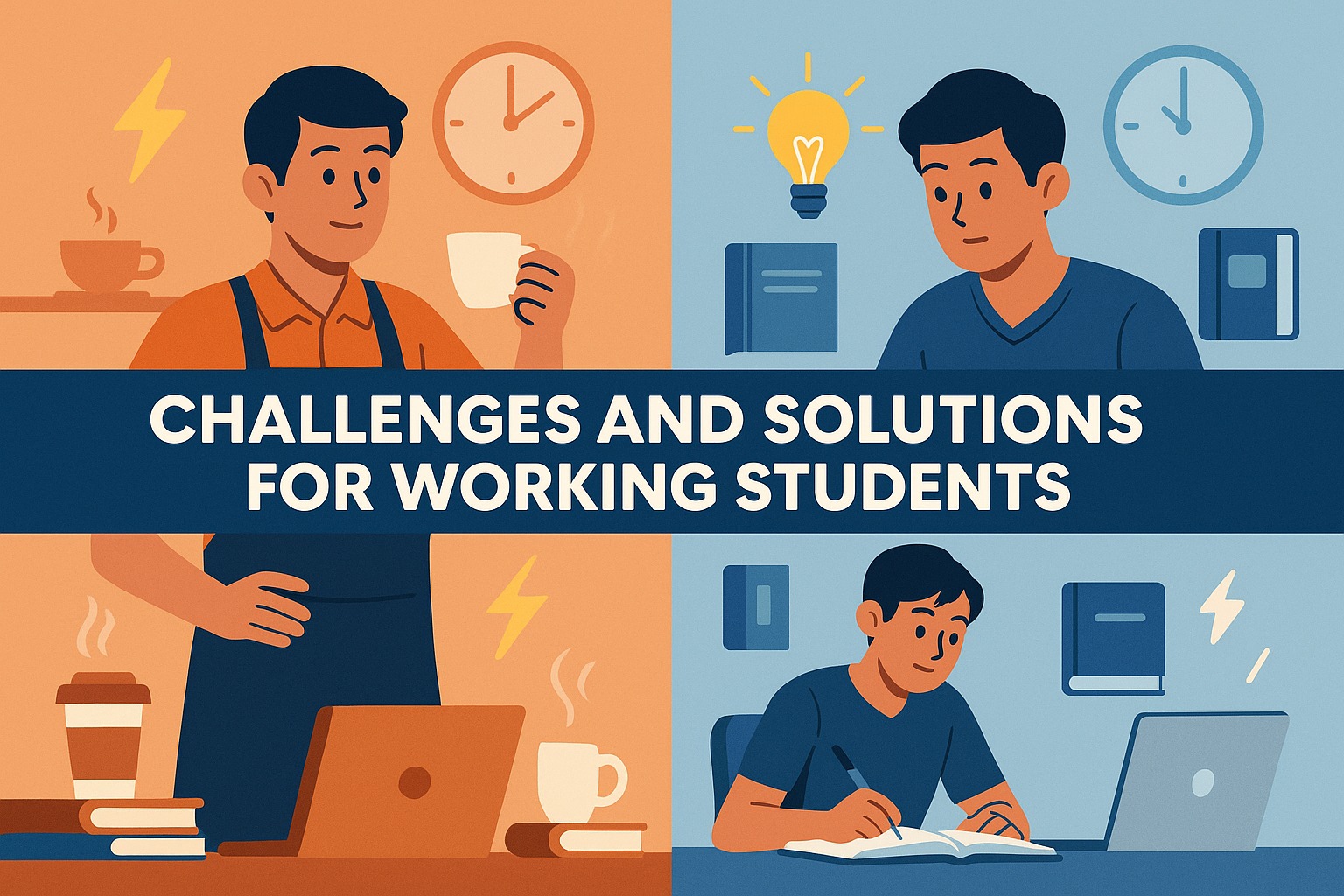
Being a student while working is no easy feat. Many students choose to take on part-time or even full-time jobs to support their living expenses, pay tuition fees, or gain valuable work experience. While this decision reflects independence and responsibility, it often comes with a set of challenges that can impact academic performance and personal well-being. Below are some common challenges faced by working students, along with practical solutions.
Challenges
1. Time Management
One of the biggest challenges is managing time between classes, work, and personal life. Tight class schedules often conflict with working hours, forcing students to sacrifice rest or social activities.
2. Physical and Mental Exhaustion
Working and studying back-to-back without sufficient rest can lead to fatigue, stress, and even health issues. Many working students suffer from lack of sleep and diminished focus during lectures.
3. Decline in Academic Performance
Balancing job responsibilities and academic commitments can result in decreased grades or difficulty keeping up with coursework.
4. Limited Social Life
Time constraints often prevent working students from socializing with classmates or participating in campus activities. This may affect their social experience and networking opportunities.
Solutions
1. Create a Structured Schedule
Students should develop a realistic weekly plan that includes study time, work shifts, rest, and social activities. Utilize time management tools or digital calendars to stay organized.
2. Choose Flexible Jobs
Seek part-time or freelance positions with flexible hours or shift-based schedules. Some campuses offer on-site jobs tailored to student availability.
3. Prioritize Health
Adequate sleep, a balanced diet, and light exercise are essential for maintaining energy and focus. Don't hesitate to take a break from work if physical or mental health begins to decline.
4. Communicate with Professors and Employers
Be open with your professors about your dual responsibilities. Some may provide flexible deadlines or alternative arrangements. The same applies to your employer—transparency helps build understanding.
5. Reduce Academic Load (If Necessary)
Consider taking fewer courses per semester to ease the workload. Focus on mastering fewer subjects rather than overloading yourself.
Conclusion
Being a working student is undeniably challenging, but entirely achievable with proper time management, open communication, and self-care. The key is to maintain balance and be mindful of your own limits. With the right approach, students can thrive in both academics and the workplace.
About the Author
Gusti Ayu Tita
Author — STEKOM University
An active author focused on academic issues, educational technology, and human resource development in the campus environment.