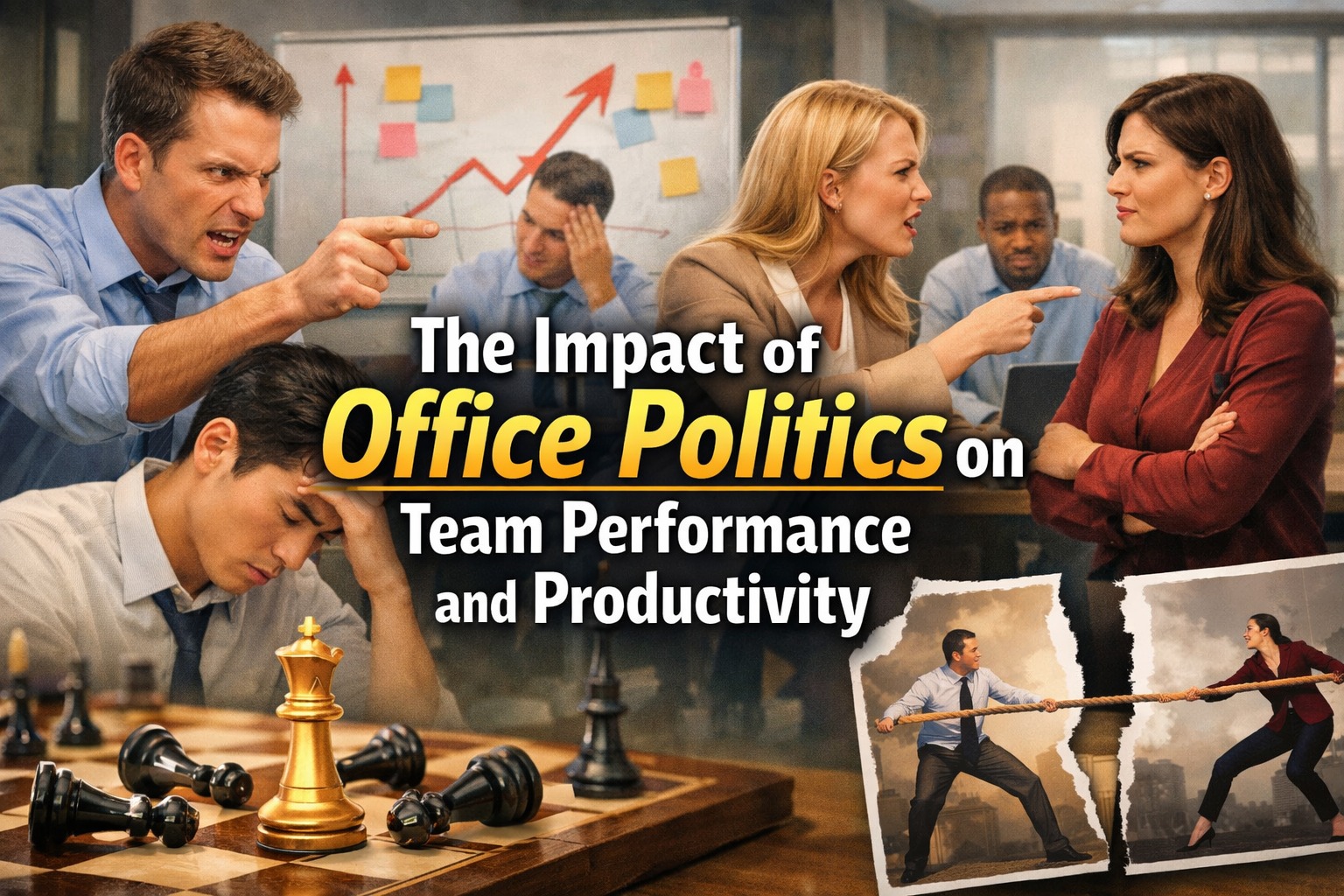
Office politics is a common reality in many workplaces. It refers to the informal use of influence, relationships, and power to achieve personal or organizational goals. While some forms of office politics can help improve communication and decision-making, unhealthy office politics often creates conflict, reduces trust, and negatively affects overall team performance.
Understanding how office politics influences employees and organizational productivity is important for building a healthy work environment. Companies that successfully manage workplace dynamics are more likely to maintain employee engagement, collaboration, and long-term business success.
UNDERSTANDING OFFICE POLITICS IN THE WORKPLACE
Office politics occurs when employees use personal influence, alliances, or strategic relationships to gain advantages within an organization. These activities may involve competing for promotions, resources, recognition, or leadership opportunities. In some situations, office politics develops naturally as employees interact and pursue career growth.
However, problems arise when political behavior becomes excessive or self-serving. Employees may prioritize personal interests over team objectives, creating tension and misunderstandings. This can weaken workplace relationships and make collaboration more difficult for everyone involved.
HOW OFFICE POLITICS AFFECTS TEAM PERFORMANCE
Healthy teams depend on trust, communication, and cooperation. When office politics becomes dominant, employees may hesitate to share ideas or information because they fear criticism, manipulation, or unfair treatment. As a result, teamwork becomes less effective and decision-making slows down.
Political conflicts can also create divisions within teams. Employees may form groups based on personal interests rather than organizational goals. These divisions often reduce unity and make it harder for team members to work together efficiently toward common objectives.
THE IMPACT ON EMPLOYEE PRODUCTIVITY
One of the most significant consequences of unhealthy office politics is reduced productivity. Employees may spend valuable time dealing with conflicts, rumors, or relationship management instead of focusing on their actual responsibilities. This distraction lowers efficiency and delays project completion.
Workplace stress caused by political behavior can also affect concentration and motivation. Employees who feel overlooked or unfairly treated often become less engaged in their work. Over time, this decline in motivation can negatively impact both individual and organizational performance.
EFFECTS ON EMPLOYEE MORALE AND JOB SATISFACTION
Employee morale is closely linked to perceptions of fairness and respect. When promotions, rewards, or opportunities appear to be influenced by politics rather than performance, employees may lose confidence in the organization. This feeling can lead to frustration and dissatisfaction.
Low job satisfaction often increases employee turnover. Talented workers may seek opportunities elsewhere if they believe their efforts are not recognized fairly. High turnover can be costly for organizations because recruiting and training new employees requires significant time and resources.
STRATEGIES TO REDUCE NEGATIVE OFFICE POLITICS
Organizations can minimize harmful office politics by promoting transparency and fairness in decision-making. Clear communication regarding promotions, performance evaluations, and organizational changes helps employees understand how decisions are made. This reduces uncertainty and limits speculation.
Leaders also play a critical role in creating a positive workplace culture. Encouraging open dialogue, teamwork, and mutual respect helps employees focus on shared goals rather than personal competition. Regular feedback and conflict resolution practices can further strengthen workplace relationships.
BUILDING A POSITIVE AND PRODUCTIVE WORK CULTURE
A strong workplace culture emphasizes collaboration, accountability, and ethical behavior. Employees should feel comfortable expressing ideas, sharing concerns, and contributing to team success without fear of political consequences. Such an environment promotes innovation and continuous improvement.
When organizations prioritize fairness and teamwork, employees become more engaged and productive. Strong professional relationships improve communication, strengthen trust, and support better business outcomes. Ultimately, reducing negative office politics benefits both employees and the organization as a whole.
CONCLUSION
The impact of office politics on team performance and productivity can be significant. While workplace influence and networking are natural aspects of organizational life, excessive political behavior often damages trust, reduces collaboration, and lowers employee motivation. By fostering transparency, fairness, and effective communication, organizations can create healthier work environments where employees and teams perform at their best.
About the Author
Gusti Ayu Tita P
Author — STEKOM University
An active author focused on academic issues, educational technology, and human resource development in the campus environment.